News

Global Physics Photowalk winners

From deep under the North Sea, to the outskirts of Rome and the Canadian shores of the Pacific, the winning images from the 2018 Global Physics Photowalk competition capture the beauty, precision and international nature of humankind’s search to understand the Universe. Selected from thousands of images submitted by hundreds of amateur and professional photographers […]

Global Physics Photowalk winners Read More »

International contribution to project to unlock the mysteries of neutrinos and anti-matter

The largest liquid-argon neutrino detector in the world has just recorded its first particle tracks, signaling the start of a new chapter in the story of the international Deep Underground Neutrino Experiment (DUNE). DUNE’s scientific mission is dedicated to unlocking the mysteries of neutrinos, the most abundant (and most mysterious) matter particles in the universe.

International contribution to project to unlock the mysteries of neutrinos and anti-matter Read More »

ATTRACT call

To bridge the gap between basic research and real market needs, ATTRACT is calling for researchers, entrepreneurs and companies to bring forward breakthrough projectson pioneering imaging and sensor technologies. The call opens on 1st August 2018 and applicants have up to three months to submit their ideas (deadline 31st October, 2018 23:59 hrs CET). The ATTRACT Project will

ATTRACT call Read More »

First Successful Test of Einstein’s General Relativity Near Supermassive Black Hole

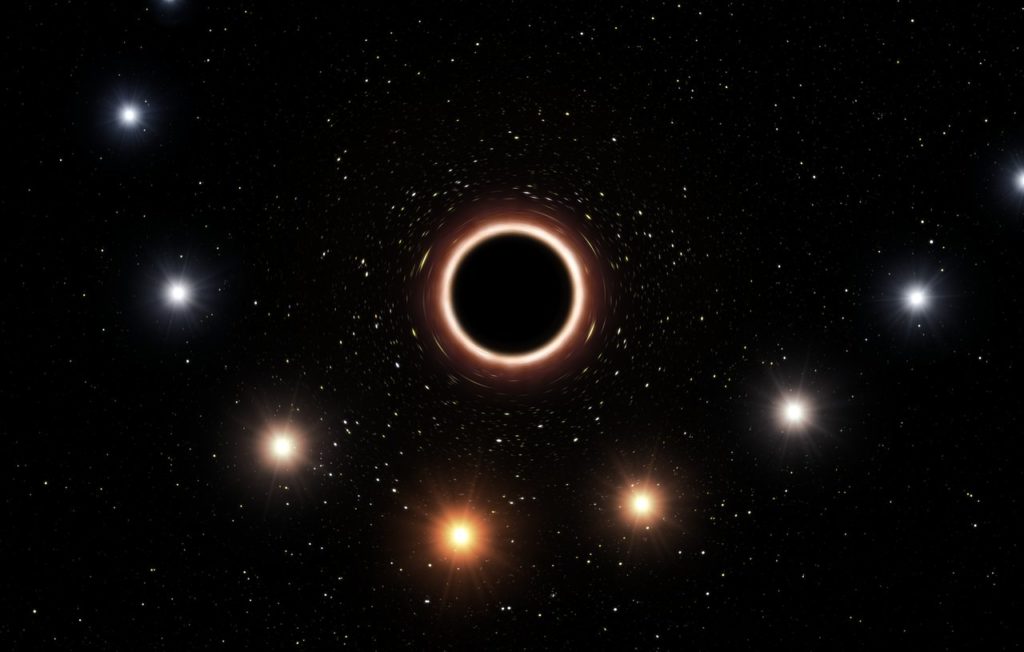
Observations made with ESO’s Very Large Telescope have for the first time revealed the effects predicted by Einstein’s general relativity on the motion of a star passing through the extreme gravitational field near the supermassive black hole in the centre of the Milky Way. This long-sought result represents the climax of a 26-year-long observation campaign

First Successful Test of Einstein’s General Relativity Near Supermassive Black Hole Read More »

IceCube Neutrinos Point to Long-Sought Cosmic Ray Accelerator

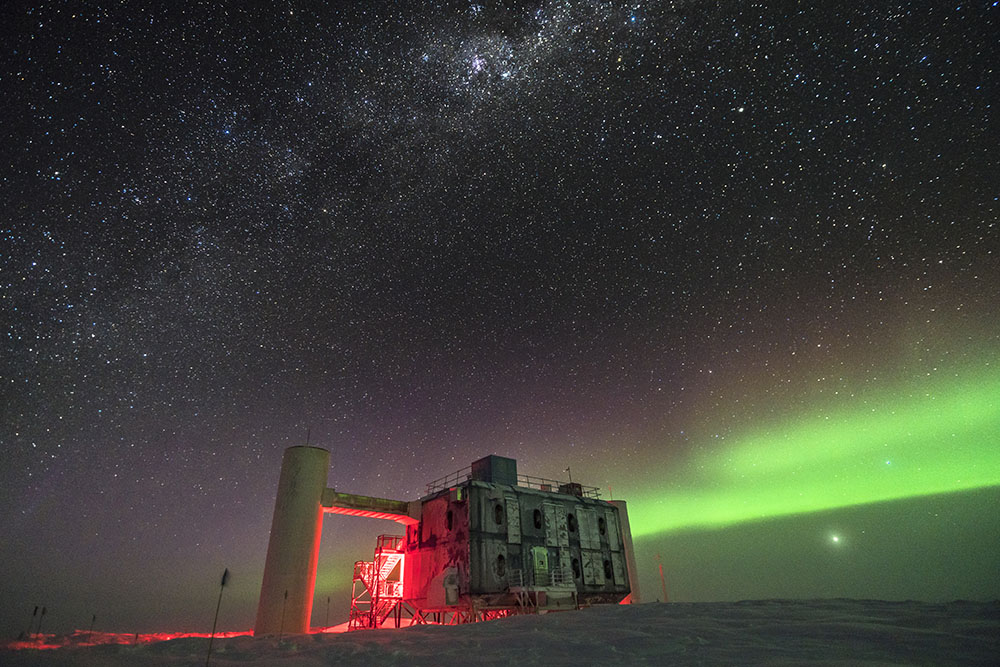
An international team of scientists has found the first evidence of a source of high-energy cosmic neutrinos, ghostly subatomic particles that can travel unhindered for billions of light years from the most extreme environments in the universe to Earth. The observations, made by the IceCube Neutrino Observatory at the Amundsen–Scott South Pole Station and confirmed

IceCube Neutrinos Point to Long-Sought Cosmic Ray Accelerator Read More »

KATRIN inauguration

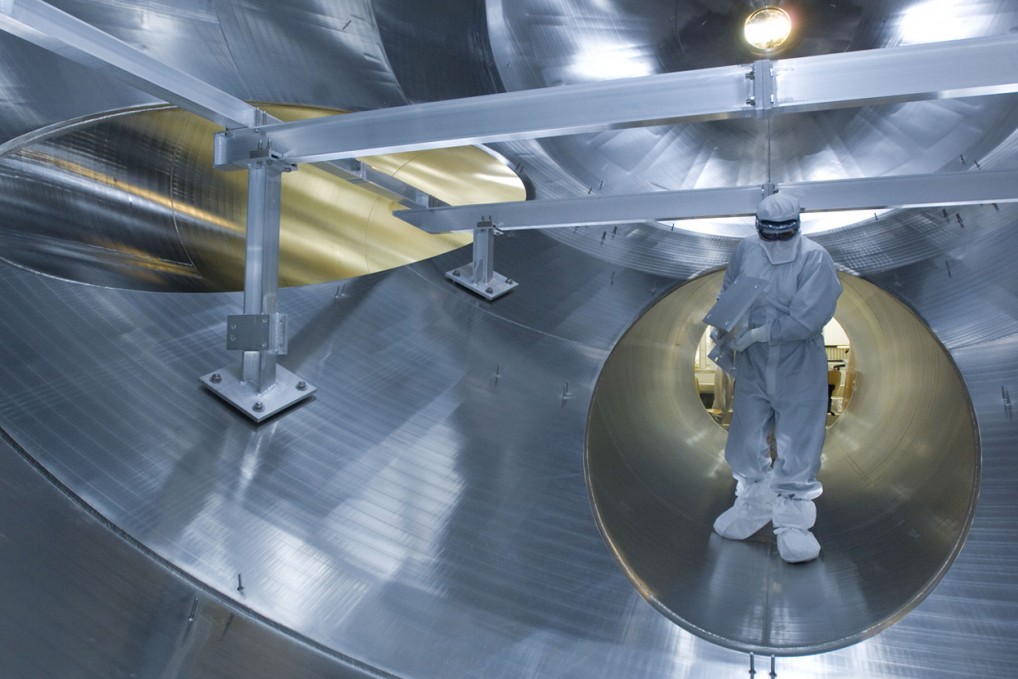
On June 11 the KATRIN experiment (Karlsruhe Tritium Neutrino Experiment) joined the fundamental search effort to determine the mass of neutrinos. What is the mass of neutrinos?  To answer one of the most fundamental and important open questions in modern particle physics and cosmology, the KATRIN experiment was designed and built by an international collaboration

KATRIN inauguration Read More »

OPERA collaboration presents its final results on neutrino oscillations

22 May 2018 The OPERA experiment, located at the Gran Sasso Laboratory of the Italian National Institute for Nuclear Physics (INFN), was designed to conclusively prove that muon-neutrinos can convert to tau-neutrinos, through a process called neutrino oscillation, whose discovery was awarded the 2015 Nobel Physics Prize. In a paper published today in the journal

OPERA collaboration presents its final results on neutrino oscillations Read More »

APPEC welcomes Hungary

APPEC is pleased to announce that at the latest General Assembly meeting held on May 17 2018 Hungary formally joined APPEC. The Hungarian Academy of Sciences (MTA) supports multi-messenger astrophysics focusing on gravitational wave research, exploring the characteristics of the high-energy Universe, as well as cosmology and the study of the properties of dark matter

APPEC welcomes Hungary Read More »