Needle-like structures on positively charged lightning leaders
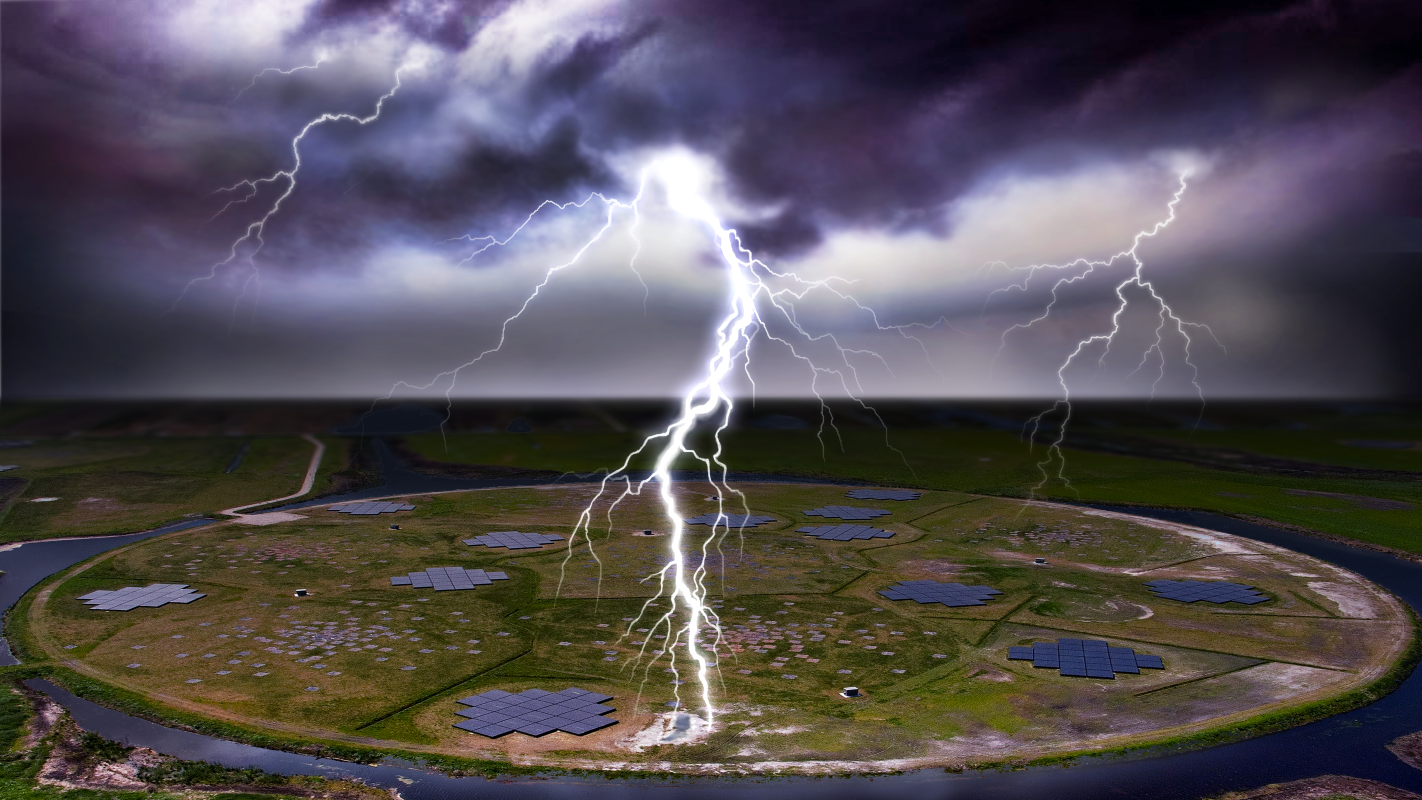
Lightning above LOFAR (montage). Credit: University of Groningen, Olaf Scholten
In contrast to popular belief, lightning often does strike twice, but the reason why a lightning channel is ‘reused’ has remained a mystery. Now, an international research team led by the University of Groningen has used the LOFAR radio telescope to study the development of lightning flashes in unprecedented detail. Their work reveals that the negative charges inside a thundercloud are not discharged all in a single flash, but are in part stored alongside the leader channel at interruptions. This occurs inside structures which the researchers have called needles. Through these needles, a negative charge may cause a repeated discharge to the ground. The results were published on April 18 in the science journal Nature.
“This finding is in sharp contrast to the present picture, in which the charge flows along plasma channels directly from one part of the cloud to another, or to the ground”, explains Olaf Scholten, Professor of Physics at the KVI-CART institute of the University of Groningen. The reason why the needles have never been seen before lies in the ‘supreme capabilities’ of LOFAR, adds his colleague Dr Brian Hare, first author of the paper: “These needles can have a length of 100 metres and a diameter of less than five metres, and are too small and too short-lived for other lightning detections systems.”
Low Frequency Array (LOFAR) is a Dutch radio telescope consisting of thousands of rather simple antennas spread out over Northern Europe. These antennas are connected with a central computer through fibre-optic cables, which means that they can operate as a single entity. LOFAR is developed primarily for radio astronomy observations, but the frequency range of the antennas also makes it suitable for lightning research, as discharges produce bursts in the VHF (very high frequency) radio band.
Reference:
Needle-like structures discovered on positively charged lightning branches; Brian Hare, Olaf Scholten et al.; „Nature“, 2019; DOI: 10.1038/s41586-019-1086-6
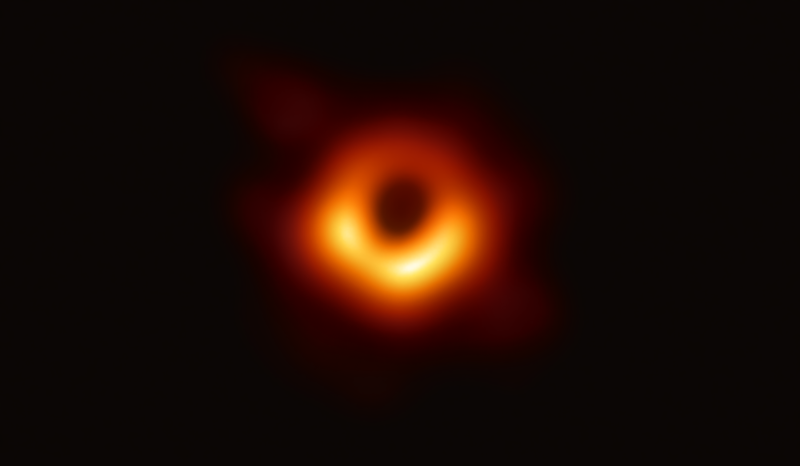
On April 10th 2019, the Event Horizon Telescope (EHT) Collaboration presented its first results – an image of the supermassive black hole in galaxy M87 – in multiple simultaneous press conferences around the world. The official EHT press release is available from their website.
For the first time scientists have succeeded in taking a direct image of a black hole. The EHT is a large telescope array consisting of a global network of radio telescopes. By combining data from several very-long-baseline interferometry (VLBI) stations around Earth and using several independent methods the first image of a black hole was produced.
This breakthrough was announced in a series of six papers published in a special issue of The Astrophysical Journal Letters. The image reveals the black hole at the center of Messier 87, a massive galaxy in the nearby Virgo galaxy cluster. This black hole resides 55 million light-years from Earth and has a mass 6.5 billion times that of the Sun.
On the slopes of the Mt. Elbrus, the 16th International Baksan School on Astroparticle Physics was held, organized jointly by the Institute for Nuclear Research (INR) of RAS and the Joint Institute for Nuclear Research (JINR) with the participation of the Astroparticle Physics European Consortium (APPEC) and the Russian Foundation for basicResearch (RFBR). After a 15-year break, the world-famous series of schools held near the Baksan Neutrino Observatory of the INR RAS was revived.
Among the participants of the School, there were 58 postgraduates, senior students, and young scientists from 9 countries of three parts of the world. Participation of European students became possible thanks to APPEC support; many Russian listeners were supported by JINR and the INR RAS, and the RFBR grant gave an opportunity to cover the business trip expenses of invited lecturers. “At the School, I saw a well-balanced composition of the deepened theoretical basis, the modern state of science and the view on future astrophysical experiments, and all this was presented by great lecturers. A large number of fairly good questions asked by participants, and their vivid interaction confirms the great success of the School that should definitely be held again in the same format,” as quoted by Thomas Berghöfer (DESY, Germany), who also delivered the lecture “Ultimate Low Light-Level Sensor Development”.
A more comprehensive report can be found in their press release and on the webpage which also provides additional material.
Rear-side view of a suspended mirror. Image credit: EGO/Virgo Collaboration/Perciballi.
The Virgo and LIGO detectors are ready to start the new Observing run called O3, lasting a whole year. The hunt for gravitational waves is set to start on April 1st when the European Virgo detector, based in Italy at the European Gravitational Observatory (EGO), and the LIGO twin detectors, located in the state of Washington and Louisiana (USA), will start to take data becoming together the most sensitive gravitational wave observatory to date.
During a one-year period the LIGO and Virgo Collaborations will register science data continuously, and the three detectors will operate as a global observatory. Since August 2017, the end of the second observation run O2, the two collaborations have intensively worked on their interferometers to improve the sensitivity and reliability. Scientists have also improved their offline and online data analysis and developed further the procedures for releasing Open Public Alerts: these will within minutes notify the physics and astronomy community when a potential gravitational-wave event is observed.
The scientific output of observation run O3 is expected to be tremendous and it will potentially reveal new exciting signals coming from new sources.
The Helmholtz Association is funding an international graduate school for multi-messenger astronomy, which is organised by DESY, the Humboldt University Berlin, the University of Potsdam and the Israeli Weizmann Institute of Science.
Multimessenger astronomy, the exploration of the Universe using a multitude of cosmic messengers, has led to several groundbreaking discoveries during the last few years, many of which built on significant contributions from the partner institutions.
With a new generation of instruments, advanced methods of exploiting their data, as well as extensive theoretical modeling, members of this research school have unique research opportunities in this emerging field.
The partner institutions are involved in several leading observatories, e.g. the Cherenkov Telescope Array, the IceCube neutrino observatory or the Zwicky Transient Facility, to which the students will have access.
Last week the International Workshop on Neutrino Telescopes took place in Venice, Italy. The focus of the workshop was Multimessenger Physics. Matching the topic of the conference the chair of the APPEC General Assembly Teresa Montaruli gave a talk on Multimessenger Physics and the APPEC strategy.
In the end a round table, moderated by T. Montaruli, with F. Halzen and C. Rubbia on Perspectives and Challenges of Multimessenger Astrophysics took place. F. Halzen discussed Multimessenger in connection to particle physics and the future of neutrino astronomy was discussed by A. Karle. The question was raised how APPEC will support the R&D: by increasing synergy of Gravitational Waves, Dark Matter and Neutrino Double Beta Decay experiments and involving CERN, Technology Fora and ECFA Panel.
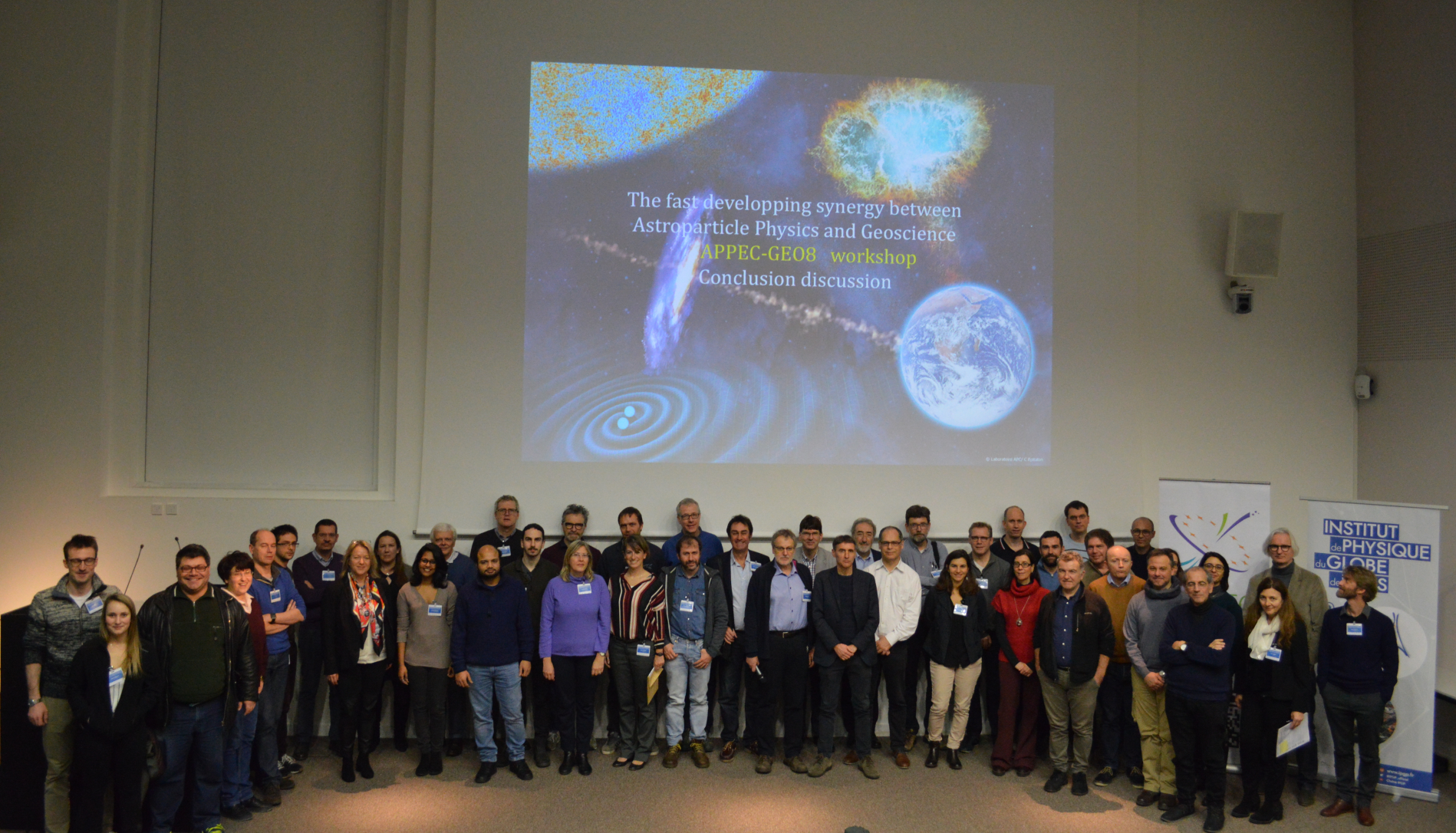
On February, 11-12 2019 the European Alliance for Earth Sciences – GEO.8, the Astroparticle Physics European Consortium – APPEC and the Academia Europaea organized the Workshop on Observatory Synergies for Astroparticle Physics and Geoscience at the Institut de Physique du Globe de Paris (IPGP) ( https://indico.in2p3.fr/event/18287/ )
More than 60 scientists and representatives of funding agencies and companies from 11 European countries gathered together. The aim was to discuss the scientific and technical overlapping topics of the two communities and to promote a common strategy for the future.
It is also important to note that in the framework of the EU-funded ASPERA ERANET, precursor of APPEC, three workshops in the period 2011-2012 had been organized and a brochure had been prepared in order to address and develop synergies between astroparticle physicists and geoscientists.
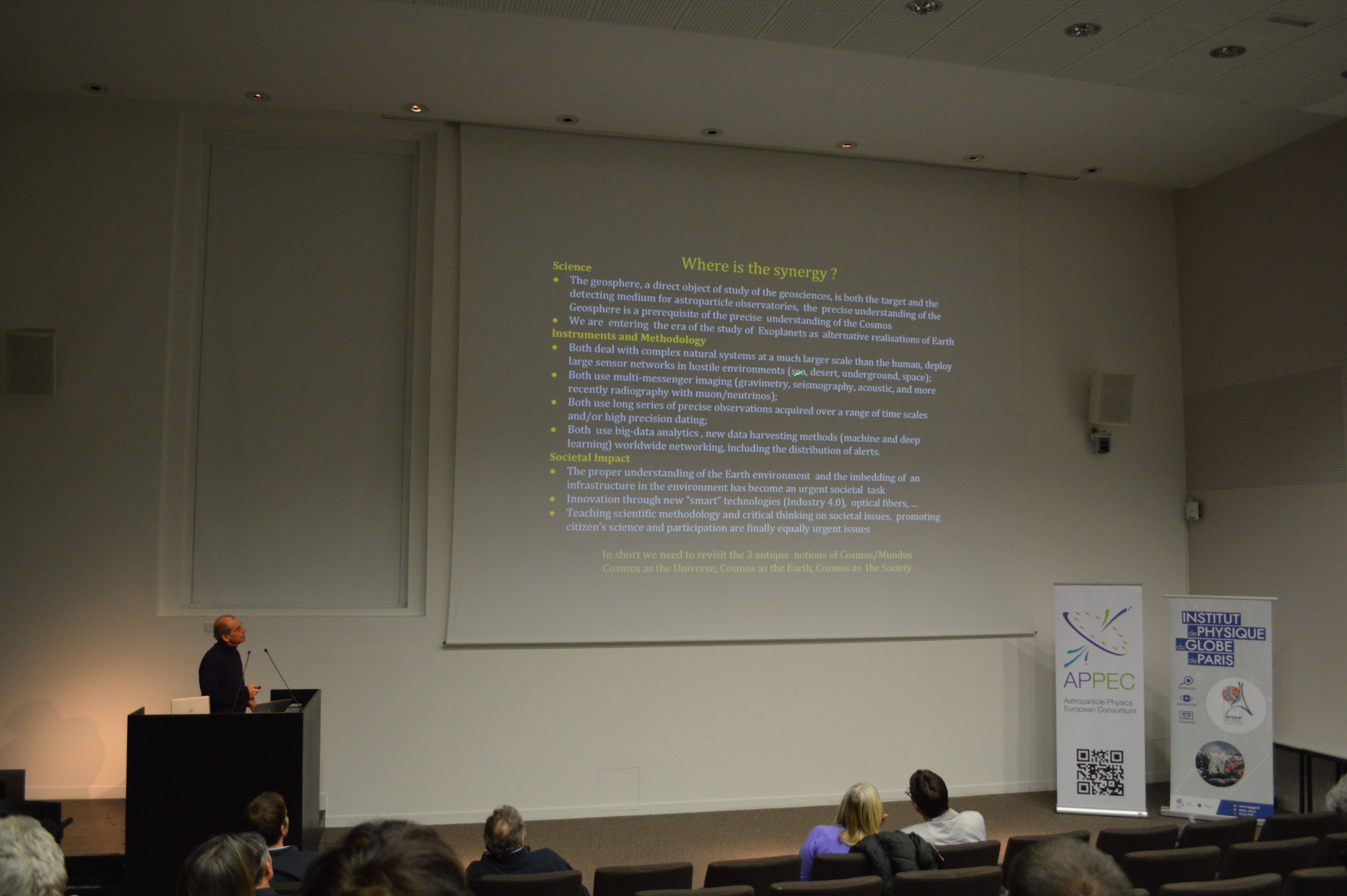
At IPGP, many overlapping aspects concerning science, technology/methodology and societal impacts have been identified. Some of the highlights are mentioned in the following.
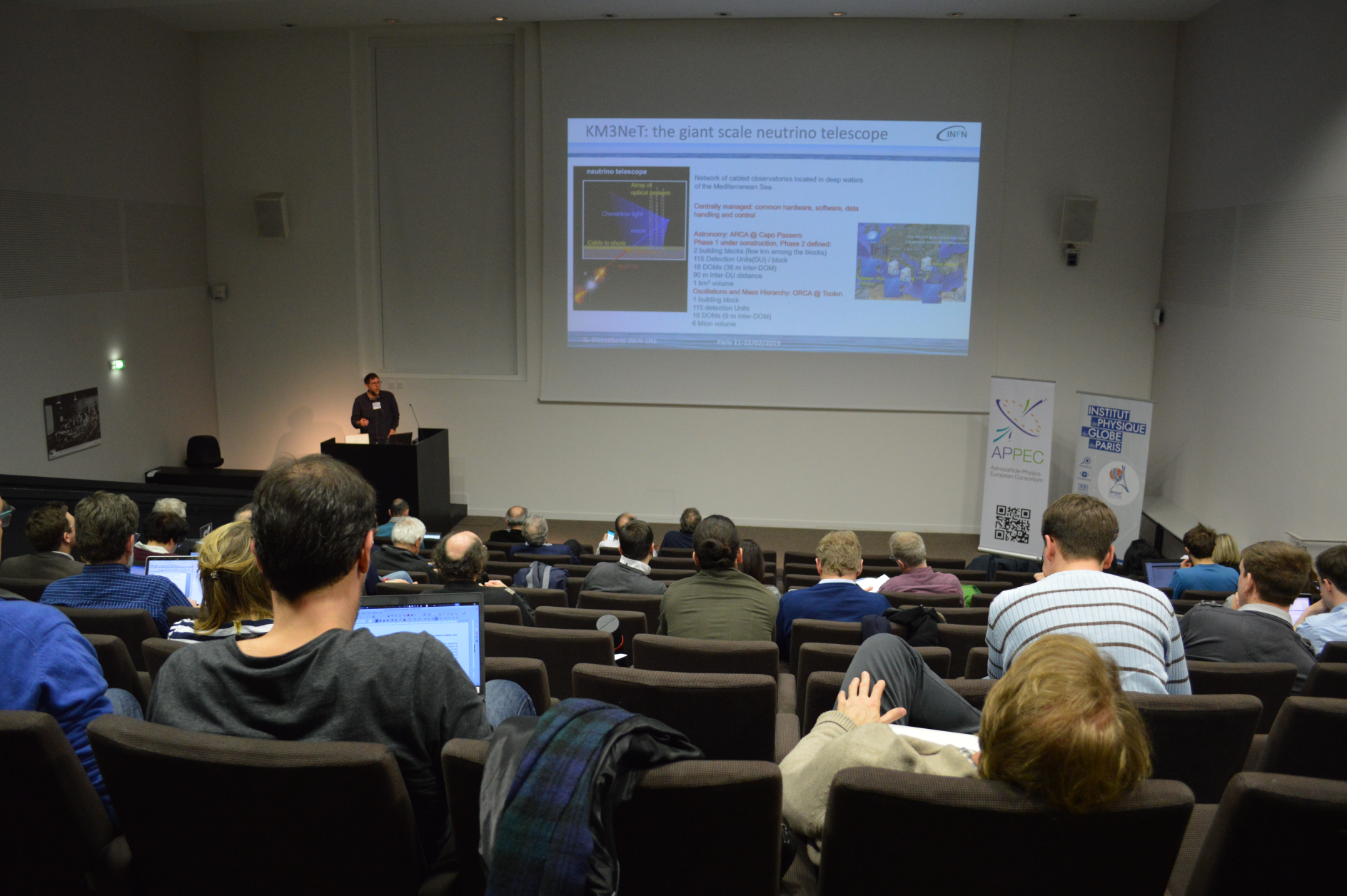
Neutrinos covering a broad energy spectrum and detected by different astroparticle underground, underwater and under-ice observatories have the potential to additionally give precious information about the Earth’s mantle and core.
Cosmic ray muons, are a very promising tool to complement to geophysical imaging techniques such as gravimetry to investigate underground structures, with many applications ranging from volcano monitoring to archaeology and underground structure prospection.
Methodologies developed in the context of gravitational wave research, e.g. for the monitoring of micro-seismic noise and/or stronger seismic incidents can have applications ranging from Earthquake Early Warning systems to the monitoring and risk evaluation of large civil infrastructures. Inversely, geoscientific techniques and algorithms realized for subsoil mapping and assessment of the seismic noise have a return to gravitational wave environmental noise hunting issues. Ocean imaging is another example of measurements that geoscientists and deep ocean neutrino observatories commonly perform, e.g. through the deployment of acoustic sensors. They can give precious information on seismic activity as well as hints about biological formations and the behavior of deep ocean life.
More generally, astroparticle physicists and geoscientists working with underground or underwater facilities/instrumentation can reveal with unprecedented detail the characteristics and the geological role of “deep-life” in Earth or Ocean.
An overview of recent discoveries on life in the deep Earth attracted much attention and confirmed the needs of investigations in extreme environment.
On the technical front, the innovations concerning large distributed seismic and gravimetry networks based on very new technologies have an impact on both sides of the astro-geo-synergy. A common interest arose thus on the recent developments using optical fibers as distributed acoustic or strain sensors monitoring large areas as well as means of implementation of precise timing and synchronization.Last but not least, a geoscience observatory in preparation, the Krafla Magma Testbed (KMT, www.kmt.is) was presented as an example of a possible locus of development of synergies around a large infrastructure.
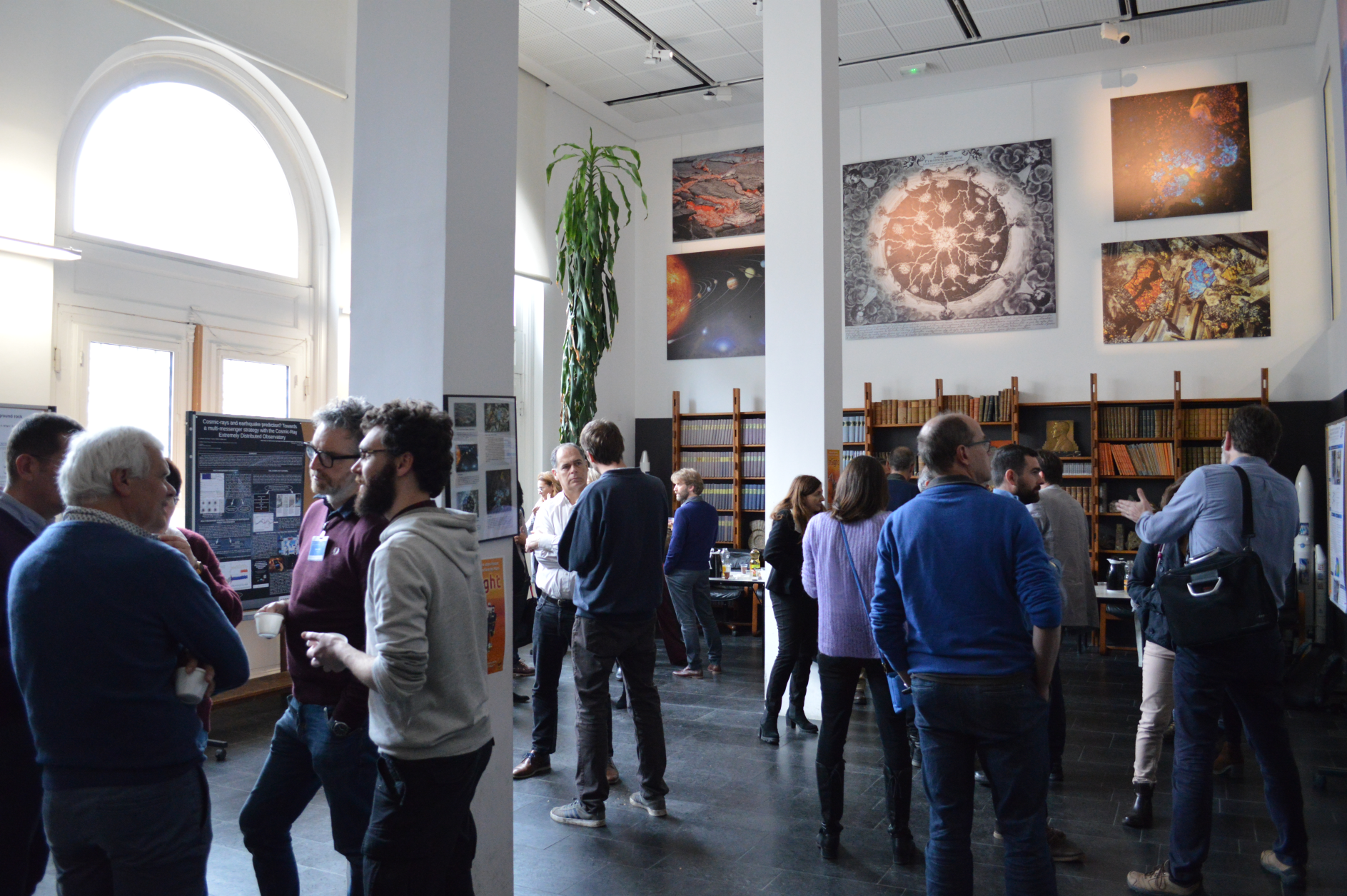
In the discussion that followed the presentation of the above characteristic but certainly not exhaustive list of synergies, the gathered agencies and leading scientists decided to pursue and enhance the work along the following lines:
The sustainable institution of yearly meetings on these common topics of synergy, eventually opening them to the global community. The effort to implicate ESFRI and Other World Class (OWC) infrastructures, from both fields in order to assess synergies has to be enhanced. The participants demanded therefore that next meetings could be organized close to large infrastructures of either field. The European Gravitational Observatory (EGO), host of the VIRGO gravitational-wave detector close to Pisa, in Italy, will thus be the location of the next workshop in 2020. It was also recommended to involve already existing overlapping communities, such as the geoneutrino one, already engaged in the organization of conferences and summer schools on shared topics.
The common future demands concerning computing and IT technology, already the subject of COST actions (e.g. COST CA17135 on Machine Learning in Geoscience and Gravitational Waves) have not been deeply treated in the workshop in Paris but should be considered in the near future and included in a dedicated event and/or in the planned conference of 2020.
In order to realize ambitious collective projects, the APPEC and GEO.8 representatives recommended to summarize the shared demands and aims in a roadmap for the upcoming years. An ad hoc working group for the preparation of this document will be soon established. The different funding agencies and organizations involved in APPEC, GEO.8, EGU and AGU – the European and American Geoscience Unions, could be then more easily engaged in joint activities involving for instance the realization of large infrastructures such as those proposed by the KMT Consortium.
Concerning the consortia links, the Chair of the Executive Board of GEO.8 will be invited to the General Assembly meetings of APPEC as an observer and vice-versa. The Earth and Cosmic Sciences section of the Academia Europaea can provide the framework for further discussing and exploring synergies between astroparticle physicists and geoscientists.
Last but not least, the EU framework programs Horizon 2020 and the future Horizon Europe are an opportunity to finance joint activities in different categories e.g. FET, ERC synergy, MSCA- COFUND/ ITN/ RISE, without excluding possible options in the pillars Industrial Leadership and Societal Challenges, and the respective successors in FP9.
This document (here as pdf) is signed by the organizing team, the representative of Academia Europaea, the chair of APPEC and the Executive Secretary of GEO.8: Michel Diament, Stavros Katsanevas, Francesca Moglia, Paolo Papale, Teresa Montaruli and Alexander Rudloff
The European Strategy for Particle Physics provides a clear prioritisation of European ambitions in advancing the particle physics science. The Strategy is due to be updated by May 2020 to guide the direction of the field to the mid-2020s and beyond.
To optimally inform all participants in the process, the Secretariat of the European Strategy Group (ESG) called upon the particle physics community across universities, laboratories and national institutes to submit written input by 18 December 2018 to prepare the discussions on the Strategy Update which will take place in 2019.
All of the proposals will be analysed at a public scientific symposium that will be held in Granada, Spain in May 2019. The contributions and discussions will help shape the long-term priorities of particle physics in Europe. These priorities will be formalised at the beginning of 2020 in the update of the European Strategy for Particle Physics.
The aim of the School is to cover topics in both experimental and theoretical astroparticle physics. The program of the school will include three main lecture courses followed by tutorials, practical and discussion sessions, together with several separate lectures, special session for participants presentations and excursion to underground laboratories of the Baksan Neutrino Observatory. The School is addressed to advanced masters students, graduate students and postdocs working in astroparticle physics.
The key features of the school are:
* Three 6-lecture courses by leading experts (neutrino detection, machine learning, multimessenger astrophysics), supplemented by tutorials, practical work, more lectures and participants’ talks.
* Excursion to Baksan Neutrino Observatory underground labs (4800 mwe).
* Location in a national park close to Mt. Elbrus (5642), one of the “Seven Summits” of the World, with possibilities for skiing and hiking during long mid-day breaks.
* Low registration fee (325 EUR including full-board lodging, airport transfer, banquet and excursion) and fellowships covering the fee.
Topic: Active and passive stabilization systems and sensors
The Astroparticle Physics European Consortium APPEC is inviting technology experts from industry and academia to the APPEC Technology Forum 2018 (ATF 2018) on Nov 12-13 2018 in Veldhoven, near Eindhoven in The Netherlands.
For the sixth year, ATF 2018 will provide the necessary framework for discussions among all the stakeholders fostering new R&D activities, improving existing technology and supporting current and emerging intra- and extra-field collaborations.
With the intention of laying the foundations for future cooperation involving industry and academia, this year the ATF 2018 will concentrate on the development of holders and positioning systems for high-stability setups, where vibrations can be detected with special sensors and then suppressed, extending to other forms of active and passive stabilization needed in many scientific experiments. This technology can have a wide range of applications, for example, where mirrors, magnets and detectors have to be precisely positioned, or temperature and pressure have to be accurately stabilised.
The fields of application are also numerous, ranging from astroparticle, particle and detector physics to geology, quantum mechanics and many other disciplines. The potential for innovative applications is large and we are convinced there will be the opportunity for an effective exchange of ideas and experiences among the participants.
ATF 2018 is taking place immediately before the Precision Fair 2018, at the same location which will provide even more opportunities for knowledge transfer and collaboration. The Fair is focused on development and production of high-tech components, modules and systems, aimed at meeting the ever increasing demands on shape, size and accuracy of fast precision positioning. Two sessions on the first day of the Fair will be dedicated to the achievements and future demands of precision technology in Big Science Projects.
Participants from CERN, the KATRIN experiment and Einstein Telescope (ET) community have already confirmed they will present their high-precision technology at the Forum. Register here to attend: https://indico.desy.de/indico/event/20154/registration/


 On the slopes of the Mt. Elbrus, the 16th International Baksan School on Astroparticle Physics was held, organized jointly by the Institute for Nuclear Research (INR) of RAS and the Joint Institute for Nuclear Research (JINR) with the participation of the Astroparticle Physics European Consortium (APPEC) and the Russian Foundation for basicResearch (RFBR). After a 15-year break, the world-famous series of schools held near the Baksan Neutrino Observatory of the INR RAS was revived.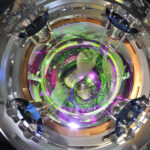

 Neutrinos covering a broad energy spectrum and detected by different astroparticle underground, underwater and under-ice observatories have the potential to additionally give precious information about the Earth’s mantle and core.
 Ocean imaging is another example of measurements that geoscientists and deep ocean neutrino observatories commonly perform, e.g. through the deployment of acoustic sensors. They can give precious information on seismic activity as well as hints about biological formations and the behavior of deep ocean life.
 In the discussion that followed the presentation of the above characteristic but certainly not exhaustive list of synergies, the gathered agencies and leading scientists decided to pursue and enhance the work along the following lines:
 The
The