On Tuesday 31 October thousands of people from all over the world joined in a global celebration of dark matter, one of the biggest mysteries of our Universe.
Credit:STFC
On Dark Matter Day 24 countries marked the day with events.
Dark matter is a huge part of the Universe that scientists’ calculations tell us exists, but that has never been observed. Yet, together with dark energy, scientists believe it makes up 95 percent of the total universe. What we can see, and the matter that scientists can account for is just five percent of the Universe, the rest is a mystery.
To highlight the international effort to find dark matter, Dark Matter Day was created by the Interactions collaboration, a global network of particle physics communicators.
Events were held all over the world, in the US, Canada, France, Brazil and Norway to name a few.
All in all, Dark Matter Day was a huge success, leaving behind a legacy of greater understanding of and appreciation for dark matter research and with many on the hashtag #darkmatterday on Twitter calling it the new Halloween!
Will we do it all again next year? Watch this space.
More than 100 years since they were first theorised by Albert Einstein – and two years since they were first detected here on Earth – the study of gravitational waves has been awarded a Nobel Prize.
The 2017 Nobel Prize for Physics has gone to Professors Kip Thorne, Barry Barish and Rainer Weiss of the Ligo-Virgo collaboration, key figures in detecting the long-theorised ripples in space-time ‘for decisive contributions to the LIGO detector and the observation of gravitational waves’.
The detection was a truly international effort and has captured headlines across the world ushering in an entirely new era of astronomy research.
“I am delighted that this year’s Nobel Prize has gone to our gravitational wave research”, said Jo van den Brand, spokesperson for the Virgo Collaboration.
“The detection of these minute wrinkles in spacetime constitutes an extraordinary achievement. It is the start of a new chapter in our study of the Universe”
Since the first discovery in 2016, three more gravitational waves generated by two colliding black holes have been detected. The most recent of these detections, on August 14, 2017, was the first one with three detectors at the same time, namely the two Advanced LIGO detectors and the upgraded Advanced Virgo instrument, which jointly operated for 4 weeks starting August 1, 2017.
LIGO Executive Director, David Reitze, said: “I’m positively delighted that the Nobel Committee has recognized the LIGO discovery and its profound impact on the way we view the cosmos. This prize rewards not just Kip, Rai, and Barry but also the large number of very smart and dedicated scientists and engineers who worked tirelessly over the past decades to make LIGO a reality.
Notes to editors
Credit: Nobel Prize
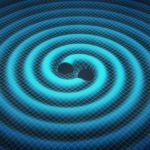
Gravitational waves are ripples in space caused by massive cosmic events such as the collision of black holes or the explosion of supernovae. They are not electromagnetic radiation, and as a result have been undetectable until the technological breakthroughs at LIGO enabled by UK technology. The waves carry unique information about the origins of our Universe and studying them is expected to provide important insights into the evolution of stars, supernovae, gamma-ray bursts, neutron stars and black holes. However, they interact very weakly with particles and require incredibly sensitive equipment to detect.
LIGO is operated by Caltech and MIT with funding from the USA’s National Science Foundation (NSF), and supported by vital input from more than 1,000 researchers around the world.
The Virgo collaboration consists of more than 280 physicists and engineers belonging to 20 different European research groups: six from Centre National de la Recherche Scientifique (CNRS) in France; eight from the Istituto Nazionale di Fisica Nucleare (INFN) in Italy; two in The Netherlands with Nikhef; the MTA Wigner RCP in Hungary; the POLGRAW group in Poland; Spain with the University of Valencia; and EGO, the laboratory hosting the Virgo detector near Pisa in Italy.
They are studying new phenomena in our Universe for the very first time, whilst honing novel technology to allow gravitational wave detectors to probe even further out into our cosmos.
Preparatory activities have been ongoing for a few years now, however, the International Axion Observatory (IAXO) has recently reached an important milestone with the formal constitution of the collaboration in a meeting that took place on 3-4 July 2017 at DESY, Hamburg. An initial set of 17 institutions from around the world have approved a collaboration agreement, setting the rules and basic management bodies of the collaboration.
IAXO is a next generation axion helioscope whose baseline goal is to search for axions from the Sun, with sensitivity largely beyond current limits on this elusive particle. In particular, IAXO will enjoy signal-to-noise ratio 10000 times larger than its predecessor the CERN Axion Solar Telescope (CAST). IAXO will uniquely probe a region of the axion parameter space that is strongly motivated by theory, astrophysics and cosmology.
The near-term goal of the collaboration is to build a scaled-down prototype version of the experiment, called babyIAXO, to probably be located at DESY. It will pave the way to the full experiment and will deliver intermediate relevant physics outcomes.
Antonio Masiero, deputy head of INFN in Italy and professor of theoretical physics at the University of Padua has been appointed by the APPEC General Assembly as the new Chair of the APPEC organisation commencing in January 2017.
Professor Masiero was elected Chair of APPEC (Astroparticle Physics European Consortium) by representatives of the 13 member countries of the group which coordinates research in Astroparticle Physics in Europe.
At the same General Assembly Job de Kleuver, from the Dutch FOM Institute for International Affairs and Large Scale Facilities, was elected Secretary General. Both will take office on 1 January 2017, respectively succeeding Professor Frank Linde (Nikhef, Netherlands) and Thomas Berghöfer (DESY, Germany), at the end of their mandates.
Speaking of his appointment Professor Masiero said “”It is really an honour and a responsibility to be asked to lead APPEC through the next few years when we will be putting in place the key recommendations made by the forthcoming APPEC road map due to be published early in 2017. Astroparticle physics now represents an extraordinarily exciting opportunity for science to explore the uncharted land beyond the Standard Models of particle physics and cosmology”.
Current APPEC Chair Professor Linde welcomed the appointments and said “Congratulations to Antonio on being appointed APPEC Chair. You will have a busy time ahead of you with the roadmap soon to be published. I am sure you will do an excellent job as our new APPEC Chair.”
Job de Kleuver said “Astro particle physics is an exciting field of science and in recent months we have seen research breakthroughs with hopefully more on their way. The implementation of the new APPEC roadmap is an ambitious effort and I am fully motivated to take on responsibility for those plans, together with Antonio, and to strengthen the ties between the APPEC partners, leading to both the realisation of new research infrastructures and enabling European Astroparticle Physics to continue to flourish.”
Appec is the consortium that brings together European agencies that support research in Astroparticle Physics at the national level, with the primary objective to promote and facilitate cooperation within the growing community of astroparticle physicists in Europe. Astroparticle physics, that the encounter between particle physics, cosmology and Astrophysics, is a relatively recent and rapidly growing field of research. With physics experiments in the underground Labs and submarines, extensive networks of ground-based telescopes to detectors in space, Europe is gathering more and more fascinating challenges, aiming to study the elusive particles and uncover the darkest mysteries about the structure of the universe.
Biographies
Antonio Masiero was born in Vicenza in 1955 and since 2001 he has been Professor of physics at the University of Padua and was Director of the local chapter of INFN. A graduate of the University of Padua in 1978 (with a thesis on the unification of the fundamental interactions), he spent eight years of research abroad (postdoc at the University of Geneva, CERN and at the Max Planck Institut Munich, assistant professor at New York University) in the period 1979-1987. His research career began at INFN in 1982 at the INFN Padova and later a senior researcher in the same section in 1987. He has been a college professor since 1994, first as extraordinary Professor at the University of Perugia, then to SISSA (international school for advanced studies) in Trieste and then at the University of Padua. His research has shown particular attention to signs of new physics beyond the Standard model. Antonio is author of about 200 scientific publications and he has been an invited speaker at more than 100 conferences and international schools.
Job de Kleuver graduated in experimental physics in 1989. After two years of research in physics, in 1991 he moved to Research Policy Department of FOM, the Research Council in the Netherlands. He is currently responsible in charge of International Affairs and large infrastructures. For 25 years, he has been involved in scientific policy in various fields of physics, with a specific focus on large research infrastructures, such as the Dutch laboratory experiments at LHC HFML and since 2000 astroparticle physics. He is Secretary of the board of the collaboration Nikhef and a member of various committees including HFML domestic, international and European projects.
In the lovely surroundings of the Carl-Friedrich von Siemens Stiftung at Schloss Nymphenburg in Munich the SENSE Kick-off workshop took place on 27 September.
Scientists, international experts and company representatives gathered to signal the start to the SENSE project, which is funded as FET-Open in Horizon 2020.
Dr Thomas Berghöfer, the general secretary of APPEC, explained to the audience the long way to SENSE, which was developed after the experience of two APPEC/ ASPERA Technology Fora on photosensors, and discussions on the LIGHT and other conferences to coordinate and support R&D activities towards the ideal low light-level photosensor.
The project consortium – which consists of the partners DESY, University of Geneva, Max-Planck Institute for Physics in Munich, and the Karlsruhe Institute of Technology – and the work packages were introduced in the following talks. Further talks gave an introduction to current status and challenges in in the area of low light level sensors. Lively discussions after the talks and in the breaks showed strong interest on the project from the audience.
Dr Razmik Mirzoyan, leader of work package “Roadmapping & Monitoring” mentioned in his talk that he is “dreaming of a sensor with a photon detection efficiency of 70%” – so let´s start working together on sowing the seeds for substantial sensor developments!
All the presentations from the conference can be found on the kick-off website.
From 29 August – 3 September, 60 scientists from across the world gathered in the village of Listvyanka at the shore of Lake Baikal during The Three Messenger Conference writes Dr Vladimir Bozhilov
Somewhat contrary to your first expectations, Siberia – a tremendously vast region that accounts for 77% of the land of the Russian Federation – can be a magnificent and sunny place. At least at the shores of Lake Baikal at the end of August or in the early days of September. The 60 scientists who just a few weeks ago took part in the Three Messenger Conference at the village of Listvyanka at Lake Baikal enjoyed nice weather, and an intense amount of lectures and networking, focused on the three astroparticle messengers.
The conference from 29 August – 3 September was organized by APPEC (Astroparticle Physics European Consortium), its transnational partner JINR (Joint Institute for Nuclear Research) in Dubna, the Institute for Nuclear Research of the Russian Academy of Sciences, together with the Lomonosov State University in Moscow, and the Irkutsk State University. The meeting provided a unique opportunity for exchanging cutting-edge science ideas and for fostering collaborations between scientists from all over Europe, America, and Russia.
The name “Three Messenger” is inspired by the three basic cosmic messengers that scientists use to study the high energy Universe. Remember the discovery of gravitational waves announced in February 2016? Combined with ultra-high energy neutrinos and cosmic and gamma rays, these are the tools astroparticle physics uses to study some of the most exciting phenomena in nature. The merging of two black holes, the active hearts of distant galaxies, and the mysterious events that produce gamma ray bursts are just a few examples.
During the conference, colleagues from around the world also learned more about the history of astroparticle physics in the Baikal region. It dates back to the 1960s, as explained by Prof. Nikolay Budnev, director of the Applied Physics Institute at the Irkutsk State University. Prof. Budnev was also head of the Local Organizing Committee, which did a great job. In between all the lectures and proceedings, the participants could still have a boat ride on Lake Baikal and follow the Great Baikal Trail. After the conference, participants had the chance to make an excursion to the TAIGA experiment, a combined cosmic and gamma ray experiment currently built in the Tunka Valley. In one of the upcoming newsletters, we will describe the TAIGA experiment in greater detail. The TAIGA site visit was accompanied by a film team from Russian television.
So next time you hear Siberia, think science, think adventure, think astroparticle physics. And astroparticle physics is always hot and always rocks!
Dr. Vladimir Bozhilov is a Chief Assistant Professor in the Dept. of Astronomy at the Faculty of Physics, University of Sofia, Bulgaria. He is also the editor-in-chief for BBC knowledge Bulgaria magazine.
In April, we had reported that the SENSE project will be funded by the European Commission as a Coordination and Support Action in the domain of Future Emerging Technologies. After successful negotiations the three-year project, which can be seen as a satellite activity of APPEC, will be starting this month.
The aim of SENSE is to coordinate research and development efforts in academia and industry in low light level sensoring. This initiative has emerged from the series of Technology Fora organized within the frame of ASPERA and APPEC.
We cordially invite all interested colleagues from academia and industry for the SENSE kick-off workshop. This one-day workshop will be held on 27 September, 2016 in Munich at the Carl-Friedrich-Siemens Foundation in Nymphenburg Castle. Participation in the workshop is free, but registration is required.
The SENSE work programme is defined by the following activities:
set up an experts group and conduct the development of a European R&D roadmap towards the ultimate low light-level (LLL) sensors,
monitor and evaluate the progress of the developments with respect to the roadmap,
coordinate the R&D efforts of research groups and industry in advancing LLL sensors,
prepare a database of light sensor specifications and lab equipment, test stands and expertise available in the different institutions,
liaise with strategically important European initiatives and research groups and companies worldwide,
create the Technology Exchange Platform to enable an efficient exchange between researchers and developers being involved in SENSE,
prepare training events and material to attract and teach especially young researchers,
work out a technology training session that can implemented in any existing summer school.
Further information and registration for the SENSE kick-off workshop can be found on the SENSE website.
APPEC mourns the loss of Roberto Petronzio, who passed away on 28 July 2016. Roberto was one of our founders, a member of the General Assembly from 2000 to 2011 and chair of APPEC from 2004-2005.
He studied physics under Nicola Cabibbo at the University of Rome La Sapienza and went on to work at CERN as a fellow, and from 1979-1986 as a CERN staff member. He was a visiting professor at École Normale Superieure in Paris, Max Planck Institute, Munich, and Boston University. In 1987, he became professor of theoretical physics at University of Rome Tor Vergata. He was appointed president of INFN in 2004, holding the role for seven years.
Roberto, mainly in collaboration with some of the most prominent representatives of the “Rome Theory Group”, Cabibbo, Luciano Maiani, Guido Altarelli, and Guido Martinelli, gave very relevant contributions to the study of various aspects of particle phenomenology, in particular in the field of strong interactions.
Roberto was a champion of the SuperB accelerator project – a B-factory intended to cover a 1.3km loop in the Rome/Lazio area. Ultimately the project could not be hosted in Italy, but the technology he worked on was implemented in Japan. He also worked on the development of INFN’s supercomputer capability – the INFN Array Processor Experiment – to design and construct high performing computers for quantum chromodynamics calculations. Roberto’s work resulted in 190 published papers and books, with more than 11,000 citations.
Luciano Maiani, chair of the International Centre for Theoretical Physics, said: “A fine mathematical mind, Roberto never lost sight of the relationship that goes between theory and experiment and was able to suggest meaningful experiments himself, to test delicate aspects of the theory. For this, he was widely appreciated a respected.”
Antonio Masiero, chair of the APPEC Scientific Advisory Committee, said: “Roberto often emphasized the need for European astroparticle physics to find a natural centre of gravity, as particle physics did so naturally at CERN as its major laboratory. He was determined for APPEC to fill that coordinating role for astroparticle physics, and his commitment to the growth and development of the discipline was central to his presidency of INFN.”
Roberto suffered a stroke in 2014, and was forced to retire through poor health in 2015. He passed away in hospital in Rome. His influence on APPEC will last long into the future.
3rd International Neutrino Meeting on Large Neutrino Infrastructures
News from the 3rd International Neutrino Meeting on Large Neutrino Infrastructures – 6 July 2016
Press Release concerning the 3rd International Neutrino Meeting on Large Neutrino Infrastructures hosted by KEK on the 30-31st of May 2016 “Strengthening global coordination on large neutrino infrastructures”
Funding-agency1 and laboratory representatives2 gathered at the 3rd International Meeting on Large Neutrino Infrastructures3 on May 30-31, 2016 at KEK in Tsukuba, Japan to gauge the progress in the global coordination of projects that had been launched during the first and second international meetings4 and to discuss the next steps in the global coordination.
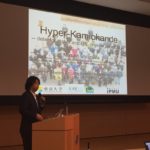
The meeting was opened by the 2015 Nobel Prize winner Takaaki Kajita who commented that “Very large-scale experiments will be needed to fully explore neutrino properties. These large-scale experiments will also naturally have astrophysics potential and increase the sensitivity of searches for proton disintegration.” He went on to note that to realise the necessary very large-scale facilities would require “… international coordination and collaboration” and defined the goals of the meeting to be to “… discuss the physics cases and global strategy, including astrophysics and proton decays, which are the part of the aim of this series of meetings; have follow-up discussions of the ICFA Neutrino Panel’s5 roadmap discussion document”6 and to discuss “… the various neutrino experiments, including Hyper-Kamiokande7, toward the realization of an efficient and productive global neutrino program.”
In this meeting, the funding-agency and laboratory representatives welcomed the important steps that had been made towards the realisation of the Hyper-Kamiokande (Hyper-K) experiment7. The international proto-collaboration has developed new, high-sensitivity, large-aperture photomultiplier tubes that substantially reduce the total project cost without unduly compromising its potential to address important questions in particle and astroparticle physics and in nucleon decay. The re-optimisation of the Hyper-K project is accompanied by the J-PARC accelerator-upgrade plan that will deliver 1.3 MW of proton-beam power on target and novel, high-performance near detectors. A recent review of the KEK Project Implementation Plan concluded that the “… J-PARC upgrade for HK is the highest priority”; already, the critical Main Ring power-supply upgrade has been approved. The two host institutes, IPNS/KEK and ICRR/UTokyo, have established a standing International Advisory Committee that has already begun to review the program in all its aspects.
T2K8, which exploits the J-PARC accelerator facility and the Super-Kamiokande (Super-K) large water Cherenkov detector, have delivered the first measurements of electron-neutrino appearance phenomena and is seeking evidence for leptonic CP-invariance violation. The Super-K collaboration has been making precise measurements of atmospheric and solar neutrinos, world leading searches for cosmic neutrinos from supernova explosions and baryon-number-violating proton-decay signals. A programme of incremental upgrade of the beam power of the J-PARC Main Ring will enhance the discovery potential of T2K, T2K phase II and, eventually, Hyper-K.
The agency and laboratory representatives were impressed by the rapid convergence of the efforts of the long-baseline, wide-band-beam community, which has developed a scientific programme based on an ambitious Long Baseline Neutrino Facility (LBNF) at Fermilab and the Deep Underground Neutrino Detector (DUNE) project9 at the Sanford Underground Research Facility (SURF)10. A rich medium-scale Short Baseline Neutrino (SBN) Program11 continues to be developed at Fermilab. The SBN Program, which encompasses the SBND12, MicroBooNE13 and ICARUS14 experiments, seeks to test the light-sterile-neutrino hypothesis and contribute to the development of liquid-argon-TPC technology. This year MicroBooNE started to take data, launching the SBN Program. The DUNE collaboration now consists of more than 850 scientists and engineers from over 149 institutions in 29 countries around the globe.
Significant milestones met in the last year include the creation of the DUNE collaboration, its governance and DUNE’s scientific and technical specification, the endorsement of the LBNF/DUNE programme in two DOE critical design reviews, the approval of the LBNF/DUNE conceptual design and the agreement that excavation for LBNF will start in 2017. The excellent progress in the development of proton beam-power at Fermilab through the Proton Improvement Plan15 and the strides taken in the “ProtoDUNE” programme which will demonstrate the feasibility of large-scale liquid-argon (LAr) TPCs read out using the single-phase (SP) and double-phase (DP) techniques were noted.
The CERN Neutrino Platform16 is a welcome structure to foster the active involvement of Europe and CERN in the U.S. and Japanese neutrino infrastructures. Six projects have now been approved, including refurbishment of ICARUS to be the far detector for the SBN Program at Fermilab, two large-scale prototype detectors for DUNE, and a future muon spectrometer for T2K. Much of this work is underpinned by agreement on the CERN contributions to the Fermilab SBN and LBNF/DUNE programmes.
The importance of the complementarity between Hyper-K and DUNE6 was reconfirmed. Each experiment has been optimised for the measurement of electron-neutrino appearance at the same L/E but at baselines, L, and neutrino energies, E, that differ by almost a factor of 5. The longer baseline will allow LBNF/DUNE to determine the mass hierarchy. DUNE and Hyper-K apply different detection techniques, which are matched to the relevant neutrino-energy spectrum, to deliver comparable sensitivities in the search for CP-invariance violation. Both detectors will accumulate large atmospheric-neutrino samples that will enhance the measurement of standard-neutrino-model parameters and allow the study of neutrino astrophysics including solar-neutrinos and supernova-neutrinos. DUNE and Hyper-K have complementary sensitivity to proton decay.
The agency and laboratory representatives were also impressed by the conceptual and technical progress of the reactor-based liquid-scintillator experiments, JUNO17 and RENO-5018, which have the potential to determine the mass hierarchy and to make precise measurements of a complementary set of oscillation parameters. Ice at the South Pole (PINGU)19, sea-water in the Mediterranean (ORCA)20, and the Iron Calorimeter (ICAL) at the India Neutrino Observatory (INO)21 can also enhance the potential of the accelerator-based neutrino-oscillation programme using atmospheric neutrinos. The complementarity of these large liquid-scintillator/underwater/ice detectors to Hyper-K and DUNE was welcomed.
There is a diverse physics program in the development of both single-beta-decay measurements and neutrino-less double-beta-decay measurements, which explore the region of parameter space in which neutrino masses are degenerate. The ambitious goal for the neutrino-less double-beta decay programme over the next decade is to deliver the sensitivity necessary to cover the inverted-mass-hierarchy region. Achieving this goal will require the enrichment of samples of the relevant isotopes and ton-scale detectors, thereby boosting the size of the experiments. Further international cooperation will be valuable in the development of the technologies required to deliver this ambitious experimental programme.
The agency and laboratory representatives noted that the precision of cosmological constraints on the total mass of neutrinos continues to improve and provides important and complementary constraints by measuring the influence of neutrinos on the growth of structure in the Universe. Future cosmic surveys, such as DESI, LSST, Euclid, WFIRST and CMB S4, will further improve these constraints.
The ICFA Neutrino Panel presented its recent roadmap discussion document6. The funding-agency and laboratory representatives took note of the Panel’s interim recommendations and endorsed the peer-group- and stakeholder-consultation process by which the Panel proposes to finalise its roadmap. The document provides a welcome platform for the discussion of the full exploitation of the present programme, the evolution of the long-baseline LBNF/DUNE and Hyper-K programmes and the development of the hadro-production and cross-section measurement programmes necessary to maximise the overall scientific output. The Panel’s report also sets in context long-term opportunities such as the Neutrino Factory and ESSnuSB. The Panel has identified a decision point at around 2020 when the future of the sterile-neutrino search and cross-section measurement programmes can be defined and recommends that experiments such as nuSTORM and IsoDAR be evaluated in preparation for the decision point.
The agencies and the laboratory directors thanked the ICFA Neutrino Panel and the IUPAP Astroparticle Physics International Committee (APPIC) for organising the meeting. The 4th International Neutrino Meeting on Large Neutrino Infrastructures will take place in Europe in 2017.
Katie Yurkewicz
Fermilab Communication Director
Katie@fnal.gov
Footnotes
In the meeting the agencies were represented by (in agency alphabetical order): A. Lankford (Chair High Energy Physics Advisory Panel, representing Department of Energy), Ursula Bassler (Director Institut National de Physique Nucléaire et Physique des Particules, IN2P3/CNRS), David Wark (STFC), H. Tanaka (representing the National Science and Engineering Research Council of Canada, NSERC), Gabriella Catanesi (representing Istituto Nazionale di Fisica Nucleare (INFN), Italy)
In the meeting the directors of laboratory present were (in laboratory alphabetical order): Takaaki Kajita (Director, Institute for Cosmic Ray Research, University of Tokyo), Yasuhiro Okada (Executive Director, High Energy Accelerator Research Organization), Reiner Kruecken (Deputy director, TRIUMF), Hitoshi Murayama (Director, Kavli IPMU), Masayuki Nakahata (Director, Kamioka Observatory, ICRR, U. Tokyo), Naohito Saito (Director, J-PARC), Jun Cao (Assistant director of IHEP, China), Soo-Bong Kim (Director of RENO laboratory, Korea). Yury Kudenko (Representing INR, Russia), Gobinda Majumder (Representing the India-Based Neutrino Observatory INO), Yoshitaka Itow (Chair, Cosmic Ray Committee, Japan), Bonnie Fleming (Representing Fermilab), Kunio Inoue (Director of Tohoku University’s Research Center for Neutrino Science, ApPIC), Natalie Roe (LBNL, incoming chair of ApPIC), Stavros Katsanevas (representing APPEC), Marzio Nessi (representing CERN neutrino platform), Alain Blondel (observer, representing Switzerland), The ICFA neutrino panel was represented by K. Long.
The LIGO Scientific Collaboration and the Virgo collaboration have identified a second gravitational wave event in data from the Advanced LIGO detectors. The event was detected early on the morning of 26 December 2015, following on from the first direct detection of a gravitational wave in September.
The December gravitational waves were produced during the final moments of the merger of two black holes around 1.4 billion years ago. The black holes, 14 and 8 times the mass of the sun, merged to produce a single, more massive spinning black hole that is 21 times the mass of the sun.
“It is very significant that these black holes were much less massive than those observed in the first detection,” said Gabriela Gonzalez, LIGO Scientific Collaboration (LSC) spokesperson and professor of physics and astronomy at Louisiana State University. “Because of their lighter masses compared to the first detection, they spent more time—about one second—in the sensitive band of the detectors. It is a promising start to mapping the populations of black holes in our universe.”
During the merger, a quantity of energy roughly equivalent to the mass of the sun was converted into gravitational waves. The detected signal comes from the last 27 orbits of the black holes before their merger. Based on the arrival time of the signals—with the Livingston detector measuring the waves 1.1 milliseconds before the Hanford detector—the position of the source in the sky can be roughly determined.
“In the near future, Virgo, the European interferometer, will join a growing network of gravitational wave detectors, which work together with ground-based telescopes that follow-up on the signals,” said Fulvio Ricci, the Virgo Collaboration spokesperson. “The three interferometers together will permit a far better localization in the sky of the signals.”
The detection of another gravitational wave events demonstrates that the era of gravitational wave astronomy has begun. Advanced LIGO’s next data-taking run will begin in the autumn, with further improvements in detector sensitivity. The Virgo detector is expected to start its observations during the second half of the new observing run.