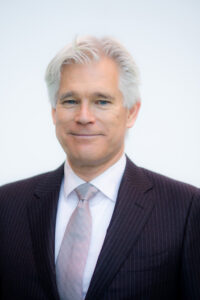
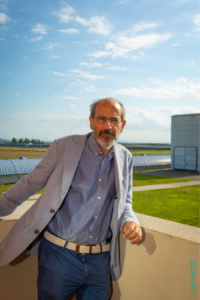
Interview with Gonzalo Merino, director of the Port d’Informació Científica
At the Joint ECFA-NuPECC-APPEC (JENA) Seminar in May 2022 in Madrid, both the plenary presentations and the closed session of funding agency representatives revealed that there is an increased need for discussions on the strategy and implementation of European federated computing at future large-scale research facilities. Therefore, APPEC, ECFA and NuPECC decided to organize a European, cross-community workshop on the strategy of computing. Gonzalo Merino, director of the Port d’Informació Científica, is part of the Organizing Team and will explain the implementation and aims of the workshop.
During the JENA Seminar the status and needs of computing for all three communities was discussed. Can you shortly explain, what are the differences and commonalities?
I actually see more commonalities than differences. Each of the three communities has its own specific research program of course, but I think they show a lot of synergies in their common quest to understand fundamental physics questions such as the nature of dark matter, the origin of the highest energy cosmic rays or many others. Last year we heard a lot of examples of this for instance in detectors, or accelerator programs. But it is in the software and computing that I think the commonalities and potential synergies are more evident. To carry out our research program, we increasingly rely on massive amounts of experimental data as well as complex simulations. In this data-driven era that we live in, our science depends more and more on computing. Both, the availability of large computing and data infrastructures and our capability of developing and maintaining a rich software ecosystem to exploit this increasing complexity. There are several challenges ahead, and they all affect the three communities: handling exabyte size datasets keeping budget under control, making effective use of increasingly powerful HPC machines and new architectures such as GPUs, incorporating emerging paradigms such as AI or, more into the future, quantum computing into our analyses and, probably above all of them, training and retaining the talented people that is needed to build and maintain all this infrastructure. For the differences, we could say that there has not been a long tradition of working together on these topics, but I see a change of trend and I am confident that there is an emerging transversal conversation.
How can the workshop contribute to addressing the computing challenge in the coming years?
I think the workshop can be an important catalyst for the cross-community dialogue and work that we need to see in the future. Initiatives like the ESCAPE project planted the seed for this process, which has now to consolidate. There are activities in place, such as EOSC-Future, or others being planned that I hope will stimulate this common development environment. I think that the software and computing challenges are common and very complex, not only for our three communities but also for many others. To me, one of the key aspects to succeed in managing that complexity is to work together and develop common infrastructure.
Credits: CERN
What format do you plan for the workshop? Will there be talks or discussions?
There will be both talks and discussions, but I hope we will have plenty of the latter. We will first have a number of talks to set the scene, remind us of the main challenges and the evolution of the global landscape. Then, we should have plenty of time for discussing the main issues, guided by experts from different fields organised in various panels. This will happen mostly on the second day of the workshop.
What do you hope to get out of the workshop?
I hope we end our meeting with a clearer vision of the roadmap for jointly developing the future software and computing infrastructure for our communities, and with a strategy to speak as a single voice in the global e-infrastructures conversation. Acknowledging that we are of course not alone in this ecosystem, hence we will also need to establish connections beyond our fields, with communities such as the photon sciences, life sciences or earth observation, to just name the most obvious that come to my mind.
Gonzalo Merino
Gonzalo Merino is the Director of PIC, a scientific-technological center near Barcelona that specializes in data-intensive research and which is jointly operated by CIEMAT and IFAE. PIC collaborates with scientists from different disciplines to develop advanced data handling services. It also provides data preservation and analysis services for the ATLAS, CMS and LHCb experiments of the LHC, the MAGIC telescopes in La Palma, the Euclid ESA satellite mission and others. From 2013 to 2018 he was at University of Wisconsin Madison managing the computing for the IceCube Neutrino telescope, located at the South Pole. Gonzalo did a PhD in Physics at the UAB analyzing ALEPH data, one of the four experiments at LEP, the former particle collider at CERN.
Interview with Günther Hasinger, designated director of DZA
At the end of September, the German BMBF announced its decision that the German Center for Astrophysics (DZA) had been selected as a new research center in Lusatia. In a multi-stage procedure, this proposal, submitted by scientists from astronomy and astroparticle physics led by Günther Hasinger, prevailed over its competitors.
Congratulations to you and your whole team! This success will have great impact on the development of astronomy and astroparticle physics, not only in Germany. Can you explain the scientific aim and the mission of this new research center?
Mulitmessenger physics at the German Center for Astrophysics. Credits: DESY
The DZA has three main pillars: research, technology and digitalization. The research in principle will cover several fields of astrophysics in synergy, but in the beginning, we concentrate on areas with high innovation potential in technology and digitization: radio and gravitational wave astronomy. Both areas have exciting new developments and instruments that provide huge opportunities, especially in opening innovation potential and collaboration with industry. In particular radio astronomy will produce (among) the largest rate and volume of data in any kind of science, pre-empting future requirements across society and science. Our research mission thus has a large societal impact.
The competition “Wissen.schafft.Perspektiven” (Knowledge.creates.perspectives) is intended to provide regional structural support. How was the DZA able to convince here?
We start with strengthening the positive elements already existing in the region: its location in the very center of Europe with close connections to the Polish and Czech republic; the surrounding Universities and colleges with a scientific and technological focus; the breadth and depth of surrounding industries as partners in technology development and digitization; the local people firmly rooted in the region with great openness and curiosity for new development; and last not least, the unique seismographic conditions in granite rock: the Treasure of Lusatia.
One element for our success is the excellent team team spirit we were able to demonstrate throughout the preparation process in the whole region. Our strength is the leading competence and experience from research and development through planning to the implementation of major projects and operation. We do not have to build national and international networks. We will bring them with us.
Drilling site in Cunnewitz. Credits: DESY/ Paul Glaser
How can science profit the chosen location?
We want to create a national lighthouse with an international appeal with a research mission of high societal impact. The unique combination of research and development in digitization, sensor technology and materials research provide jobs with a long-term future in many areas and a magnet for business and institutions, support for start-ups and spin-offs, transfer. This requires new education for a whole generation from day care through vocational training to university and gives prospects for young people in the region, securing the need for skilled workers. We attract people and prevent brain drain.
How will this research center influence astronomy and astroparticle physics in Germany and in Europe?
Germany is making outstanding contributions to astronomical research, e.g. exemplified by the Nobel Prize for the Black Hole in our Milky Way. The European Southern Observatory (ESO) and European Space Agency (ESA), organized through state treaties, allow German astrophysics to play leading roles. However, for future large international astrophysics projects the situation is different. The Square Kilometre Array (SKA) radio observatory is e.g. planned jointly by various nations, the Einstein Telescope, the Vera Rubin Observatory, and the European Solar Telescope all require new national structures that are not existing in Germany today. SKA is calling for regional data centres. The Einstein Telescope is looking for partners in Europe to set up large test and development centres for gravitational wave interferometers. The possibilities for German industry to participate in such tenders require institutional commitment. The DZA therefore has an important national role in astrophysics and astroparticle physics.
What is the timeline of this project?
The project starts with a three-year build-up phase, anchored at the Technical University Dresden, where the formal legal foundation process is prepared and all the major plans for construction, digitization and technology development are prepared. Already during this phase we want to employ several high-level leadership positions in cooperation with the TU Dresden.
The formal foundation procedure is expected for early 2026, when a roughly 10-year ramp-up and construction phase begins. The final center will host about 1000 employees in three institutes, for astrophysics, technology and digitization at the campus in Görlitz and a Low Seismic underground lab in the Lusatia granite block between Bautzen, Hoyerswerda and Kamenz.
Günther Hasinger, Credits: DESY/ Paul Glaser
Günther Hasinger, currently director of Science at ESA and Head of ESAC, was born in Oberammergau, Germany, in 1954. Between 1994 and 2001 he has been a professor at the University of Potsdam and served as director of the Astrophysical Institute Potsdam. In 2001 he was appointed as the director High Energy Group at the Max Planck Institute for Extraterrestrial Physics (MPE). In 2008 he became scientific director at the Max Planck Institute for Plasma Physics (IPP) which he left in 2011 to serve as the director of the Institute for Astronomy (IfA) of the University of Hawaii at Manoa until he moved to ESA in 2017. He has held the chair of the Council of German Observatories (RDS) and served as the president of the International Astronomical Union Division on Space and High Energy Astrophysics. Günther Hasinger played a key role in the operation of X-ray satellites, the development of future observatories or the discoveries of the cosmic X-ray background radiation. He received numerous awards for his scientific achievements, including the Leibniz Prize of the Deutsche Forschungsgemeinschaft, the international Committee on Space Research (COSPAR) Award and the Wilhelm Förster Prize for public dissemination of science. He is a member of the Academia Europea, the Berlin-Brandenburg Academy of Sciences, and Leopoldina (the German National Academy of Sciences), and an external member of the Austrian Academy of Sciences.
Christian Spiering has worked in Russia for more than four years in the 1970s and has collaborated with Russian researchers for almost fifty years. Russia with its language, its literature and its people became a kind of second cultural home for him. In the early APPEC/ASPERA period he chaired several roadmap processes and he initiated the Global Neutrino Network, a network in which neutrino astronomers from different countries and from several experiments work together. Russia’s attack on Ukraine has currently made such collaborations impossible. This war affects in first order the Ukrainian people and Ukrainian scientists but also has a huge impact on science in Europe as a whole and in particular on collaborations with Russian scientists. These aspects will be discussed in the following interview.
You have always worked closely with Russian scientists. How has this collaboration changed since the start of the war in Ukraine?
Before answering your question, let me make a general remark: I admit that I belonged to those who have tried to understand and to explain Russian policy, even to some degree Putin’s policy, and who see themselves disproved since February 24. I am also aware that with respect to the emergence of this conflict, there is no simple black and white. Historians will weigh the arguments of all sides against each other, including also those about chances missed by Western and Ukrainian policy. But whatever mistakes may have been made from all sides: nothing, really nothing justifies a war, and nothing justifies the support of the aggression against Ukraine.
Now to your question.
Let me give you a simple example: I am chairing the Technical Advisory Board of Baikal GVD and I am a member of its strategic Advisory Committee. Just in February we had sessions of these two committees and wrote detailed recommendations, including the advice to broaden the basis of the experiment by inviting more international collaboration partners. Now, a bit more than a month later, we neither could perform such sessions, nor would we write recommendations. The advice to invite more international partners at present would sound bizarre, to say the least.
Within the Global Neutrino Network, Baikal GVD is also part of transnational multi-messenger activities which – regrettably for all sides – will suffer from the present situation.
Another case is the TAIGA experiment in Siberia, with strong intellectual and hardware contributions from Germany. For the time being, Germans will not travel to Russia and participate in detector upgrade and operation. Parallel analyses in Germany and Russia are continuing, but when and how this could lead to a jointpublication is open. Another example is the FACT Cherenkov telescope in La Palma which was foreseen to be transported to the TAIGA site; if and when this could happen is currently written in the stars. On another note will be experiments like LEGEND, CUPID and others which used to (or have planned to) obtain purified materials from Russia. They might have to look for other, likely more expensive suppliers.
Are there still opportunities to work together with Russian colleagues?
For the moment all cooperation with Russian institutions has been frozen. I believe that – if artists and sportsmen cancel their participation in joint events – scientists should also send a strong signal against this completely unjustified and brutal war. There is no question that contacts will be resumed at some point after the end of the war, or at least after a ceasefire. This will certainly start with small projects shaped by individuals. However, I personally would find it difficult to come back to common work, such as if nothing had happened, with someone who has openly supported the invasion of Ukraine.
How do you assess the situation for science and scientists in Russia?
Russian scientists will be, or are already, the first to suffer with respect to their work. This starts with the possibilities to participate in international projects in the West, to be accepted as speakers on conferences, with problems to sign with their Russian affiliation on joint publications, and continues with the availability of high-tech components for experiments in Russia, like, e.g., the Baikal Gigaton Volume Detector or the TAIGA observatory.
On a completely different note is the exodus of excellent scientists, among them those of whom Putin says he “spits them out like a mosquito that has got into his mouth” (a formulation which reminds me of the darkest times in Germany as well as in Soviet Union). Historical situations are difficult to compare, but somehow this could become a version of the exodus of brilliant minds from Germany in the 1930s.
On the one hand, there is a declaration, signed by several thousand Russian scientists, against the war; on the other hand, Russian universities have issued a statement in which they express their full support for Putin’s politics. How can we deal with these different attitudes?
I have the deepest respect to the signatories of the letter against the war – for their clear inner compass and for their courage. For me, the rectors of the Universities who signed the second letter range on a similar level as all the Duma members, ministers and governors who have silently carried out the illegal orders of the government and therefore bear a considerable share of the blame for the current situation. Note, however, that some rectors did not sign this nasty document and that the names of some of them seem to have been inserted without their own knowledge. Also, a non-negligible number of faculty members and students signed a letter against that of their rectors – with consequences for them which likely will become fully visible only after the war.
I have no clear idea how to deal with that. The general principle should be to support the signatories of the anti-war letters wherever possible, and avoid the cooperation with the intentional signatories of the rector’s letter if any possible. How to translate this into action in concrete situations will have to be seen. For the duration of the war, a proper selectivity seems impossible, so I would vote for freezing any official cooperation until the weapons are silent and a ceasefire is reached, however fragile it may be.
Whatever we do, we should keep in mind, that Russian science does not only consist of Universities and Research Institutes, but is made up of thousands of unexpectedly isolated researchers, a large proportion of whom condemn war, even though they may disagree with us about its causes. I will keep the contacts to my Russian friends, and I fervently hope for a time when we see each other in person and can work together again.
Many collaborations and scientific institutions are currently discussing how to combine good scientific practice and the sanctions against Russia and how to deal, for example, with joint publications. What is your opinion on this?
I think that withdrawing already submitted publications is not a good way. Work on publications in preparation, however, might easily be paused – this kind of “freezing” does not violate good scientific practice. Let’s be honest: for more than 99.9% of all possible publications, at this very moment a clear sign against the war is more important than their delay by a few months (I hope that this time scale does not turn out to be an illusion).
In any case, I would wish that the APPEC countries find a coordinated answer to this question.
Do you expect an increasing number of Russian refugees, including scientists? How should we as a scientific community deal with these?
Journalists, writers, artists and scientists are probably the most exposed and vulnerable groups. The European governments should create a support program so that our Universities and research institutes are enabled to create positions for exiled Russians and to integrate them in our research landscape. Given the excellent scientific quality of many of the Russian opponents to the war, this would certainly turn out as a clear benefit for astroparticle and particle physics in western countries.
You yourself live in Berlin, where many Ukrainian refugees are currently arriving. How do you personally experience this situation?
Together with a few others, I am taking care of eight Ukrainian women with their 13 children. At the beginning, they were accommodated in a hostel, but without meals. So, we prepared breakfast and dinner for them for a fortnight. Meanwhile we could accommodate them in four flats and are helping them with all the confusing formalities – financial support, health insurance, language lessons, etc. Most of them want to go back to Ukraine as soon as the war is over.
A Russian-speaking colleague of mine, also retired, took a job as a full-time teacher of Ukrainian kids. In general, there is great support from volunteers, and even the cumbersome Berlin bureaucracy is – slowly but steadily – getting into gear.
This interview took place on 2 April 2022.
Further information
Database of positions and accommodation for Ukrainian students and researchers: Science for Ukraine
Christian Spiering (born 1948) studied Physics at Humboldt University Berlin. 1974-78 he worked at JINR Dubna. Having started his carrier with hadron-nucleus interactions, he moved to a neutrino experiment at Protvino/USSR, and 1988 to neutrino astrophysics – starting with the neutrino telescope in Lake Baikal, later AMANDA at the South Pole, and ending up with IceCube. Being engaged in “two worlds”, he initiated the Global Neutrino Network in 2014. He worked also in the Tunka/TAIGA air shower experiments in Siberia. Christian served as AMANDA European Spokesperson and later IceCube spokesperson. From 2006 to 2012 he chaired the APPEC Peer Review Committee. He was awarded the Markov Price of the Russian Academy of Sciences and the O’Ceallaigh-Medail of the Dublin Institute for Advanced Studies. He is author of two popular-scientific books, quite recently “Neutrino astronomy – looking to hidden worlds”.
Interview with the APPEC Scientific Advisory Commitee Chair Sijbrand de Jong about the review process
The (European) Astroparticle Physics community is invited to provide feedback on the draft APPEC mid-term review of the Astroparticle Physics Strategy 2017-2026. The APPEC SAC, with its chair Sijbrand de Jong, has been preparing this preliminary review over the last few months and has now made it available to the community. The report as well as the feedback form are both accessible at https://indico.desy.de/event/32140/overview – feedback will be possible until January, 21st, 2022. It will be further discussed during the Berlin Town Meeting in June, after which the final report will be prepared. In this interview, Sijbrand de Jong gives us an insight into the entire process.
You have been coordinating the review process over the last months. What is your intention with the current draft document?
We are now half-way the 2017-2036 period of the current European Astroparticle Physics Strategy and a lot has happened since then. Hence, this is a good time to take stock concerning the present strategy and to see if corrections on the course are needed and to start thinking about the European Astroparticle Physics Strategy in the period after 2026. Therefore, the APPEC General Assembly (GA) has asked the Scientific Advisory Committee (SAC) to organise an update of the strategy. The SAC would like to involve the entire Astroparticle Physics community in Europe and beyond in the update process. The final draft of the strategy update that will be offered to the GA for endorsement will be based on the outcomes of a Town Meeting to which then entire community is invited and which will be held in Berlin on 9 and 10 June 2022. To prepare both the agenda, the discussion form and the content of this meeting, the SAC is preparing a document to review the current situation and to indicate new developments since 2017 and topics for discussion. Such a document will help to structure the discussion and will allow us to arrive at a good conclusion after two days of gathering. The SAC consists of some very knowledgeable people, but it falls short compared to the intellectual capacity of the entire APP research community. In the preparation of this review, the SAC therefore requests the help of the entire community to arrive at a balanced document as input for the discussions in Berlin. To structure the input from the community the current draft review serves as a framework where we hope we already give a decent summary of the status and developments and list of discussion items, and we ask for feedback to complete and refine the review.
Localization of the gravitational-wave, gamma-ray, and optical signals for the binary neutron star merger GW170817. (From B. P. Abbott et al 2017 ApJL 848 L12)
What you consider as major changes since the publication of the roadmap in 2017?
In particular in multi-messenger astronomy things move forward fast, but also our knowledge on particle physics is progressing steadily. There are lots of experiments and observatories announced as desirable in the current strategy that are being realised. The use of machine learning is gaining terrain rapidly and will also be very important to our research field. With the experiments getting bigger and more expensive in time, the pooling of resources and the availability of central research infrastructure gains importance to the point that going to a next level of organisation and coordination seem inevitable. There have also been major developments in society at larger and in our scientific surroundings. Diversity, Equity and Inclusion and the care for all our researchers must be on the agenda. Some of these topics were not much addressed in the current strategy, but the SAC feels they ought to be addressed from now on.
Who should give feedback and how?
We are reaching out to the entire APP community. All individuals are invited to give feedback. It is important that every voice is heard. In addition, it is also particularly useful to receive the feedback of collaborations and national communities. Collaborations often already have their own strategy, sometimes even involving a follow-up experiment. National communities are usually the closest to the sources of our resources. The National roadmaps have a real impact on what we can do in the European context. There is a fort and back between the European strategy and the national strategies. One may hope that the national strategies align with the European strategy, but this is only possible if the national strategies are considering the European strategy. Of course, we hope for feedback from committees and boards that represent the research fields bordering APP, such as particle physics through e.g. ECFA and nuclear physics through e.g. NuPECC. There is much overlap with these communities and real synergy is possible, the Joined ECFA, NuPECC, APPEC Seminars are a good example for meeting and starting joint projects.
What do you expect from the community feedback?
Most likely we will have missed things and made some factual mistakes. It is important to get these potential distractions out of the way to keep the discussions in Berlin focussed and effective. Despite its length, the document is relatively short on any particular experiment, observatory or development. We are trying to keep the document as concise as possible, while maintaining a balance in the amount of information for each subject and issue. We have probably succeeded when everybody feels that we are too short on their darlings.
What are the next steps after the feedback deadline?
After gathering all the feedback, the SAC will adapt the review to be as comprehensive and correct as possible. This final review, after being endorsed by the GA, will be made public well in advance if the Berlin Town Meeting. At the same time as finalising the review, the SAC will also draw up the agenda for the Berlin meeting with all the information of what the community thinks is. We will also carefully consider all suggestions for “burning questions” that can be given in the feedback form. This is a very important part of the feedback form.
How will you include the discussions taking place during the Town Meeting in the final document?
Ideally, the strategy update document will be much shorter, and hence it will contain much less detail than the review document. Yet, all relevant information from the Town Meeting will have to be included. This is a daunting challenge, to which the SAC will set itself over the summer of 2022. Basically, it means that the strategy update will be written from scratch, following the format of the current strategy document. The strategy update will also contain many more pictures than the single one in the current review document. The SAC wanted the review document to be picture free, but the only one included replaced a lot of text to explain the interrelations of all sorts of neutrino properties and their measurements and is therefore included. Not as an illustration of the text, but as the replacement of a potential lengthy text paragraph.
When the final document will be published and what is your goal with this review?
During the process this document will serve as the basis of our discussion in the Town Meeting and as one of the basic inputs for the strategy update document. It will also serve as the basis for the deliberations of the SAC on the programme for the Berlin Town Meeting and be a lead for structuring the discussions during this meeting. It is therefore a pivotal working document. The review and the talks and summaries of the Town Meeting will be made public. After the completion of the update process, they will serve both as documentation of the process itself and as background information of the strategy for those who really want to dig deep.
Sijbrand de Jong was trained as an experimental particle physicist and worked on deep inelastic neutrino, muon, and electron scattering and electron-positron, antiproton-proton and proton-proton colliders, before turning to ultra-high-energy cosmic ray science. He worked on both instrumentation, data analysis and phenomenology in particle and astroparticle physics. Presently, he is a member of the Pierre Auger Collaboration and GRAND Collaboration, specialising in radio detection of ultra-high-energy cosmic particles. He held several management and governance positions, e.g., member of the LHC committee, and CERN Council president and presently is the dean of the Faculty of Science of Radboud University.
Interview with Akira Ohnishi, Laura Fabietti, Philip von Doetinchem, and Alexander Kalweit on the JENAA-EoI on Nuclear Physics at the LHC
Akira Ohnishi, Philip von Doetinchem, Laura Fabbietti and Alexander Philipp Kalweit formed an initiative on Nuclear Physics at the LHC in response to the JENAA call for EoI.
This topic is of interest to all three communities, particle, astroparticle and nuclear physics. Hyperon-nucleon and hyperon-hyperon interactions can be studied with high precision, and these results are fundamental for the study of the equation of state of neutron stars. For the search for dark matter in cosmic rays, the physics of the formation of light antinuclei, like antideuterons and antihelium nuclei, plays an important role and is thus of particular interest for the astroparticle physics community.
In this interview they tell us more about the aims and activities of this initiative.
How are the four of you connected with the three JENAA communities?
Philip: I am an astroparticle physics researcher with a focus on cosmic antinuclei detection for the purpose of using them as messengers for new physics light antinuclei. These subjects are closely connected with each other, and can be studied in the terrestrial experiment, LHC-ALICE. Laura and Alexander: We are both working in the ALICE experiment at CERN and we are excited about the fact that measurements at the LHC have a direct impact on astrophysical questions. Akira: I am a theoretical nuclear physicist and have communicated with Laura on the hyperon-nucleon interactions, and I am also interested in the neutron star matter equation of state.
How did you come up with the idea of a common EoI?
Akira: The ALICE members (Laura and Alexander) organized an interdisciplinary unit including Philip and myself. One of the papers on hyperon-nucleon interactions is published in Nature, and we find that our subjects are attracting broad interest. Philip: Looking at the current status of particle astrophysics it is clear that the interpretation of the cosmic-ray data itself will benefit strongly from improving nuclear production and interaction cross sections. Therefore, a collaborative effort across different disciplines is essential to make the most out of existing and future data.
What are the aims of your initiative?
Philip: The goal is to bring the different communities closer together and to develop a common strategy to address big open questions, like the nature of dark matter, existence of antimatter, and to understand the equation of state of neutron stars. Akira: I am working on the theoretical studies of connecting the hadron-hadron interactions and the hadron-hadron correlation functions. At present, we evaluate the hadron-hadron correlation functions from “reliable” ab initio interactions, such as the lattice QCD and chiral EFT interactions. By comparing with data, I hope that various hadron-hadron interactions would be elucidated by the studies both from theory and experiment.
The kick-off Meeting for your initiative took place almost one year ago. How did you proceed after this?
Akira: I have joined the ALICE collaboration as an associate member. Two papers from the ALICE collaboration including me are in preparation. I also submitted two papers (not from ALICE) on the correlation functions. One is the hadron-deuteron correlation function and the other is the femtoscopic study of NΞ – ΛΛ coupled channel potential. One of the great advances in the ALICE papers (in prep.) including me is the extension of the scope to hadrons with a charm quark. As the first work, we are preparing a paper on D– p correlation function paper. Since there have been no experimental works on the charmed-hadron interaction with nucleons, I think that this is a breakthrough. I have contributed to the paper on providing predictions from some of the theoretical interactions. Philip and Laura: Our groups started collaborating on a new cosmic antideuteron study that specifically focuses on integrating all new collider data for antideuteron production and interaction in the Galaxy in a consistent way.
What are the next steps?
Philip: It is planned to organize a strategy meeting in 2022 to develop a concrete vision of what this initiative wants to accomplish in the next 5, 10, 20 years. We are currently just opening the door to cosmic antinuclei physics and it will be a significant effort from the current status to a precision understanding of sources and propagation of cosmic antinuclei. The impact of these studies has transformative potential for the fields of cosmology and dark matter physics. Alexander: At the LHC, the next big data taking campaign — the so-called Run 3 — is just about to start with a fully upgraded ALICE detector that will allow significantly higher data taking rates. Especially the antinuclei measurements, that are very statistics hungry, will profit enormously from that. Akira: In order to solve the hyperon-puzzle of neutron stars, understanding the three-body force including hyperons is decisive. Since the two-body Λ-nucleon potential (relatively well-known from hypernuclear physics) leads to a soft equation of state which cannot support two-solar-mass neutron stars. Thus we need repulsive three-body forces including hyperons, early transition to quark matter, or modified gravity (modification of general relativity) to solve the hyperon-puzzle. It may be possible to probe three-body forces from the three-body correlation functions. While the theoretical formulation has not been developed, it can be a great achievement if three-body forces including hyperons are obtained from correlation function studies. Another step is the hadron-hadron interactions including heavy-quarks. Hadron physics including charm and bottom quarks is rich and very interesting. A lot of exotic hadrons including heavy-quark(s) have been observed and are attracting the attention of many researchers. However, hadron-hadron interactions involving heavy-quarks have never been confirmed experimentally. If achieved, femtoscopic studies of hadron-hadron interactions with heavy-quarks will provide the first systematic database and will contribute to the non-perturbative QCD physics.
How could interested people join your initiative?
Alexander: Everyone is more than welcome to contact us directly, for instance via email. Akira: Already at present, many hypernuclear and hadron physicists are interested in the works from the initiative. The hyperon-nucleon interactions from the initiative have stimulated the (traditional) hypernuclear physicists, and hypernuclear physics experimentalists have started to prepare confirming them in the (standard) scattering experiments. Exotic hadron physicists expect the progress in the femtoscopic studies from the initiative. Once the three-body potentials involving hyperons are accessed, neutron star physicists will be definitely interested and use them in evaluating the equation of state.
How could NuPECC, ECFA and APPEC support your activities?
Akira: Well, in the future, some international workshops/symposia may be held and supported by the initiative. We may hope to give young researchers awards in those meetings, and may ask the consortiums to support the awards. Alexander: The large physics potential of these truly interdisciplinary studies is sometimes not fully recognised, because they do not fall into existing categories, e.g. in funding agencies or when submitting abstracts for large conferences. Therefore already publicising our physics via interviews like this one or in newsletters and journals helps us a lot.
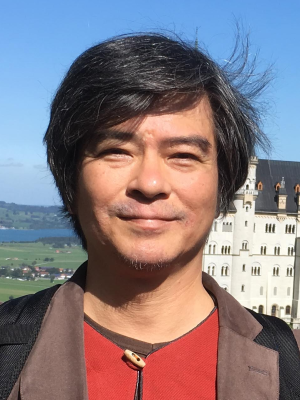
Akira Ohnishi is a theoretical nuclear physicist and Professor at the Yukawa Institute for Theoretical Physics (YITP), Kyoto University, since 2008. He has been working on heavy-ion collisions, strangeness nuclear physics, nuclear matter phenomenology, and hadron-hadron interactions. He worked on developing some transport models and applied them to heavy-ion collisions and strangeness nuclear production. From the analyses of data, he found that Lambda-Lambda pairs are more abundantly produced at low relative momenta than expected, which implies the effect of the Lambda-Lambda attraction. He discussed the idea to constrain hadron-hadron interactions by using the two-particle momentum correlation from high-energy nuclear collisions in the international workshops held in YITP and other places. The femtoscopic study of hadron-hadron interactions is now one of the main subjects of his research.
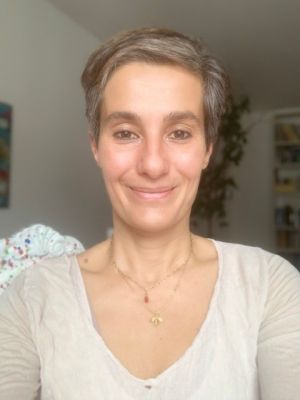
Laura Fabietti
Laura Fabbietti is an experimental nuclear physicist and Associate Professor at the Technische Universität München since 2010. Her main scientific interests have developed from the study of in-medium properties of hadrons at accelerator experiments with intermediate energies (HADES, FOPI and AMADEUS) to the study of hadron-hadron interactions and antinuclei formation and absorption measured at the LHC with ALICE. Laura is a member of the ALICE collaboration since 2014, her group has participated to the upgrade of the ALICE TPC with GEM readout and she is currently interested in understanding two- and three-body forces involving nucleons and strange/charmed hadrons. In this context, she would like to link new measurements of the hadron interactions including strangeness with the hyperon puzzle in neutron stars and study the equation of state of dense nuclear matter including strange hadrons. Laura and her TUM group are also interested in best using the (anti)nuclei measurements at accelerators as input for the understanding of antinuclei production in our Galaxy from collisions of high energy cosmic rays with nuclei within the interstellar medium and possible from dark matter annihilations/decays.
Philip von Doetinchem
Philip von Doetinchem is an experimental particle astrophysicist and Associate Professor at the University of Hawai‘i at Manoa. His research program focuses on the ”Identification of Dark Matter with Cosmic-ray Antinuclei,” funded by NASA and NSF. He is a collaboration member of the operational AMS-02 experiment on the International Space Station. Furthermore, Doetinchem is the project scientist of the upcoming GAPS experiment. This new high-altitude balloon experiment aims to detect cosmic-ray antinuclei with a complementary experimental technique to AMS-02. Besides, his group is working on the fixed target experiment at NA61/SHINE at CERN to measure cosmic-ray (anti)nuclei production cross sections.
Alexander Kalweit
Alexander Kalweit studied physics at the Technische Univeristaet Darmstadt. For his Ph.D. at the Gesellschaft für Schwerionenforschung, he joined the ALICE experiment at CERN to investigate the production of light flavour hadrons in heavy-ion collisions. His current main research interests is the production of anti- and hyper-nuclei at the LHC. He holds a research staff position at CERN and serves as deputy physics coordinator of the ALICE collaboration.
Interview with Patricia Conde Muíño on the JENAA Diversity Working Group
ECFA, NuPECC and APPEC recognise the importance of diversity as a motor to boost productivity and innovation, fight prejudice and discrimination and contribute to improving social and economic standards.
As part of the Joint ECFA NuPECC APPEC Activities, JENAA, a Diversity Charter was developed to be signed by research organisations, collaborations and conferences within the three fields. Patricia Conde Muíño represents ECFA in the Diversity Working Group, and she will tell us more about the Charter and the corresponding actions.
How did the idea for a joint working group on diversity come about?
I am not sure how the first idea appeared, but the Diversity Charter was first proposed within ECFA in 2018 by Jorgen D’Hondt, the ECFA Chair by then. He was very keen on starting this initiative. At the same time, the three consortia, APPEC, ECFA and NuPECC, were beginning a series of Joint Activities (now called JENAA). The Diversity Charter soon became one of the first joint efforts, with full support also from the APPEC and NuPECC groups, chaired by Antonio Masiero and Marek Lewitowicz, respectively. The first step was creating the task force with representatives from all three consortia to prepare the first Diversity Charter.
What is the content of the diversity charter, and why do you think it is important for organisations, collaborations and conferences to sign the document?
The Diversity Charter states the fundamental principle that people differ in many different ways. By accepting, valuing, and supporting this diversity, research organisations (in general) can create a working environment that boosts productivity and innovation, fight prejudice and discrimination. The definition of diversity presented is very wide. It recognises that individuals may differ in visible or invisible aspects, such as age, gender and sexual orientation, national and ethnic origin, civil status and family situation, religious convictions, political and philosophical opinions, and physical ability. The signatories of the Charter agree on promoting diversity by fostering an environment of respect and understanding, and stimulating diversity at all levels in the hierarchical organisation of the entity. As part of the effort toward promoting diversity, they also agree to balance the composition of coordinating or advisory committees, as well as management positions, and provide monitoring information on their diversity status.
Concerning why should Research Organisations, Conferences, or Collaborations sign the agreement, there are several reasons. The first one is the moral responsibility we all have to fight prejudice and discrimination, fostering an inclusive environment where all the individuals are respected and can benefit from the same opportunities, such that they can flourish and give the best of themselves. In addition, it has been demonstrated in several studies that having more diverse teams not only boosts productivity and innovation in companies (where it is also correlated with a higher turnover) but also in research organisations. We present some references for these studies in the Charter itself. Promoting diversity and respect improves the working environment, the work-life balance within the organisation and contributes to the efficiency and competitiveness of the organisation. Therefore, it is in the interest of the research entities to promote and support diversity.
The Working Group also developed a survey to monitor diversity. Can you tell us more about this survey?
Diversity Charger signatories agree to provide monitoring information to APPEC/ECFA/NuPECC on their diversity status. This monitoring focuses on a reduced set of variables that can be collected by the different entities (age, gender, career level, citizenship, and working country), as described in the support document. In case they already have this information available (in a database, for example), they can readily provide it. Otherwise, to facilitate collecting the monitoring data, we developed three different surveys that can be used by Research Organisations, Collaborations, and Conferences. Filling the survey should not take longer than three or four minutes and will be very important to get an overall picture of the three fields.
What do you expect as the outcome of the activities?
We aim to contribute to a more diverse community in the fields of APPEC/ECFA/NuPECC. Since awareness is the first step towards change, we expect to obtain a global picture of the current situation with the survey, identifying possible imbalances not only in gender but also related to nationalities or even working countries. This picture will be extensive, covering many research collaborations with different sizes in the three fields in addition to research organisations and conferences.
What are the next steps to reach this goal?
The surveys represent just the first step. In case some imbalance is observed, we will propose a series of actions or recommendations that can be implemented to improve diversity in the various entities. In addition, we want to promote a dialogue between different signatories to share experiences and best practices, helping them find the solutions that best work in each case.
We have received up to now very positive feedback, with collaborations very interested in participating, that is a very good sign.
Patricia Conde Muíño is Assistant Professor at IST (Universidade de Lisboa) and researcher at the Portuguese Laboratory for Experimental Particle Physics, LIP. She coordinates the Portuguese activities in the ATLAS Experiment at CERN and represents Portugal at the European Committee for Future Accelerators (ECFA). Her research interests focus on the exploration of the Higgs sector. She contributed to the Higgs Boson discovery and later to measurements of Higgs Boson properties at ATLAS. She is one of the ECFA representatives in the APPEC/ECFA/NuPECC Diversity Working Group.
Interview with Tommaso Dorigo about the MODE collaboration
As reply to the JENAA call for Expression of Interest Tommaso Dorigo and his colleagues proposed a program for Machine-learning Optimized Design of Experiments – MODE. Their main target is the use of differentiable programming in design optimization of detectors for our research field. The first Kick-off Meeting took place last September and they just published a preprint of a short article on their research plan on INSPIRE which will be published by Nuclear Physics News International. In this interview, Tommaso Dorigo will tell us more about MODE and next steps.
Can you explain more about the program and aim of MODE?
For over a century now, physicists have designed instruments to detect elementary particles, and radiation in general, exploiting cutting-edge technologies, and in some cases developing entirely new ones. As the complexity of the apparatuses and of the required tasks grew, so did our inventiveness. This has brought a stream of new developments, which culminated in the past two decades with the construction and operation of giant detectors like ATLAS and CMS, which are mind boggling instruments.
Precisely because of their complexity the design of such apparatuses has followed well-defined paradigms, which have served us well until now, and guided us toward robust design choices and well-established techniques. However, those choices are not – and cannot be – perfectly aligned with our true experimental goals. The reason is that the task of optimizing the design of these apparatuses is absolutely super-human, as it requires the study of configuration spaces of hundreds, if not thousands of dimensions. In fact, a global optimization is usually not even attempted: we use as success-metrics simplified surrogates of our real goals, and this potentially results in huge losses in performance.
A proposed pipeline for the optimization of a muon tomography apparatus (Figure taken from the article on the MODE collaboration published in Nuclear Physics News International, March 2021).
Yet today we can, in principle, rely on artificial intelligence for the exploration of those hugely complex parameter spaces. Differentiable programming techniques allow us to navigate through them, if we provide the right interfaces and construct models of the whole experiment, from the simulation of the events of interest, particle interaction with matter, detector response and reconstruction, and inference extraction. This is very hard, I am not hiding that. But we need to start doing it. MODE has the goal of proving how such a path can be undertaken, to realign our experimental choices with our true goals, and to vastly improve the effectiveness of future detectors.
But MODE is not specifically targeting those giant multipurpose detectors for fundamental physics – quite the contrary, in fact. MODE researchers are starting this ambitious program by working towards smaller-scale practical applications of particle detectors, such as proton therapy or imaging with cosmic muons. In these areas, the detectors are relatively small and their geometry is way less complex than those of particle colliders. Nevertheless, design optimization is far from trivial also in these applications. In fact, the first practical implementation of the MODE program may well be in one of these areas, where the typical timescales from design to operation are relatively short.
At the JENAS 2019 the call for EoI was issued and you came up with the MODE program. Did you and your colleagues already work on this topic before, or did you just start after this event?
I have worked on machine-learning-driven optimization of physics measurements in the past, but my idea of applying the techniques developed in that context to the design of instruments was born while sitting in board meetings of accelerator physics coordination. There, I observed that the design of new detectors for future colliders was being proposed and starting, by the hands of colleagues with decades of experience in instrumentation, without any consideration for the elephant in the room, AI. In 20 years, the extraction of information from detector signals will be entirely automated and in the hands of much more complex and performant algorithms than those in use today. This means that constructing devices with the same paradigms as before is doomed to be enormously suboptimal.
Of course, and fortunately, I am not the only one who realizes this, and in fact efforts in the use of advanced computer science techniques to the optimization of detectors and instruments have started to appear in the past few years. Some of the MODE members are in fact leaders in this area of research, with some important publications already produced. With the help of these colleagues, we thus formed the MODE collaboration, to provide the ground where to build the required interfaces for a more systematic approach to detector design.
To what extent does your collaboration represent the three communities Particle, Astroparticle and Nuclear Physics ?
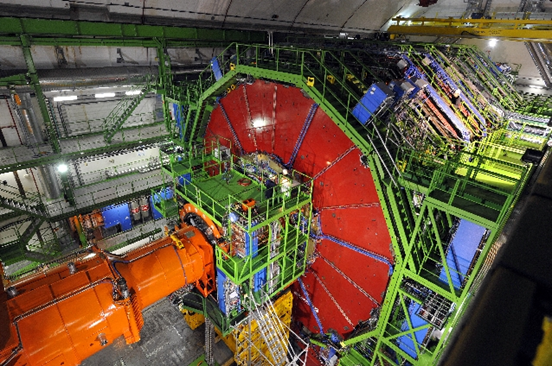
A view of the CMS experiment at CERN. The complexity of modern particle physics experiments is too high to allow for human-driven optimization. Or, better put, the space of design choices is so vast that the potential for improvement in relevant metrics (discovery potential, data quality) is huge. (Credits:CERN)
Our group for now is small, but highly motivated. I cannot cite everybody here, but MODE includes physicists who are experts in machine learning and already working for calorimetry optimization (Jan Kieseler, at CERN, Fedor Ratnikov, at HSE University and Yandex Data school, and colleagues at National Research University Moscow), track reconstruction (Mia Tosi, at University of Padova), inference extraction (Pietro Vischia, at UCLouvain, and Giles Strong, at INFN-Padova), and muon tomography (Andrea Giammanco, at UCLouvain) – all those tasks are important use cases for MODE, and are not specific of HEP. And we have computer scientists with experience in collaboration with physicists (Atilim Gunes Baydin, at Oxford University, and Gilles Louppe, at Université de Liege); plus Ph.D. students in HEP (Hevjin Yarar and Lukas Layer, at INFN-Padova). But MODE tries to be as inclusive as possible, because of the extremely challenging nature of its research program. We need the interest of everybody who wants to extract information from devices that work by detecting radiation in any form, and therefore it is only natural to look beyond the playground of some of us, which is HEP. Hence we have started to involve colleagues from the astroparticle physics and nuclear physics community, as well as neutrino physics, by inviting them to take part to the advisory committee of a workshop we are organizing, which we hope will be the first of a series, and by asking them to chair sessions there and take part. In conjunction, we are advertising our research plan within those communities, as we believe that our studies will benefit them just as much as HEP.
It is important to realize that particle detectors can be improved quite significantly in their performances by studying even very simple choices, such as moving detection elements around. Last year I did an exercise with a simply designed detector, MUonE, which will be built to reduce a theoretical uncertainty on the g-2 muon anomaly. The experiment aims to measure the differential muon-electron elastic scattering with layers of silicon impinged on by a beam of muons at CERN, and is very simple – so simple that I could study it with a fast simulation and demonstrate that with some optimization a factor of two gain in the relevant metric could be achieved without increase in cost or complexity. A publication ensued, and the collaboration is now using my results for an improved design. But this is just an example.
How can ECFA, NuPECC and in particular APPEC support your activities?
Help in making the MODE research program more visible and known within the communities is certainly important – we have indeed already benefited from the offer of publishing a short manifesto in the Nuclear Physics News International journal. Also, we presently have no explicit funding for MODE, so support for the organization of a yearly workshop will be very welcome.
You plan a MODE Workshop on Differentiable Programming this autumn. What are the aims of the workshop and who should participate?
The workshop aims at making these techniques more widely known, as well as at creating a stable bridge and a communication ground with the computer science community. Anybody who realizes that these tools, which today power artificial intelligent devices all around us, are needed for fundamental physics research in the future should consider coming, listening, or giving a contribution. I mention artificial intelligence in everyday life objects (cellphones, self-driving vehicles, targeted ads, spam filters, etcetera) because these things have changed the paradigms in our society, but this was only possible because it was economically favourable to invest in creating the right interfaces for the problems to be solved. In basic research, we have to create those interfaces ourselves, or we will be stuck to the ice age before we know it.
Are there other events planned or what are the next steps?
Besides the workshop, we are starting to hire – there is a Ph.D. position for a Joint doctorate at the University of Padova and at Université Clermont Auvergne, call open until May 12 at the University of Padova; the student will work on MODE research. We are also starting our activities in two important use cases, the optimization of muon tomography detectors and the study of hybrid calorimeters. We are writing a white paper on the use of differentiable programming for detector design. And we are participating in a proposal to join the ELLIS society within a larger community of HEP and astro-HEP scientists. Finally, we are participating in competitive funding, to provide ourselves with the needed fuel for a long journey.
How can interested scientists join and benefit from MODE?
To join mode you only need to declare your genuine interest in our research plan and to devote a fraction of your research time to some of our activities, or propose others within our interests. We hold online meetings every month or so, and everybody is welcome to attend.
Tommaso Dorigo (Ph.D. 1999) is a particle physicist and machine learning expert who works as a First Researcher for the INFN and teaches Particle Physics and Data Analysis courses at the University of Padova, Italy. He participates to the CMS experiment at the CERN LHC collider, where he is a member of the Statistics Committee, which he chaired in the years of the Higgs boson discovery. In 2020 Dorigo founded and since then coordinates the MODE collaboration. He is an author of over 1600 peer-reviewed scientific publications, and is an editor of the Elsevier “Reviews in Physics” and “Physics Open” journals; since 2006 he has also run a popular blog, visited over 14 million times (http://www.science20.com/quantum_diaries_survivor).
Interview with Clarisse Aujoux, Kumiko Kotera and Odile Blanchard on the first carbon footprint study of an astroparticle physics experiment
Environmental sustainability is becoming an increasingly important topic, especially in science. The approach of determining the annual carbon footprint of a future astroparticle experiment and identifying possible savings potential is new and will certainly become an important aspect in the future. As pioneers, three scientists have published a study on the carbon footprint of the GRAND experiment, taking a close look at the main emission sources, i.e. travel, digital technologies and hardware equipment. In this interview, we talk to Clarisse Aujoux, Kumiko Kotera and Odile Blanchard about their study.
With your work, you are the first to conduct such a carbon footprint study for an astrophysics experiment. How did it come about?
The GRAND collaboration is concerned about its environmental impact. We had several discussions about this subject in collaboration meetings, and a “GRAND Carbon Committee” was set up. As our experiment is in its prototyping stage, it is a good time to make decisions according to environmental criteria. Still, as long as we don’t have any quantification of the emissions, we cannot make consistent decisions. Therefore, a first step towards taking such measures was to estimate the carbon footprint of our experiment, and assess the major sources of emissions.
Can you shortly explain what GRAND is?
A prototype antenna being tested at the deployment site of the 300-antenna pathfinder, GRANDProto300, in the Qinhai Province, China. Credit: GRAND collaboration.
The working of the most violent phenomena in the Universe (compact object mergers, blazar jets, pulsar winds…) remains mysterious. These objects could be probed by deciphering the ultra-high energy astroparticle messengers that they send. The detection of these particles is however very challenging and requires to deploy large-scale experiments.
The GRAND (Giant Radio Array for Neutrino Detection) project aims primarily at detecting ultra-high energy neutrinos, cosmic rays and gamma rays, with a colossal array of 200,000 radio antennas over 200,000 km2, split into ~20 sub-arrays of ~10,000 km2 deployed worldwide. The strategy of GRAND is to detect air showers above 1017 eV that are induced by the interaction of high-energy particles in the atmosphere or in the Earth crust, through its associated coherent radio-emission in the 50-200 MHz range.
A staged construction plan ensures that key techniques are progressively validated, while simultaneously achieving important science goals in UHECR physics, radioastronomy, and cosmology early during construction. The 300-antenna pathfinder array, GRANDProto300, is planned to be deployed in 2021. It aims at demonstrating autonomous radio detection of inclined air-showers, and make measurements of the composition and the muon content of cosmic rays around the ankle energy. The first 10,000 antenna sub-array (GRAND10k) is planned to be deployed in the mid 2020s, and will have the sensitivity to detect the first ultra-high energy neutrinos. In its final configuration (GRAND200k), in the 2030s, GRAND plans to increase our sensitivity to neutrino detection of two orders of magnitude compared to current experiments, and to reach a sub-degree angular resolution, which should enable us to perform ultra-high energy neutrino astronomy.
GRAND will also be the largest detector of UHE cosmic rays and gamma rays. It will improve UHECR statistics at the highest energies ten-fold within a few years, and either discover UHE gamma rays or improve their limits ten-fold. Further, it will be a valuable tool in radioastronomy and cosmology, allowing for the discovery and follow-up of large numbers of radio transients — fast radio bursts, giant radio pulses — and for precise studies of the epoch of reionization.
Which parts of the experiment cause the greatest greenhouse gas (GHG) emissions?
Projected distribution of greenhouse gas emissions for all sources for GRANDProto300, GRAND10k and the full GRAND array. The title indicates the total amount of emissions per year due to each source at each experimental stage. (source: Aujoux, Kotera & Blanchard, 2021 https://arxiv.org/pdf/2101.02049.pdf)
In our study, we have focussed on the GHG emissions related to three sources: travel, digital technologies and hardware equipment. Interestingly, we find that these emission sources have a different impact depending on the stages of the experiment. Digital technologies and travel prevail for the small-scale prototyping phase (GRANDProto300), whereas hardware equipment (material production and transportation) and data transfer/storage largely outweigh the other emission sources in the large-scale phase (GRAND200k). In the mid-scale phase (GRAND10k), the three sources contribute equally.
Did you expect these results or was one result particularly surprising?
We did not expect that the emissions related to digital technologies would have such a large impact. We believe that people in general are more aware of the emissions due to travel and hardware equipment production, but tend to forget that large amount of data can actually lead to a huge carbon footprint.
How can these findings contribute to reducing GRAND’s carbon footprint?
The study has initiated numerous discussions within the collaboration. Various types of actions may be implemented to mitigate the carbon footprint of GRAND, at all stages of the project deployment.
Travel emissions may be reduced by encouraging local collaborators to perform the on-site missions or by having international collaborators stay longer on the site of the experiment rather than doing multiple trips, each lasting a few days ; they may also be reduced by optimizing collaboration meetings, through optimizing the location of the meetings, limiting the number of attendees from the collaboration, opting for some virtual meetings, and combining virtual and physical meetings.
Options to reduce digital emissions include the reduction in the volume of data to be archived. The collaboration is already developing data reduction strategies to reduce the carbon footprint of data transfer and storage by 4 or 5 orders of magnitude. It was also found that shipping regularly the archival data by air mail would be largely less emitting than transferring the data via the internet. As for the emissions from simulations and data analysis, the challenge is to reduce the millions of CPU hours projected to be spent yearly. Incentives to weigh the cost/benefit of the simulation runs may contribute to lower the carbon footprint in the years to come.
Mitigating the emissions from manufacturing and hauling the hardware equipment will be a top priority for the design of the GRAND200k phase, as these emissions are projected to weigh most in the carbon footprint of this phase. It is about optimizing the environmental cost of the materials used for the antennas, the solar panels and the batteries, establishing a recycling plan, and monitoring the transportation from the production sites to the array-sites.
The GRAND collaboration will take several actions in response to this study. The various action plans proposed for each emission source will be documented in a GRAND Green Policy, which each collaboration member will be encouraged to follow, in order to reduce the collective carbon footprint.
To what extent does the location of the experiment, in this case China, have an impact on the results?
The GRAND experiment requires to be deployed in a radio-quiet area, and such areas are remote by essence. The emissions related to on-site missions and the transportation of the hardware equipment have a large impact on the total carbon footprint, in the small- and mid-scale phases.
As an international collaboration, GRAND members originate from institutes located in several countries. The main countries presently involved are (in alphabetical order): Brazil, China, France, Germany, the Netherlands, and the United States. This geographical spread, not specific to GRAND but to any international collaboration, raises obvious concerns about communication (e.g., physically gathering collaborators regularly, and hence about travel, but also about the digital infrastructure).
However, in the large-scale phase, travel and hardware transportation appear to have less impact, as emissions due to digital and hardware material prevail. We caution however that the geographical locations of the various sub-arrays –to be scattered around the world at yet undecided locations– was not taken into account.
The location of the experiment also sets the electricity emission factor, which can vary of more than one order of magnitude from one country to another. The high electricity emission factor of China implies that all our GHG emissions related to local energy consumption are particularly enhanced.
Roadmap of the GRAND project. The different stages of the project are presented, with information on the envisionned set-up, growth of the collaboration, and major greenhouse gas emission sources with their contribution in tCO2e/yr and their corresponding percentage, as estimated in our work. (source: Aujoux, Kotera & Blanchard, 2021 https://arxiv.org/pdf/2101.02049.pdf)
Particularly through the COVID-19 pandemic, the topic of travel has been discussed a lot, especially in connection with online meetings. How has this pandemic influenced your findings?
While studying the travel habits of the GRAND collaboration members, we clearly saw a drop in their travel activity after March 2020. This obviously resulted in a cut in the GHG emissions due to travel. Our study indicates that travel constitutes one of the main emission sources of the small- and mid-scale stages of the project. Besides, it is our belief that mitigation measures should be taken on all possible fronts. The Covid-19 situation has demonstrated that cutting on travel is definitely a way to reduce the carbon footprint of the collaboration.
However, we will have to elaborate on hybrid solutions as we need to maintain a certain level of physical meetings. It will be about optimizing those meetings and trips. In any case, researchers need to travel to the experimental site in order to make measurements, check that the site is appropriate for the project, and deploy the array. Furthermore, in the process of building a collaboration, personal interactions and conversations at coffee breaks and shared lunches and dinners are viewed as crucial seeds for progress. For students and postdoctoral scholars, networking is often perceived as a sine qua non for a successful career, and this is more challenging to perform online.
Do you think that such studies will be part of every experiment in the future?
Large-scale physics and astrophysics experiments gather a large fraction of the scientific staff and absorb a significant volume of the science budget. As such, it seems essential to assess their environmental impact. Besides, we believe that these experiments could turn out to be interesting for other laboratories to elaborate and test ideas, and to appreciate the best practices to be implemented in other contexts.
In this token, it is likely that such studies become part of every experiment in the future, primarily because scientists feel in majority concerned about these questions.
What can other experiments learn from your study?
The specificity of the methodology presented in our paper is that it is fully transparent and uses open source data. Hence, the method is replicable to any other scientific consortium. We have already received feedback and solicitation from colleagues who are planning to use our methodology to assess the carbon footprint of their experiments. We also propose several lines of actions for the travel and digital emission sources, that could be implemented in other experiments. We are looking forward to exchanging ideas, data and methods in order to improve the carbon footprint of the physics and astrophysics community.
Clarisse Aujoux is currently completing her Master’s degree at Ecole des Ponts et Chaussées Paris Tech, with a major in energy transition. Through her student years, she progressively developed a strong interest for environmental impact of human activities and thus specialized in carbon footprint and Life Cycle Assessment. Joining the GRAND project in 2020 for a 6 months period, she provided a systemic approach to the environmental footprint of this collaboration, essential for the decision-making process.
Kumiko Kotera (Credit: Jean Mouette /IAP-CNRS-SU)
Kumiko Kotera is a researcher at the Institut d’Astrophysique de Paris of the French Centre National de la Recherche Scientifique (CNRS). She specializes in astroparticle physics and high-energy astrophysics. Today, she acts as co-spokesperson for the international GRAND project, to try to probe the most violent phenomena of the Universe, via the detection of their extremely energetic messengers (cosmic rays, gamma rays and neutrinos).
Odile Blanchard
Odile Blanchard is an associate professor of economics at Université Grenoble Alpes, France, and specializes in energy and climate economics. She currently facilitates the work of the “Carbon footprint” team of Labos 1point5 and contributes to the development of GES1point5, the carbon footprint calculator of French research laboratories. : https://labos1point5.org/ges-1point5
Interview with Stavros Katsanevas about the Citizen Science project REINFORCE
The REINFORCE (Research Infrastructures FOR citizens in Europe) project aims to involve a broad public in the fascinating science of a Large Research Infrastructure. Through different citizen-science projects, REINFORCE aims to engage more than 100,000 citizens in making a genuine and valued contribution to managing the data avalanche. In this interview, we will learn more about the project from one of the project initiators, Stavros Katsanevas.
REINFORCE is a project on Citizen Science, what do you think are the benefits of Citizen Science, both for the participants as well as for the scientists from the Research Infrastructures?
REINFORCE (https://reinforceeu.eu/) has, as a main goal, the involvement of citizens in frontier science, accompanying the gravitational-wave and multi-messenger scientific revolutions in their progress, while strengthening the corresponding links with particle-physics searches (e.g. Dark Matter). It also addresses environmental science, through the natural and synergistic embedding of astroparticle infrastructures in the geosphere and, more generally, the environment. Furthermore, the multi-messenger understanding of the cosmos naturally brings forward multi-sensorial analyses of the data (e.g. extension to sound and acoustics) bringing in turn, inclusion and diversity; extending participation to the visually impaired, confined and senior citizens. It should be clear here, that the increase of the sensorial means of apprehension of reality, e.g. the acoustics, is not only pursued as a means to increase the inclusion of the visually impaired, but it is also considered as a way to increase our perception capability, multiplying the ways we separate signal from background. The same border crossing also happens between the cognitive and the affective and REINFORCE thus addresses issues of art and science. Last, but not least, we hope that the engagement with scientific practice brings forward elements of critical thinking, an urgent task in these times of media inflation and digital connectivity.
In this effort, REINFORCE faces the challenge of trying, in an implementation as a two-way process, to: avoid the “instrumentalisation” of the citizen, using them as a classifying machine; effectively mix human and algorithmic methods (e.g. machine learning); help them to properly separate the correlational from the causal; avoid simplistic “illustration” in both multi-sensorial and art and science representation; accompany citizens in the process, through initiatives involving presence, hangouts and collectively, for both experts and citizens, enhance the effort to distinguish signal from background noise.
The four demonstrators of the REINFORCE project (Credits: REINFORCE)
Which projects are part of REINFORCE? In addition, can you shortly explain the tasks the citizen scientist need to fulfil in these projects?
There are four projects, the gravitational-wave (GW) detector Virgo, at the European Gravitational Observatory, the high-energy neutrino-telescope, KM3Net, the ATLAS experiment at CERN and a muography project for geoscientific, archaeological and industrial infrastructure mapping. Regarding the specific tasks, let us start with Virgo. While the black-hole and neutron-star events detected follow specific General Relativity templates, used to identify the signal and also to extract the merger parameters, there are also transient events, “glitches” in the data, that are usually not related to astrophysical sources, but instead are caused by local disturbances, either technical or environmental, affecting the data quality and detection. So one of the tasks, for both GW experts and citizens, is to detect and classify glitches, that exhibit complex morphologies, to find their correlations and origin and remove them. A scientific discovery is not impossible, e.g. a supernova event would manifest itself as a glitch, and we have, from time to time, excitements of this sort. Machine Learning is also a promising tool to classify complex time-frequency patterns of glitches, and human input is required to train machine-learning models. An analogous task is performed in the KM3Net project, where citizen scientists help classify bioluminescence and bio-acoustic waveforms, forming the background for neutrino searches. In parallel, and changing point of view, these studies, address the issues of biodiversity of the deep sea. Pelagic and benthic bioluminescent organisms communicate through light. Cetaceans communicate through acoustic signalling, giving information on their sex, size and age. Here also, machine-learning algorithms can be of help. The two other projects concern tracking methods at the Atlas/LHC or cosmic rays, and the citizen scientist’s task is to go beyond the simple tracking algorithms, towards the identification of extra features, displaced vertices indices of new physics in LHC or extra hit signs of showering activity in the muography project. Here the citizens help to improve the search and reconstruction algorithms. In the muography case, again the relationship with environment, through the correlation of cosmic rays with nebulosity, atmospheric pressure etc. is an aspect of the task and can become a distributed activity around the schools of a region.
It is important to note here, that the above tasks profit from two important assets: a) the fact that they will be deployed in Zooniverse, currently the most visited citizen science platform in the world, whose initiator Chris Lintott and his group at Oxford University are partners in REINFORCE; b) the fact that data will be represented in both visual and acoustic forms, enhancing the classification and perception capabilities of both the expert scientists and the citizen scientists. In the second task, we are privileged to have the help of Wand Merced Diaz and Beatriz Garcia (of the sonoUno project) for the sonification of astronomical data. Wanda Merced Diaz, in particular, is a blind astronomer, who has for many years been leading a movement for the sonification of astronomical data, not only in the spirit of increasing inclusion, but also in the spirit of enhancing human perception potential. This last characteristic is special to the REINFORCE effort and distinguishes it for instance from the equally potent Gravity Spy project, authored by LIGO scientists, and which is already deployed in Zooniverse.
Sketch of the KM3NeT detector which is one of the large scale research infrastructures that join citizen science with the Deep Sea Hunters project. (Credits: KM3Net)
What events do you plan in the future?
We are currently finishing the beta version of our software, and we plan to have a full functioning environment for all four projects by the middle of 2021. The presentation of these citizen science environments will be inaugurated in summer 2021. Beyond the sprints and hangouts, that will necessarily accompany the participating citizens, we hope to also hold face-to-face meetings and we will continue to organise the series of workshops and “multiplying” events that have taken place this year and where the emphasis is on interactivity and feedback from the citizen scientists.
Furthermore, as I said above, for astroparticle physics, citizen science is naturally connected to a series of other themes: multi-messenger astrophysics, environmental and geoscience synergy, multi-sensorial development, art and science and critical thinking.
Regards multi-messenger physics, we are related to many other astroparticle physics efforts, that are also supported by other EU-funded projects (ESCAPE, ASTERICS) and, since our final deliverable is a roadmap for the field, we will try to coordinate with similar efforts towards this. APPEC is, of course, a perfect environment for this since the field has so many opportunities for exciting citizen science, through the plethora of open-data from gravitational waves to Vera Rubin/LSST maps. We will also organise, in the context of the EU-funded AHEAD2020 programme, workshops on multi-messenger physics, in 2021 and 2022; they will be an occasion to associate a citizen science element to the agenda.
This citizen-science roadmap should be in synergy with nearby science domains, particle and nuclear physics and astrophysics, eventually in the context of JENAS, but also, and in particular, geoscience and environment, with which we have been recently witnessing a convergence on many tools and concepts, from instrumentation to theory. This is even more so given that, in the first year of operation, we have been able to realise, through the many invitations we have received to present our programme (e.g. at the EU German Presidency event on Sustainable Development Goals through Citizen Science) that environmental and citizen-science themes will become a central framework, within which research and education opportunities will develop in the post-pandemic era.
A large number of activities will also be naturally centred on sonification. We are extremely happy that Wanda Merced Diaz will join the EGO staff in early 2021. Through her guidance, we are in contact with the UN Office for Outer Space Affairs (UNOOSA), as well as NASA and ESA experts on the sonification of astrophysical data. Furthermore, in the context of the sonification work, we have entered into contact with a series of “acousmatic” artists, and here also an art and science exhibition, along the spirit of “The Rhythm of Space”, which we organised in 2019, is under discussion. Last, but not least, we are in contact with Saul Perlmutter, whose “Big ideas Berkeley” critical-thinking course, “Sense and Sensibility in Science” has been an important inspiration for REINFORCE, in order to implement an equivalent European activity, using citizen-science data obtained above as first material.
Illustration of the so called glitches which should be recognized in the Gravitational Wave noise hunting project. (Credits: EGO)
It is statistically observed that the participation to Citizen Science activities decrease often exponentially. How do you think we can keep the citizen engaged and attract his/her long-term interest in activities?
We are lucky to have in REINFORCE, beyond the research actors (EGO, INFN (Italy), CNRS (France), University of Pisa (Italy), CONICET (Argentina), IASA (Greece)) a series of expert organisations, in education, engagement and citizen science (University of Oxford (UK), Open University (UK), Ellino-germaniki Agogi (Greece), ZSI – Center for Social Innovation (Austria), Lisbon Council for Economic Competitiveness and Social Renewal (Belgium), and the company Trust-IT) addressing the citizen-science engagement-strategy. This brings in parallel to the software development of the demonstrators, a large effort aimed at raising awareness and sustainability, in website building, webinars, communication material and social media.
In the context of this strategy definition, after an extensive study of bibliography and definition of criteria, a census (300 persons) was launched covering many countries and types of citizen scientist (from education to the general citizen) addressing key questions: Who are the potential citizen scientists that can be engaged in REINFORCE? How do we engage different target groups? Can we balance user inclusiveness and scientific productivity in the design and implementation of the REINFORCE demonstrators? What are the demonstrator design considerations to achieve such a balance? How can citizen motivation be sustained over time? What are the needs of different target groups? The first results of the survey show that a) respondents’ interest is high and that no significant changes are observed between demonstrators; b) motivations relevant to social standing and sharing with colleagues and social media do not seem as important as “helping to make discoveries” and “expecting to learn a lot about cutting edge science”; c) participants with prior experience in citizen science are (more) motivated by the opportunity to contribute to scientific research, by the opportunity to work with new data and feel more confident than the average to contribute in the project tasks; d) participants with strong scientific background display the same characteristics, with the addition that they “feel good to be involved in scientific research and are fascinated that they might make discoveries.”; e) “getting feedback”, “understanding the scientific impact of their work”, “receiving training” and using an “interface that is easy to manipulate” can be considered as the most important factors that can influence their sustained engagement. The results of the study are used to shape the project’s activities to design different, more targeted and appropriate engagement activities to successfully engage, train and retain them in the demonstrator project(s) for a longer period of time.
Do you also evaluate the impact of your Citizen Science projects?
Here we profit from the expert help of ZSI – the Center for Social Innovation (Austria), that has prepared a thorough plan, using state of the art methodology, based on a precise definition of inputs, outputs, outcomes and impact, to elaborate an impact-assessment strategy, including questionnaires, but also self-assessment, live interaction, pre- and post-involvement.
I would like to close on a series of more general thoughts. It is clear that after COVID-19 we are entering a new era, where communication and digital connectivity is becoming the definition of our social space-time, while in parallel Earthly and biological space-time-matter are at a critical point. We have also seen in the past months, examples of political/societal life around the world becoming more and more dependent on publicity-inspired mass-persuasion techniques, developing ambiguous relations to science and critical thinking. In parallel, researchers and teachers themselves suddenly became an ambiguous centre of attention. The content of academic research and education has also come under discussion. On the positive side, the pandemic brought teachers, digitally, in to the home. Families started to realise their role, the work of high-school teachers started to be recognised, breaking the ideologically dangerous “vendor-client” model of education. We academics should also admit that, in recent years, research and education have followed separate paths of specialisation, that have undoubtedly given great advances in science and technology, but also a sense of isolation to enthusiastic teachers attempting to communicate science in schools.
Once more, the proper embedding of humanity in the cosmos is in question, where the ancient notion of cosmos covers, as in antiquity, not only the Universe, but also the geosphere, society and the internal cosmos. A new synthesis of Research and Education, in the most general sense, is needed. I think that we are not alone in realising this. These facts were also remarked upon by the very inspiring article by Kip Thorne and Roger Blandford on “Post-pandemic science and education”, (https://aapt.scitation.org/doi/full/10.1119/10.0001390) where they even formulated a general call: “we scientists must now begin to think seriously about rebuilding our nation and society in the post-Covid era.“
In conclusion, there is plenty of interesting work in the citizen-science field for APPEC and for our newly-elected chair, Andreas Haungs, and General Secretary, Katarina Henjes-Kunst, to whom I seize the opportunity to wish a rich and productive mandate.
Stavros Katsanevas, currently Director of the European Gravitational Observatory (since 2018) and professor exceptional class at University of Paris, was born in 1953 in Athens. He has been assistant professor and professor at the Universities of Athens and Lyon, as well as CERN fellow and associate. He has worked in experiments on QCD, e+e-, supersymmetry and neutrinos at Fermilab (E537), CERN (ISR,PS180,DELPHI,OPERA) and the NESTOR high energy neutrino observatory. He has served as deputy director of the National Institute of Particle and Nuclear Physics (IN2P3) of CNRS (2002-2012); coordinator of the first ASPERA EU funded network of Astroparticle Physics (2006-2009); first chairman of APPEC (2012-2014); director of the Laboratory of Astroparticle Physics and Cosmology (APC) of IN2P3/CNRS-Paris Diderot-CEA-Observatoire de Paris (2014-2017) and co-director of the Astrophysics-Geophysics Laboratory of Excellence UnivEarths. He has also served as chair and co-chair of the European Gravitational Observatory Council (2002-2012); and chair of the Finance Board of the Auger Observatory (2011-2014).
Interview with Andreas Haungs and Katharina Henjes-Kunst
On December 9 at the General Assembly Meeting, a new Chair and a new General Secretary were appointed. The new Chairperson of the General Assembly (GA), which is the strategic and decision-making supervisory body, is Andreas Haungs who follows Teresa Montaruli. The new General Secretary Katharina Henjes-Kunst, following Job de Kleuver, now chairs the Joint Secretariat (JS), which is the executive body of APPEC. Both have long been closely engaged with APPEC and we are looking forward working with them in the next two years. In this interview they will tell us a bit about themselves and about their vision for the future of APPEC.
“APPEC can only be successful if there is close interaction between the three pillars GA, JS, and SAC. This is the recipe for APPEC’s success and I look forward to a functional and lively exchange between these three bodies.” Andreas Haungs, new APPEC Chair
What were your first thoughts and feelings when you found out about your election?
Andreas: The first thought was surprise at the result of the election, but this quickly turned into gratitude for the trust placed in me and joy at the exciting work ahead. The second thought was then directed to the excellent work of Teresa and Job in recent years with the desire and hope to carry on the very positive momentum for APPEC and continue to capitalize on it.
Katharina: When I heard that I was elected, I was very excited about the challenge of coordinating the working level of APPEC. I know that there are some big tasks ahead of us in APPEC in the next two years and I hope that with the strength of all APPEC partners we will successfully accomplish them. So I was happy and at the same time tense about the responsibility that is now coming my way.
Can you tell us a bit about yourself and your connection to astroparticle physics and to APPEC?
Andreas: As a trained particle physicist I joined the KASCADE high-energy cosmic-ray experiment in 1993 for my PhD. Since then I have been an astroparticle physicist with main and often leading activities in air-shower experiments like KASCADE-Grande, LOPES, the Pierre Auger Observatory and JEM-EUSO. The current basis of my research studies is the IceCube Observatory and since last year, I am involved in preparations for the Einstein Telescope. In all these experiments, my activities were directed always towards the whole life cycle of an experiment: From the development of suitable detectors to data analysis and making the scientific data sustainable and usable for the public. Beside the lead of a research group at KIT, I also can provide some experience in science management: I am manager of the KIT part of the Helmholtz research program “Matter and the Universe” and I serve as the elected co-chair of the German Committee for Astroparticle Physics. For APPEC I was active in the SAC between 2013 and 2017 as representative for cosmic rays. I am a member of the APPEC GA since 2018 representing KIT.
“I know that there are some big tasks ahead of us in APPEC in the next two years and I hope that with the strength of all APPEC partners we will successfully accomplish them.” Katharina Henjes-Kunst, new General Secretary
Katharina: In 2006 I started in the Technology Transfer Division of DESY for an FP 6 funded EU project (ERID-Watch1) to investigate the socio-economic impact of research infrastructures. Of course, in this tim I had contact to astroparticle physics research infrastructures, so I have visited MAGIC I in this time. Already in 2010 I became part of the EU funded ERA-NET ASPERA II for the coordination of European astroparticle physics and contributed significantly to topics like reports on research funding in astroparticle physics in Europe and several technology fora. This led to my last project, an EU project on the coordination of photosensor development in Europe (SENSE). I was coordinator of this project for three years, until it was successfully completed in 2019.
At the same time, I moved to the DESY astroparticle division and was part of a group who established a PhD school on Multimessenger astronomy (Helmholtz Weizmann Research School on Multimessenger Astronomy) and I am active in the coordination of the division, in this position I was again part of the APPEC JS during the last year.
Andreas, where do you see the most important challenge for astroparticle physics in the next years?
Andreas: Astroparticle physics is meanwhile an established field of research that encompasses a very broad spectrum of experimental and theoretical activities. In this sense spectrum refers not only to the content of the topics in astroparticle physics, but also to the variance in the size of the initiatives. Astroparticle physics ranges from small-scale experiments in laboratories to global large-scale observatories – addressing the entire range is important and necessary for overall success. Plans for large-scale global projects exist in all of our astroparticle physics domains (gamma ray and neutrino astronomy, gravitational wave research, or dark matter searches, to name a few examples) and it is a major challenge to guide and support the technological and structural developments, as well as the funding, towards these large-scale projects.
How do you see the role of APPEC, and especially the GA, to overcome this challenge?
I see the main task of APPEC on the control of the phase transition from small and medium sized experiments to large infrastructures across national borders. The selection of prioritized experiments for this transition must be scientifically sound and is the responsibility of the SAC. Only such a process ensures that the available resources are used optimally and that new possible resources can be made available. In particular, since there is no CERN, ESO, ESA or any other centre in European astroparticle physics that can perform these coordination tasks, coordination must be the responsibility of the APPEC GA.
What other topics would you like to address in the next two years?
Andreas: I see a focus of the upcoming term in the mid-term evaluation of the APPEC Roadmap with discussion of the results with the entire European astroparticle physics community and the culmination of this process, the targeted Town Meeting in Berlin in 2022. Furthermore, I see focal points of the activities in the continuation of the successful Technology Forum for synergetic work with the industry, as well as the interdisciplinary activities in the framework of JENAA. I also want to pay special attention to a structured global digitization of astroparticle physics, as well as a further strengthening of outreach, training and diversity in the research field.
Katharina, how can the Joint Secretariat support the General Assembly?
Katharina: Last year, a group of APPEC partners came together to reinvigorate the APPEC working level. Strengthening the working level must be the first step to fully support the activities that will be decided in the General Assembly. A regular consultation between Andreas Haungs and me is necessary to support the GA well. But I am sure that this will work out well – Andreas and I have already worked together very well on many projects before.
Beside this, what are the tasks you intend to work on with the Joint Secretariat?
Katharina: As already stated the first step is to reinvigorate the APPEC working level. Especially the year 2020 has shown us how important it is to be able to work in a distributed way – APPEC has established this early. I support the model of the distributed APPEC structure, with the so-called Functional Centers (FC) in different European countries. On the working level I would like to revive the Functional Centers with the support of the respective countries and establish a Joint Secretariat with more working power.
A central goal for me is to establish a successful and exciting Town Meeting in 2022 as exchange for the astroparticle physics community. The Town Meeting is intended to inform the community about the status of the implementation of the APPEC Roadmap and to provide space to discuss new developments. In the run-up to the Town Meeting I would like to encourage a Europe-wide discussion process to prepare the contents of the Town Meeting.
The support and guidance of European astroparticle physics communities in the set-up of new large infrastructures is an important task of APPEC. This is in particular relevant for the Einstein Telescope Project in the coming years which I want to specifically focus on in the coming years.
And of course, there are many, many more topics to support, just to mention all the activities which were already started with Teresa Montaruli and Job de Kleuver…
How important is the interplay and cooperation between the GA and the JS and also with third body of APPEC, the Scientific Advisory Committee?
Katharina: The APPEC SAC gives major input to APPEC – therefor the cooperation between all three APPEC bodies has to be strong. I was impressed by the report the SAC chair gave during the last GA meeting and I´m looking forward to work with the SAC on the APPEC Town Meeting and of course also all other topics.
Andreas: APPEC can only be successful if there is close interaction between the three pillars GA, JS, and SAC. This is the recipe for APPEC’s success and I look forward to a functional and lively exchange between these three bodies.
More broadly, what do you wish for the future of APPEC?
Katharina: I wish that APPEC will continue on the path to a vibrant federation of astroparticle physics in Europe and that it will be able to help shape the foundations for future developments in astroparticle physics over the next two years.
Andreas: The funding programs for astroparticle physics are very uneven throughout Europe and often embedded in larger research areas such as particle physics or astronomy. Especially for the large research infrastructures, an internationally operating network with coordination tasks is necessary. This is the broad field of action for APPEC. We need this strong body in Europe with high visibility and worldwide recognition.
Thanks to both of you and all the best for the coming two years.
And we want to especially thank the former Chair Teresa Montaruli and General Secretary Job de Kleuver for their work during the past years!
Teresa Montaruli and Job de Kleuver during an unexpected meeting at the Geneva airport.


 At the Joint ECFA-NuPECC-APPEC (JENA) Seminar in May 2022 in Madrid, both the plenary presentations and the closed session of funding agency representatives revealed that there is an increased need for discussions on the strategy and implementation of European federated computing at future large-scale research facilities. Therefore, APPEC, ECFA and NuPECC decided to organize a European, cross-community workshop on the strategy of computing. Gonzalo Merino, director of the Port d’Informació Científica, is part of the Organizing Team and will explain the implementation and aims of the workshop.

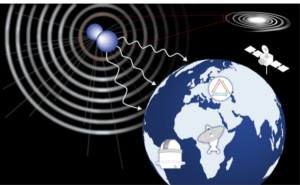
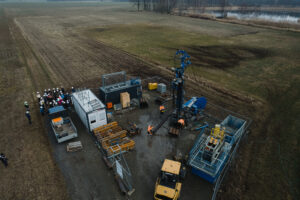

 Ideally, the strategy update document will be much shorter, and hence it will contain much less detail than the review document. Yet, all relevant information from the Town Meeting will have to be included. This is a daunting challenge, to which the SAC will set itself over the summer of 2022. Basically, it means that the strategy update will be written from scratch, following the format of the current strategy document. The strategy update will also contain many more pictures than the single one in the current review document. The SAC wanted the review document to be picture free, but the only one included replaced a lot of text to explain the interrelations of all sorts of neutrino properties and their measurements and is therefore included. Not as an illustration of the text, but as the replacement of a potential lengthy text paragraph.