AHEAD2020 is the H2020 infrastructure program for the High-Energy Astrophysics Domain recently approved by EU. Scientists and engineers from 38 research institutions and companies in 16 European countries will pool their talents to develop cutting-edge technologies and research infrastructure to learn more about the universe at high energies.
AHEAD2020 builds on the previous program, AHEAD, that was successfully completed February this year. It focused on infrastructures and technology for future high-energy satellites, in particular the Athena mission, the large X-ray space observatory due to be launched by the European Space Agency in 2030.
AHEAD activities have led to a strong improvement in the technologies for mirrors, sensor and background, to such an extent that most of the AHEAD-led studies are now being incorporated into the design of the instruments for Athena. Similar studies were carried out for the benefit of space-based gamma-ray missions focusing on the transient and multimessenger, strengthening the link between X-ray and gamma-ray communities.
AHEAD’s consortium also carried out a pilot investigation to see whether the technologies in use at its member organizations could be applied to fields other than astrophysical research. It identified a high-spectral resolution X-ray microcalorimeter cryogenic detector in a Particle Induced X-ray Emission system as suitable for non-invasive analysis in biology, fine art and archeological items or for high-sensitivity environmental measurements.
AHEAD delivered a strong visiting programme, that provided young astronomers with the theoretical and practical skills to exploit current and future generation of facilities. It opened up facilities for space-based environmental test to a wider community, including SMEs and disseminated the results to a wider audience through workshops and educational material. One video for planetary, translated into more than a dozen languages, reached an audience of 10 million people.
The successful conclusion of its acitivities allowed the AHEAD community to qualify at the advanced stage, a fundamental pre-requisite for the successful bid achieved with AHEAD2020. The overall objective remains to advance further the integration of national efforts in high-energy astrophysics keeping the community at the cutting edge of science and technology and ensuring that observatories are at the state of the art. At the same time, AHEAD2020 aims at widening its horizons to further integrate activities with the newly born multi-messenger astronomy, boosted very recently by the discovery of gravitational waves and cosmic neutrinos and of their first high energy counterparts. This will be achieved by involving a new larger community of high energy astronomers, gravitational wave and astro-particle scientists.
AHEAD2020 will strengthen the link between the theoretical efforts and the results of the observations of multimessenger sources; and continue opening the best infrastructures for data analysis of high-energy space and ground observatories. Furthermore it will integrate key infrastructures for on-ground test and calibration of space-based instrumentation and promote their coordinated use. Technological developments will focus on the improvement of selected detector, optics devices and advanced analysis tools for the benefit of future space missions and ground-based multimessenger facilities, with more emphasis on the observation of the new transient Universe. This will include the new venue of micro-satellite constellations. AHEAD2020 will support the community via grants for collaborative studies, dissemination of results, and promotion of workshops and a strong public outreach package will ensure that the domain is well publicized at both national and international level. It will also contribute to the benefit of society and to the growth of the European technology market, with specific studies of devices for cultural heritage, material composition and environmental monitoring, as well as the creation of a new generation of researcher. AHEAD2020 is expected to kick off the activities around March 2020.
In preparation of the next generation of gravitational wave telescopes, a 20-meter prototype, called the ETpathfinder, will be built in Maastricht. Now the first researchers around Prof. Stefan Hild have moved into the hosting building. At the beginning of next year, construction of the prototype for the Einstein Telescope will begin.
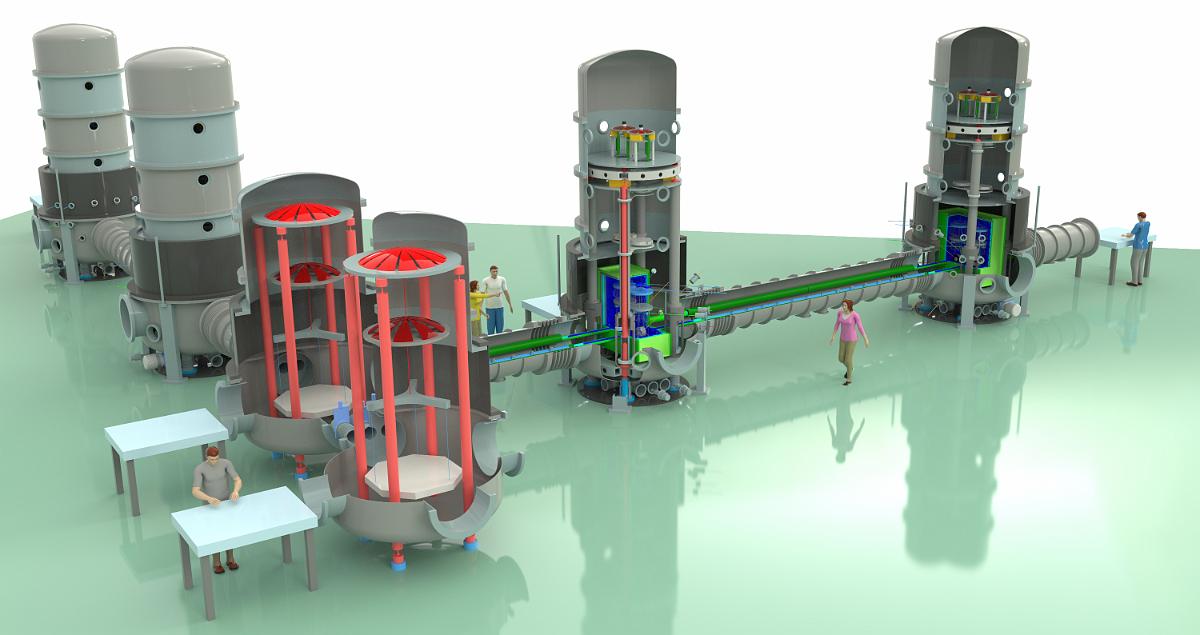
Model of the ETpathfinder. (Credits: Marco Kraan, Nikhef)
The location of the actual Einstein telescope will not be finally decided until 2021, but the Meuse–Rhine Euroregion around the city-corridor of Aachen–Maastricht–Liège, is under consideration. The Einstein telescope, Europe’s next-generation ground-based interferometer, which is more than a billion of euros, will be able to measure gravitational waves with unprecedented precision and range and to gain an insight into the early days of the universe.
To reach this goal new technologies need to be developed and shall be investigated at the ETpathfinder. “It needs to be at least 10 times more sensitive than the current generation of detectors. So we first have to develop the right low-noise technologies. Think of the glass used in the mirrors. To be able to ‘listen’ to gravitational waves, which are actually ripples in space and time, the material has to be cooled to the extreme. That’s not possible with glass, so we’re developing mirrors made of silicon”, Hild explains in an interview with M. van der Linde.
Artist view of the Einstein Telescope. (Credits: Marco Kraan, Nikhef)
The Prototype ETpathfinder is a true-to-scale model of the Einstein telescope, which will be used to test and optimize new techniques. For this purpose, a former transport hall is converted into a clean room with a low-vibration floor in which two approx. 20-metre-long arms of the interferometer are to be accommodated. The prototype is focused on cryogenic payloads to reach the following science goals:
Build a low phase noise interferometry with cryogenic silicon mirrors of up to ~100kg
Provide a flexible testbed to explore various combinations of cryogenic temperatures and laser wavelength
Investigate the interplay of thermal noise, quantum noise and control noises in the sub 10Hz region
Perform various tests of cryogenic issues (liquids vs cryo-coolers; stable control of mirror temperature; contamination handling of mirror surfaces; low power actuators …)
Commission of a testbed for new control techniques and sensors
The prototype is partly financed by an Interreg Euregio Meuse-Rhine Project and partly by different funds from the involved Institutes and Institutions. You can find a list of these partners below.
With the construction of the Pathfinder, they hope not only to gain new physical knowledge and experience in technology, but also to better position the Euregio in the decision on the final location of the Einstein telescope and to strengthen cooperation and gravitational wave knowledge in this region.
As mentioned in the roadmap, APPEC strongly supports further actions strengthening the collaboration between gravitational-wave laboratories. It also strongly supports Europe’s next-generation ground-based interferometer, the Einstein Telescope (ET) project, in developing the required technology and acquiring ESFRI status.
List of involved Institutes/Institutions
with funding from the Interreg Programm Meuse-Rhin:
The PLI (precision laser inclinometer), newly developed by CERN and JINR in Dubna, Russia (APPEC observer and member, respectively), is a new kind of seismometer that is relatively cheap and can be very sensitive, especially at low frequencies. A network of such devices has the potential of composing an efficient early warning seismic system for the High-Luminosity Large Hadron Collider (HL-LHC). During discussions at the ATF, it became soon clear that Advanced Virgo could also profit from such a system, increasing sensitivity in gravitational-wave detection at lower frequencies. For this reason, with the help of the Italian INFN, a PLI has been already tested at EGO (European Gravitational Observatory), where the upgraded version of Virgo is installed.
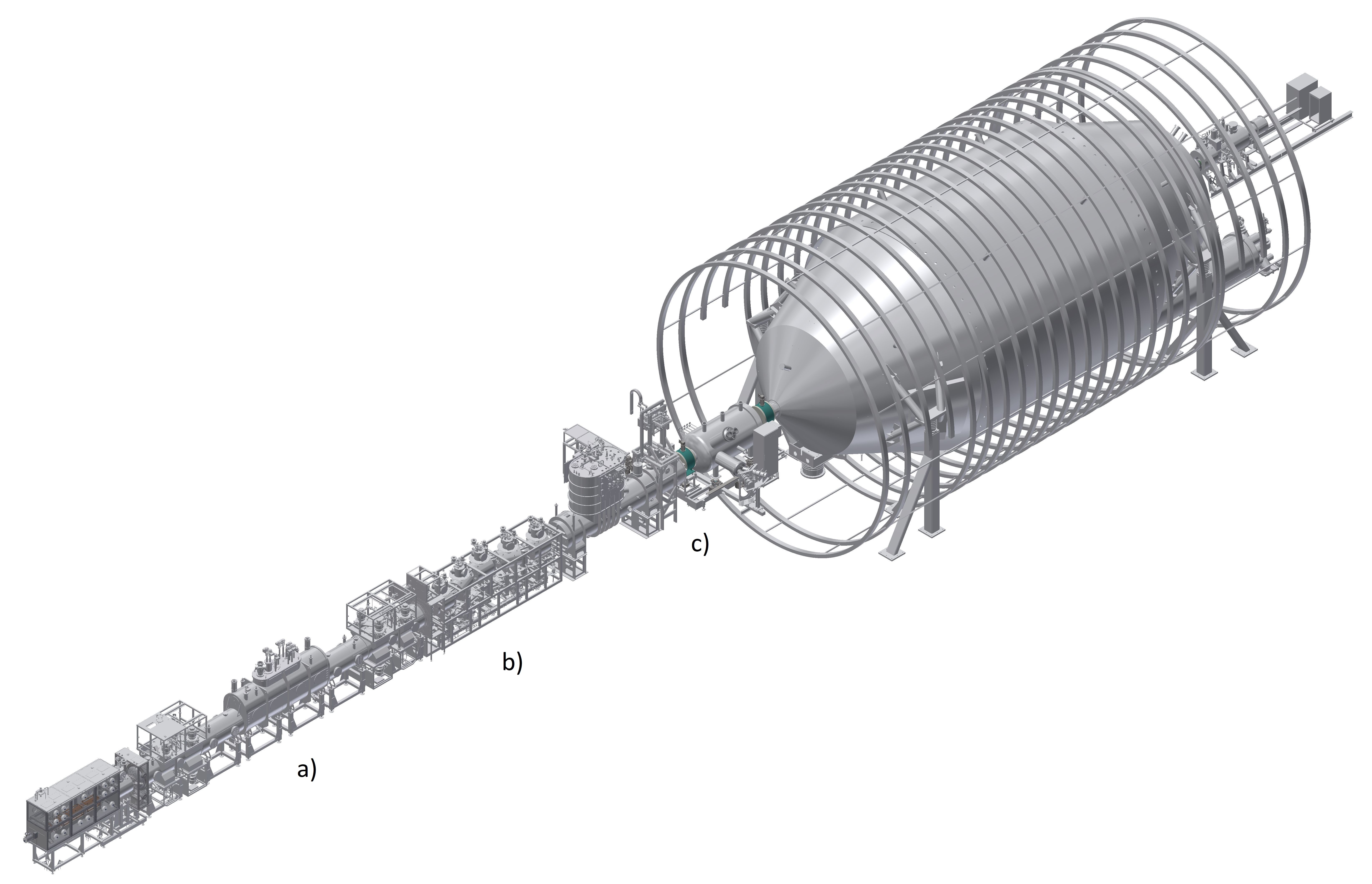
Overview of the KATRIN setup. (Credits: Steffen Lichter, KIT)
Neutrinos and their small non-zero masses play a key role in cosmology and particle physics. The allowed range of the mass scale has now been narrowed down by the initial results of the international Karlsruhe Tritium Neutrino Experiment (KATRIN).
The observation of neutrino oscillations two decades ago proved that neutrinos possess a small non-zero mass, contrary to earlier expectations. Accordingly, they play a prominent role in the evolution of large-scale structures in the cosmos as well as in the world of elementary particles, where their small mass scale points to new physics beyond known theories. Over the coming years, the most precise scale of the world, the international KATRIN experiment located at the Karlsruhe Institute of Technology (KIT), is set to measure the mass of the fascinating neutrinos with unprecedented precision.
Members of the international collaboration convene in the KATRIN control room at the Karlsruhe Tritium Laboratory during the spring 2019 neutrino mass measurement campaign. (Credits: Joachim Wolf, KIT)
In the past years, the KATRIN collaboration, formed by 20 institutions from 7 countries, successfully mastered many technological challenges in the commissioning of the 70 m long experimental setup. In spring this year, the big moment finally arrived: the 150-strong team was able to “put neutrinos on the ultra-precise scale of KATRIN” for the first time. The analysis of a first four-week measurement run in spring 2019 limits neutrino masses to less than approximately 1 eV, which is smaller by a factor of 2 compared to previous laboratory results based on multi-year campaigns. This demonstrates the huge potential of KATRIN in elucidating novel properties of neutrinos over the coming years.
This result was first released at the TAUP conference and was later officially presented during a colloquium on September 16, 2019, at the North Campus of the KIT. With lectures by Christian Weinheimer, Guido Drexlin, Kathrin Valerius, Susanne Mertens and Thierry Lasserre and a press conference, the impressive result was presented.
With the development of CMB Stage-IV in North America and the selection of LiteBIRD in Japan, the European CMB community needs to put medium- and long-term CMB planning in place in order to consolidate, exploit and extend the CMB expertise it has acquired in the last decade.
The meeting “Towards the Coordination of the European CMB program”, held September 12-13, 2019 at the AstroParticle/Cosmology (APC) Labs in Paris, France, assembled experiment builders, observers and agency representatives in a continuing effort to chart the next steps towards European coordination on CMB experiments, including collaboration in technology development, and seeking synergy with similar efforts in other parts of the world.
In addition to presentations on recent CMB results and the scientific questions of the next decade, this meeting was unique in that it specifically targeted longer-term plans for different collaborations and countries. While the LiteBIRD satellite will help define the CMB “landscape” in the coming decade, national space agencies and ESA are working with European scientists now to define European involvement. For large, ground-based efforts such as the US DOE- and NSF-proposed CMB-S4, a unified European framework is proving more difficult to assemble.
This meeting is an effort to address this. There were presentation not only from the CMB-S4 spokespeople, but also from European groups proposing to work with American CMB-S4 precursor experiments as well as from current European CMB experiment.
This workshop was the 5th in the “Florence Process” meeting series, previous meetings being held in Florence, though scheduling conflicts made it easier to hold this meeting in Paris. The agendas of these previous meeting can be found here for 2018, here for 2017, here for 2016, and here for 2015. The workshop coordinators were Carlo Baccigalupi, François Bouchet, Michael Brown, Anthony Challinor, Ken Ganga, Eiichiro Komatsu, Aniello Mennella, Enrique Martínez-Gonzalez, Joe Mohr and José-Alberto Rubiño-Martín.
On the 18th and 19th of June the APPEC Scientific Advisory Committee came together at CERN. The purpose of the meeting was to bring everyone up to date and to discuss and distribute future tasks. This includes the activities of the neutrinoless double beta decay committee, who is currently planning an APPEC community meeting on October 31. Furthermore, the establishment of a Dark Matter direct detection committee is ongoing and a draft mandate document is sent to the APPEC General Assembly for approval. In the field of CMB, a common European strategy is still under discussion, therefore a meeting is planned for September. (https://indico.in2p3.fr/event/19414/)
The proposal of regular APPEC Town meetings was discussed with great interest and approved. It was agreed to aim for a meeting in Fall 2020 and the Scientific Advisory Committee will give input on the topics to discuss.
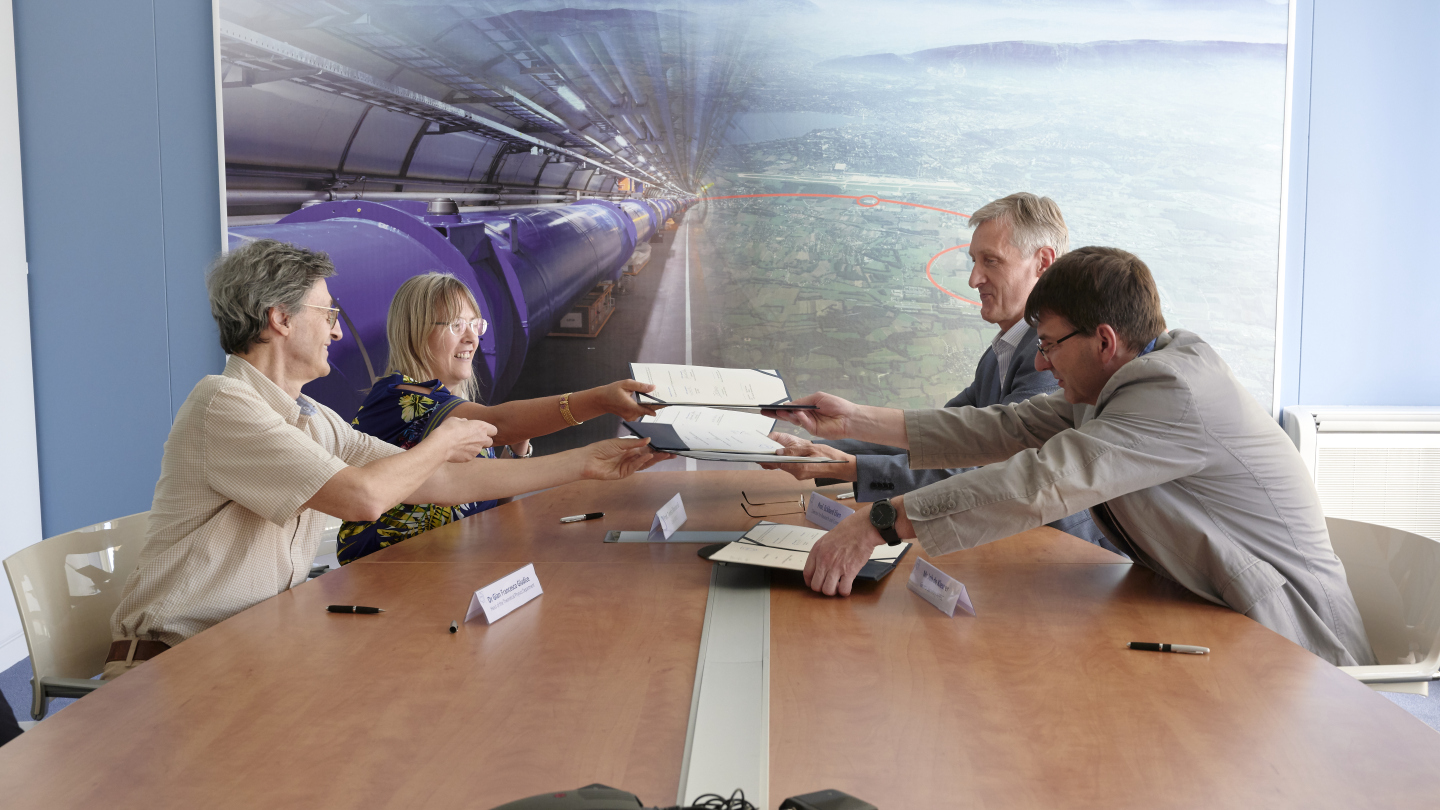
Gian Francesco Giudice, Teresa Montaruli, Eckhard Elsen and Job de Kleuver signing the official agreement for EuCAPT. Credits: CERN
On the 10th of July the European Center for Astro Particle Theory, EuCAPT was officially launched at CERN, which is also the first central hub for the next 5 years.
The first director is Gianfranco Bertone who is chairing a steering committee of 12 partners. The aim of EuCAPT is to coordinate and favour the already existing activities in several European centers and institutions active in astroparticle theory. The main activities organised by EuCAPT will include:
a. An annual general meeting of the European theoretical astroparticle physics community at the central hub;
b. Thematic workshops to be organised by other participating institutions;
c. The central hub will host dedicated meetings for small groups of scientists to consolidate/finalize collaborative projects and common proposals;
d. Coordination of existing/planned activities of the participating institutions to prevent overlaps and enrich the overall portfolio. Activities that are part of the coordinated portfolio will be labelled as EuCAPT activities;
e. Contacts/coordination with ApP theorists from all over the world favouring collaboration/visits and bolstering common actions also with institutions not belonging to the EuCAPT;
f. Advice, referee support, training concerning funding proposals;
g. Create and operate an EuCAPT website, including an activity calendar.
Along with the official launch the first meeting of the steering committee took place. We are looking forward to a fruitful cooperation which will further advance the progress in the field of theoretical Astroparticle Physics.
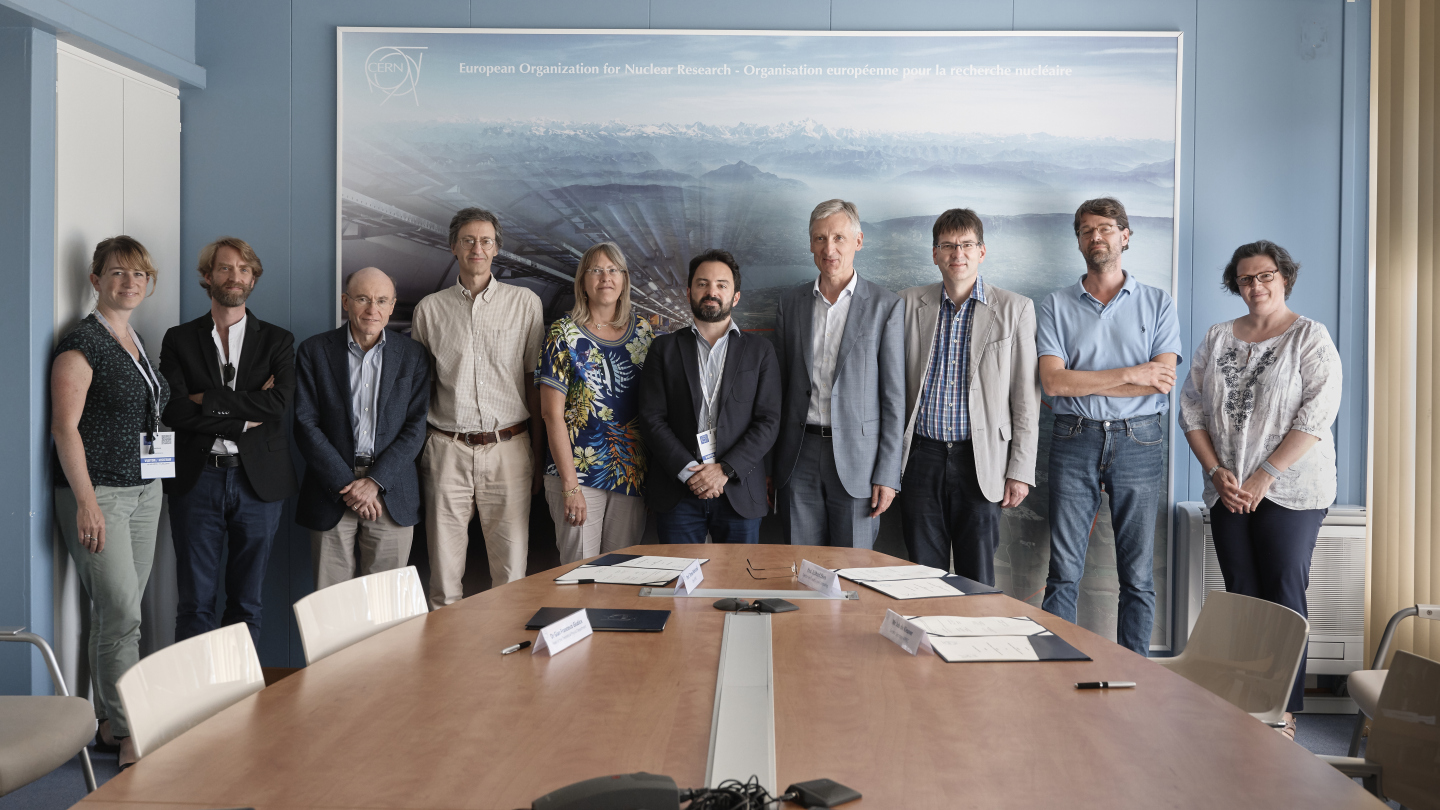
Francesca Moglia, Antoine Kouchner, Antonio Masiero, Gian Francesco Giudice, Teresa Montaruli, Gianfranco Bertone, Eckhard Elsen, Job de Kleuver, Tony Riotto and Silvia Pascoli. Credits: CERN
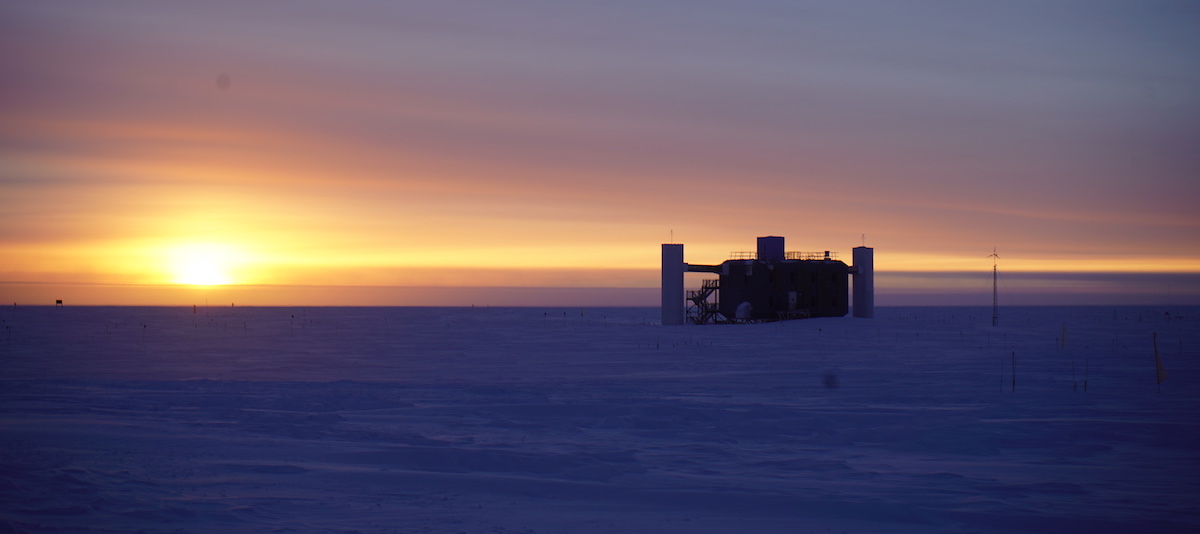
Sun setting behind the IceCube Lab at the South Pole. Credits:Kathrin Mallot, IceCube/NSF
The IceCube Neutrino Observatory at the South Pole, which in 2017 found probable evidence of a first source of high-energy cosmic neutrinos, is now being expanded into a neutrino laboratory.
The plans to extend the IceCube detector to lower energies in order to precisely measure the properties of neutrinos have now been approved by the international sponsors of the collaboration. As part of this IceCube upgrade project, seven additional cables (“strings”) equipped with optical sensors, will be installed in the deep ice in the center of the existing 86 strings. Thus, 700 improved sensors will be added to the existing 5160 optical modules in the glacier ice at the geographical South Pole.
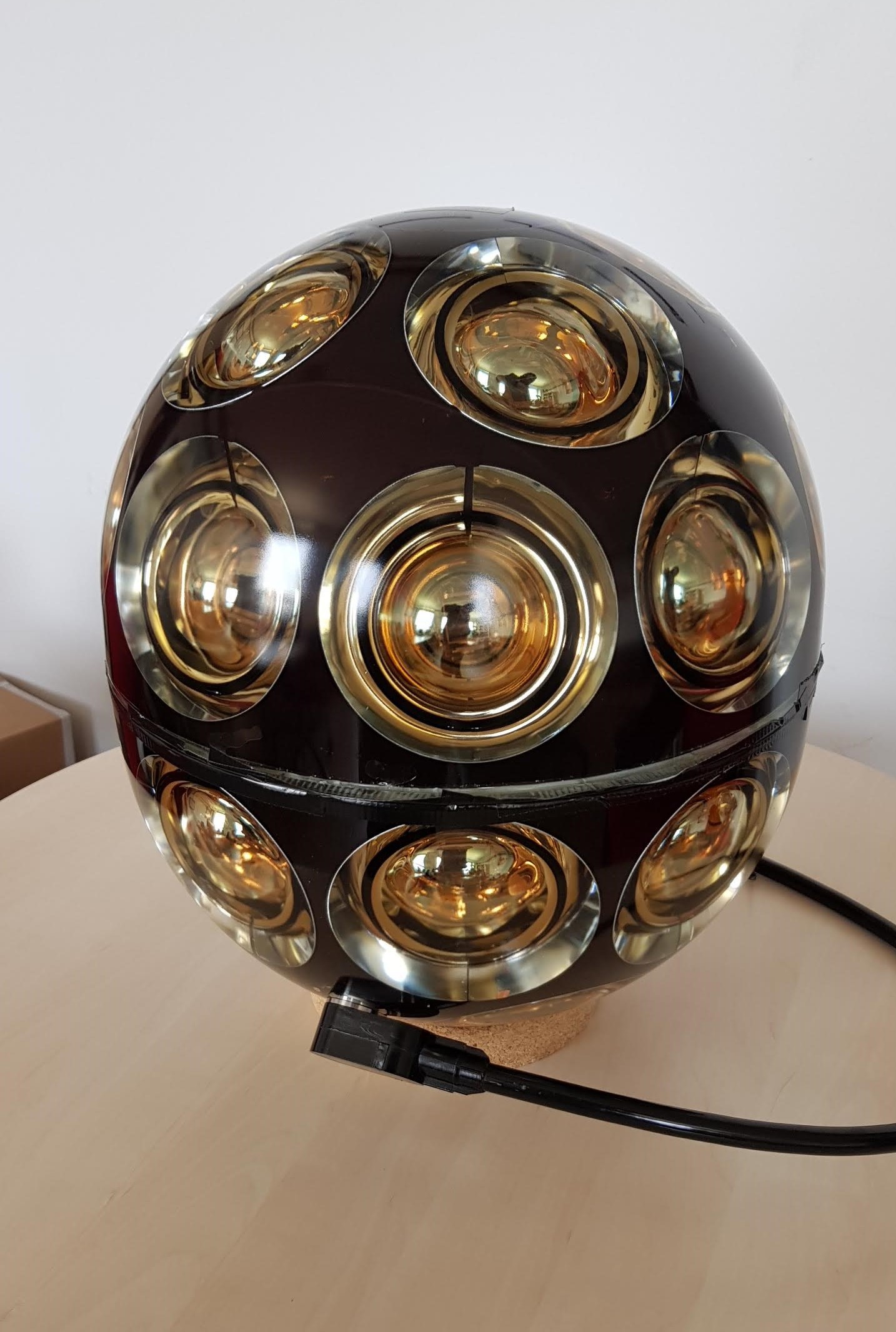
A prototype of one of the IceCube Upgrade project’s new sensor module designs, called the mDOM, which has multiple photomultiplier tubes arranged for uniform sensitivity. Credits: DESY, IceCube Collaboration
The $37 million IceCube upgrade project, which will be installed in the Antarctic summer of 2022/23, has now received a $23 million NSF Mid-scale Research Award. The planned IceCube upgrade detector will consist of different types of optical modules, which will also be tested for a ten times larger future expansion of IceCube, IceCube-Gen2. One of the new optical sensors, inspired by the KM3NeT optical modules, is the multi-pixel Digital Optical Module (mDOM). The mDOM was developed in Europe by research groups at the Universities of Erlangen-Nuremberg and Münster and by DESY, Germany. The German Electron Synchrotron DESY and the Karlsruhe Institute of Technology (KIT), as research centres of the German Helmholtz Association, are funding the construction of 430 mDOMs with a total of $6.4 million. Compared to the previous modules, the mDOM impresses with its significantly larger and segmented detection surface, which significantly increases its sensitivity. Beside NSF and Germany the upgrade project gets additional support from partners in Japan as well as from Michigan State University and the University of Wisconsin–Madison. Also involved in the preparation of the Upgrade are further 18 European university groups from Germany, Belgium, Sweden, Switzerland, Denmark and the UK. Sweden is still waiting for a decision on its application for a significant contribution to the Upgrade’s investments, and Belgium has pledged to finance a multi-million contribution to IceCube-Gen2.
“Neutrinos are the least understood particles in the standard model of particle physics,” explains Alexander Kappes, professor at the University of Münster and head of the mDOM project, referring to the scientific model that describes the behaviour of subatomic particles with unprecedented accuracy. “Neutrinos have properties not covered by the Standard Model.”The principal goal of this IceCube extension is to enhance the cubic-kilometer detector to gain precision in studies of the oscillation properties of neutrinos, which can transform – or oscillate – from one type of neutrino to another as they interact with other particles and travel through space.
Neutrino oscillations – a quantum effect that earned its discoverers the 2015 Nobel Prize in Physics – proved neutrinos have small but well-defined mass. The three neutrino mass states are not exactly the same as the electron, muon, or tau flavors, but rather mixtures of the three. The mixing phenomena are not fully understood, but they are related to what physicists call the neutrino mass ordering, i.e., which of the neutrinos is the heaviest and which is the lightest.
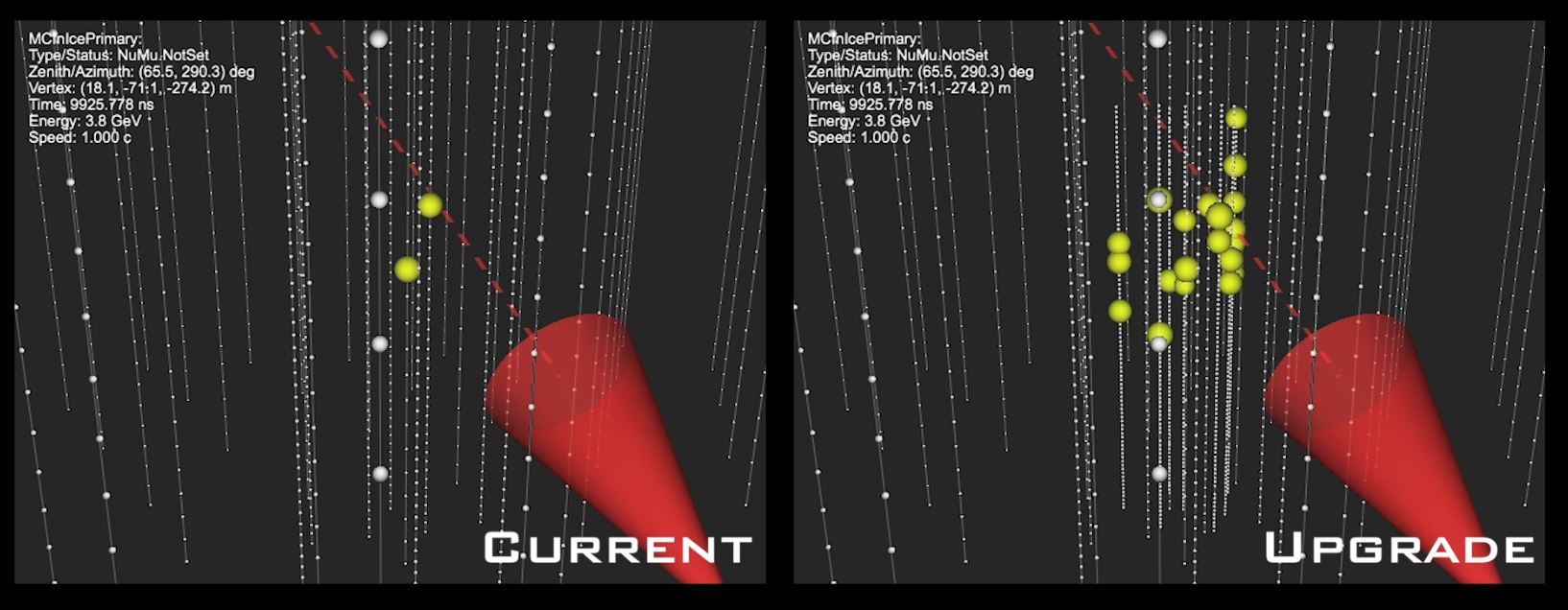
This side-by-side comparison of a simulated muon neutrino event shows how the Upgrade will be able to detect events of lower energies than the current detector. Credits: IceCube Collaboration
The IceCube Upgrade, will provide world-leading measurements of the tau neutrino appearance, which if found to be different from standard oscillations would point to new physics, such as the existence of a fourth type of neutrino – the so-called sterile neutrino.
Another goal is to better characterize the ice around IceCube sensors and thereby obtain better performance with the existing detector, thus yielding more precise reconstructions of neutrinos at all accessible energies. Most notably, this will give high-energy neutrino astronomy a boost, as IceCube will be able to resolve the neutrino sky more sharply. Furthermore, understanding the ice better will enable the collaboration to improve the reconstruction of archived data collected over the past years.
The IceCube Neutrino Observatory is located at NSF’s Amundsen-Scott South Pole Station. Management and operation of the observatory is through the Wisconsin IceCube Particle Astrophysics Center at UW–Madison. The scientific program is run by the international IceCube Collaboration, with more than 300 scientists from 52 institutions spanning 12 countries, thereof 6 from Europe.
The APPEC Community Meeting on Neutrinoless Double Beta Decay will take place on 31 October 2019 at the Hallam Conference Centre, London, UK.
This meeting aims at discussing and collecting the input of the community on the roadmap document (to follow) prepared by the Double Beta Decay APPEC Committee for the APPEC SAC on the future neutrinoless double beta decay experimental programme in Europe. The ultimate goal is to maintain a leading role in this scientifically important quest, in line with APPEC Roadmap recommendations. We will assess the existing, planned and proposed technologies, their discovery potential and technical challenges, making a critical examination of resources and schedules. We will also review the theoretical issues and the status and uncertainties on the nuclear matrix element evaluation.
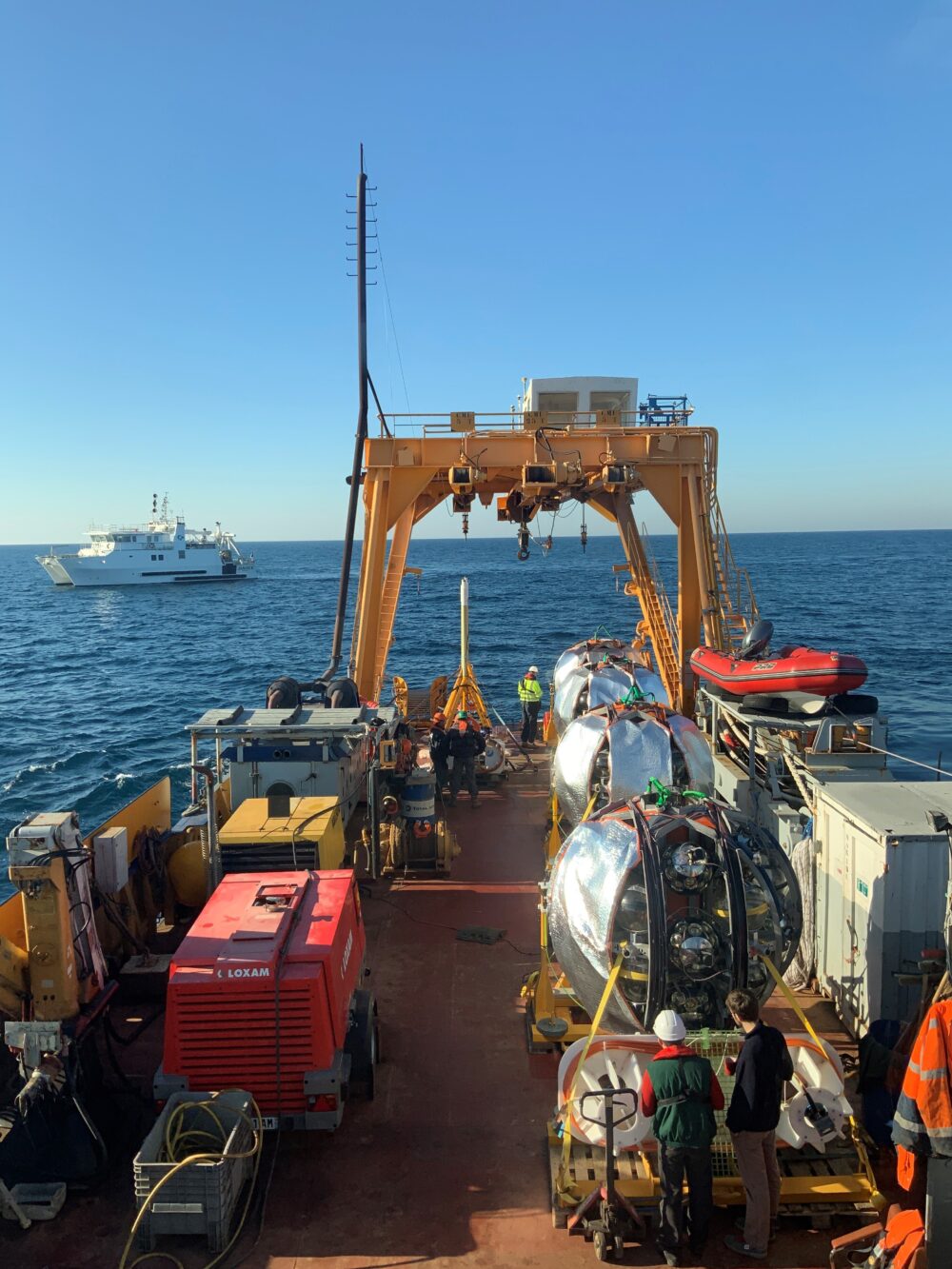
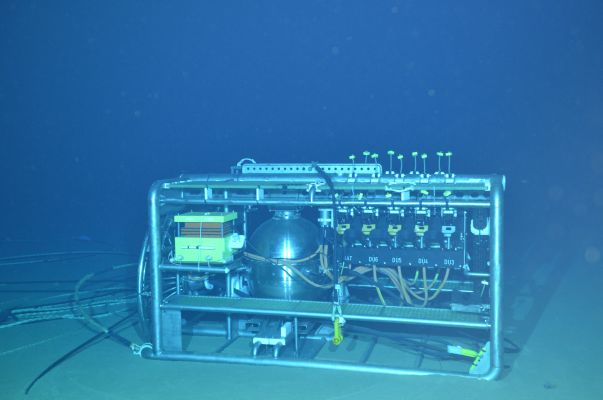
After a series of sea operations this year, the most recent of which was 29 June-1 July 2019, the KM3NeT/ORCA deep-sea neutrino detector is now continuously taking data with its first four neutrino detection units.
Located in the Mediterranean Sea at a depth of 2437 m and 40 km offshore from Toulon, France, the ORCA detector together with its sister ARCA, located offshore from Sicily, will allow the scientists of KM3NeT to study the fundamental properties of the neutrino elementary particle and perform neutrino astronomy.
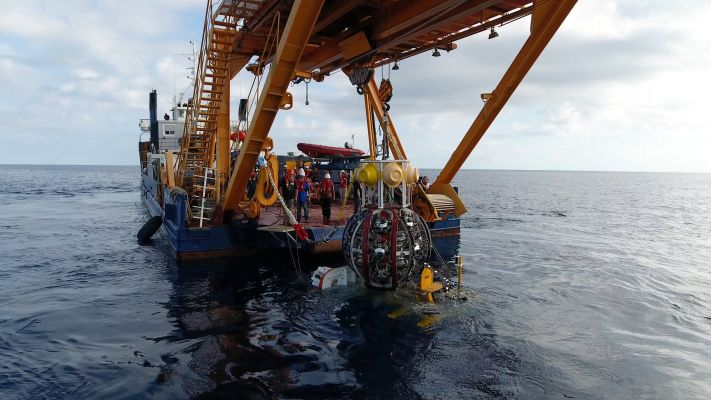
During the sea operation, a detection unit (DU), wound like a ball of wool around its spherical deployment frame, is carefully lowered from a boat to its designated position on the seafloor. Using a remotely operated submersible, controlled from a second boat, the detection unit, still on its frame, is then connected to the junction box of the seafloor network. Once the electrical and optical connections to the shore station in La Seyne-sur-Mer are confirmed, the go ahead is given to trigger the unfurling of the detection unit to its full 200 m height. During this process, the deployment frame is released from its anchor and floats towards the surface while rotating. In doing so, the string unwinds, eventually leaving behind a vertical detection unit.
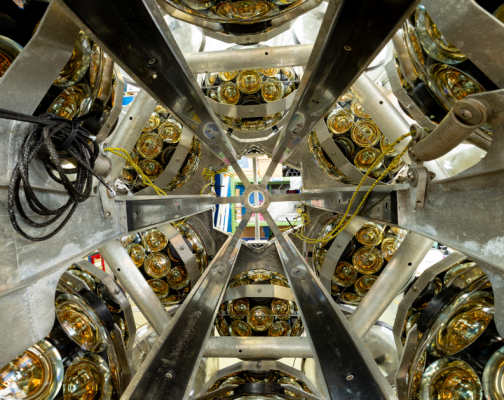
The KM3NeT design features multi-PMT optical modules each comprising 31 three-inch PMTs and each detection unit comprises 18 such optical modules. For ORCA, the detection units are spaced about 20 m from each other on the seafloor and the vertical spacing of the optical modules is about 9 m.
Almost immediately after power on, the trajectories of downgoing atmospheric muons, resulting from cosmic ray interactions above the detector, were reconstructed from the recorded light signals of the more than 2000 PMTs.
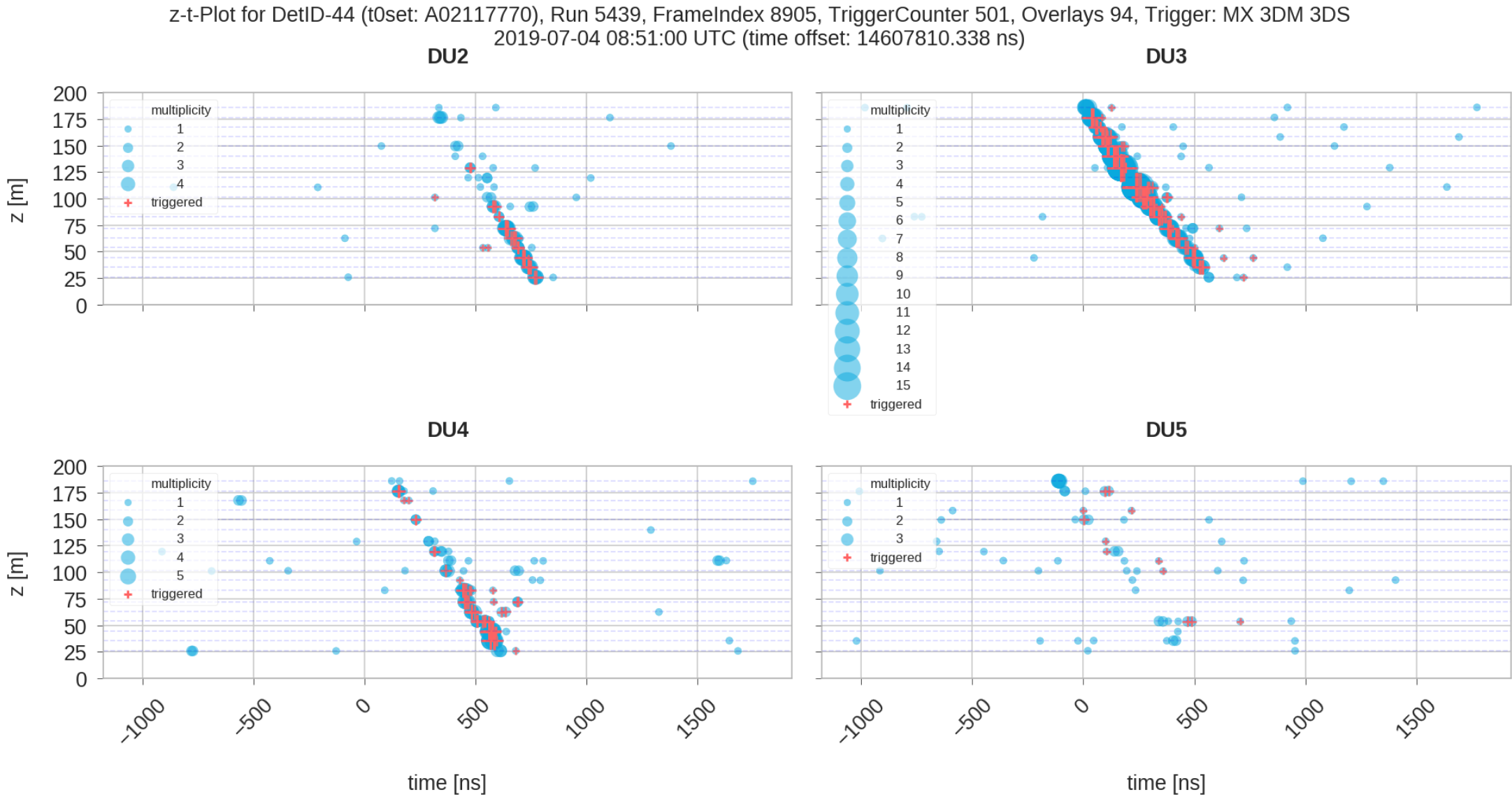
Online display of a downgoing muon event detected simultaneously by all four detection units. The height versus the time of the recorded light signals are shown separately for each of the detection units. The size of the circle indicates the number of PMTs giving a hit on that optical module.



 AHEAD2020 builds on the previous program, AHEAD, that was successfully completed February this year. It focused on infrastructures and technology for future high-energy satellites, in particular the Athena mission, the large X-ray space observatory due to be launched by the European Space Agency in 2030.



 With the development of