The nuclear, particle and astroparticle physics communities, represented by the three committees/ consortia NuPECC, ECFA and APPEC want to join their forces not only to solve the questions on the smallest and the largest structures in nature but also to improve on diversity, working conditions and societal impact. The Deliberation document on the 2020 Update of the European Strategy for Particle Physics indicate the importance of mutual cooperation between the communities working on the science fields of relevance for APPEC and NuPECC with ECFA and includes the following recommendation, which is fully supported by APPEC: “There are many synergies between particle physics and other fields of research. Clear examples are nuclear and astroparticle physics, which address common fundamental questions and use common tools.”
The document further specifies this cooperation and concludes with a concrete proposal that encourages us to continue on our common path: “Links between accelerator-based particle physics and closely related fields such as astroparticle physics and nuclear physics should be strengthened through the exchange of expertise and technology in areas of common interest and mutual benefit. To further explore and enhance the synergies, a periodic joint seminar organised by APPEC, ECFA and NuPECC was recently established. For example, on the diverse topic of dark matter addressed with complementary experimental approaches, communication and results-sharing across communities is essential. ”
Joint ECFA-NuPECC-APPEC Seminars
The first Joint ECFA – NuPECC – APPEC Seminar (JENAS) was held at Orsay in 2019. There it was decided to have such meetings on a bi-yearly basis.
The chairs of APPEC, ECFA and NuPECC issued a call for venues for the second JENAS event, a 3 day meeting which will happen in the first half of 2022. The Joint Seminar is to inform our communities about each other’s scientific, technological and organizational challenges and opportunities. Two excellent proposals were received before the deadline at the end of September to host the event in Madrid and JINR. The choice of the organizing board of JENAS (ECFA: Manfred Krammer, Carlos Lacasta, Jorgen D’Hondt; NuPECC: Angela Bracco, Eberhard Widmann, Marek Lewitowitcz; APPEC: Teresa Montaruli, Stan Bentvelsen, and Marco Pallavicini) was difficult, given that the two proponents have very strong expertise in successfully hosting international events with the highest standards. It was decided that the venue will be Madrid, given the consideration that JINR is also proposed for a meeting in 2022 by ECFA.
Expression of Interest
A call for Expression of Interest (EoIs) was submitted by the Chairs (Teresa Montaruli, APPEC; Jorgen D’Hondt, ECFA; Marek Lewitowicz, NuPECC) of the three commitees/Consortia, with a request to identify the potential communities across the border of at least 2 of them and elaborate on the synergy topic and possible objectives.
Five EoIs were submitted and others will follow most probably. They are:
Storage Rings for the Search of Charged-Particle Electric Dipole Moments (EDM), by C. Carli, P. Lenisa, J. Pretz for the JEDI and CPEDM collaborations (https://indico.ph.tum.de/event/4482/overview)
A task force was formed to advise in the process of consolidating the scientific objectives and the organization, with the ultimate scope of making these initiatives sustainable over a long term these communities.
The respective EoI task force is composed by:
Francesca Calore and Uwe Oberlack for APPEC, Isabell Melzer-Pellmann and Claude Vallee for ECFA, Boris Sharkov for NuPECC
Tomek Bulik and Jo van den Brandt for APPEC, Peter Levai and Nick van Remortel for ECFA, Boris Sharkov and György Wolf for NuPECC
Jurgen Brunner and Elena Cuoco for APPEC, Marek Tasevsky and Mikko Voutilainen for ECFA, Franck Sabatié for NuPECC
Fiorenza Donato and Xin Wu for APPEC; Navin Alahari and György Wolf for NuPECC
Mike Seidel for ECFA, Hans Stroeher and Eberhard Widmann for NuPECC
A number of kick-off meetings, a global one and individual ones were organized by the Chairs. Excellent science have been illustrated in detail in each of them and synergy clearly highlighted.
For each EoI a topical follow-up meeting was organised by the coordinators together with the relevant members of the Task Force. The aim of these meetings was to develop a concrete roadmap for the future process.
Recently, two Test Science Projects (TSP), related to the science proposed by the two EoIs, were financed by the EOSC03 program for the project ESCAPE. One concerns relevant synergies, also highlighted by iDMEu on the dark matter searches with direct and indirect detection and colliders. The TSP has the aims of (1) understanding the nature of DM by collecting data, analysis and results from astronomy, particle and nuclear physics sources on a broad platform that will be ultimately hosted on the EOSC Portal; (2) exploiting synergies and complementarities across different communities, creating a unique link between DM as fundamental science question and the Open Science services needed to answer it. The other TSP is the Extreme Universe & Gravitational waves, with the aim to perform frontier multi-messenger science to understand extreme matter and particle processes in strongly curved space-time; to combine astronomy e-infrastructures and focus on data organization for different wavelengths/messengers and different types of extreme astrophysical transients (SNe, GRBs, FRBs, TDE,s), so that they can be easily gathered, analyzed and modeled. (See Giovanni Lamanna Talk at the ESFRI RIs – EOSC Workshop, Oct. 6-7)
Finally, a call for concrete proposals for financial support of EoIs activities to be submitted to the Committees was launched on October 14, 2020 with a deadline on November 23, 2020.
List of items that could be considered is:
1) Support the organization of gatherings across communities on the EoI topic, e.g. workshops, town meetings, platforms for continuous discussions.
2) Support the dissemination of the EoI topic, e.g. professional website, publications, outreach projects including city science projects.
3) Support to foster the cross-disciplinary research environments in a sustainable fashion.
Funding will be limited and may not always fulfil the wishes. Matching the requested funds with in-kind funds from the proponents themselves will be appreciated.
Diversity Charter
We recognise the importance of diversity as a motor to boost productivity and innovation, fight prejudice and discrimination and contribute to the improvement of social and economic standards.
The three organisations joined together to propose a Diversity Charter to be signed by research organisations, collaborations and conferences within the fields of Particle Physics, Nuclear Physics and Astroparticle Physics, who value diversity and commit to promote equal opportunities at all levels. A survey is a concrete proposed action. A request to adhere to the charter and provide data has been issued to some experiments. Any other experiment can apply to APPEC for joining the proposed Charter.
Recognition of individuals in big collaborations
The working group on recognition of individuals in big collaborations also made progress in the last month.
The key objectives of this working group are to create awareness, initiate discussions inside collaborations, exchange and discuss best practices among all three communities, and reflect on alternative or additional procedures,
The working group was installed in July 2019 in Ghent, It continues previous work by ECFA, which among other activities performed a community-wide survey in 2018. A second survey in 2020-2021 to monitor the progress on the topic will potentially be performed.
Initial meetings with the collaborations were held separately for the three communities in July. The APPEC representatives, Emmanuel Gangler and Karl-Heinz Kampert reported two lively and constructive meetings with the astroparticle experiments. A next round of meetings to collect feedback from the collaborations is planned for this autumn.
Teresa Montaruli, chair of the APPEC General Assembly
Up-to-date information on all efforts are available through the newly established JENAA website: http://www.nupecc.org/jenaa/
The Pierre Auger Collaboration has reported a measurement of the spectrum of cosmic-rays above 2.5 x 10¹⁸ eV made with unprecedented precision. A new spectral feature has been identified just above 1019 eV which is found to be independent of the direction from which the particles arrive. Taken together, the observations exclude the hypothesis that the highest-energy cosmic-rays come from a small number of nearby sources and that protons dominate in the particle beam.
One of the water-Cherenkov detectors (foreground) being filled with water. A fluorescence-detector station can be seen about 1500 m away on the hill in the background. An antenna at the Cherenkov detector is used to send data to another on the mast at the fluorescence station. Signals are then sent to the control room of the Observatory, 10 km away.
Credit: Pierre Auger Observatory
The existence of cosmic rays, dominantly the nuclei of atoms, with energies above 1019 eV has been known for over 60 years but limited data have allowed speculations on their origins to range freely. While it has long been thought that the sources of these particles must lie outside our galaxy, it is only recently, through the work of the Pierre Auger Collaboration, that this hypothesis has been confirmed experimentally1 with the demonstration of a modulation in right ascension of the arrival directions of events with energies above 8 x 10¹⁸ eV. Specifically, the first harmonic is 4.7 ± 0.8 % with the maximum of the effect in a direction nearly 180° from that of the galactic centre. The amplitude increases with energy. Our understanding of the birthplaces of these particles has now been further improved through measurements of the energy spectrum of ultra-high energy cosmic rays (UHECR) recently reported2 by the Collaboration and highlighted in APS Physics3. The results are derived from an unrivalled sample of over 215,000 events with energies above 2.5 x 10¹⁸ eV.
Properties of UHECRs are deduced by studying the cascades of electrons, photons and muons, usually called extensive air-showers, created by the impacts of high-energy nuclei on the atmosphere. At 1019 eV, where the flux is around 1 particle per km2 per year, a single nucleus generates ≈1010 particles spread over about 25 km2 at ground-level. At the Auger Observatory such showers are detected using an array of 1600 water-Cherenkov detectors deployed on a 1500 m triangular grid covering 3000 km2. Arrival directions are measured with a precision of ≈ 1°. The array is over-looked from four stations, each containing six telescopes that are used to detect fluorescence light produced by the excitation of nitrogen as the shower traverses the atmosphere. A calorimetric estimate of the energy for the ≈ 10% of events recorded on moonless nights is thus possible. In the picture a single Cherenkov detector and one of the fluorescence stations are shown.
The Auger measurements are unique as methods have been developed to enable the energy of each particle that initiates a cascade to be determined independent of assumptions about primary mass or of knowledge of the hadronic processes that control the cascade, many of which are at energies well-beyond that reached at the LHC. This is achieved by using the sub-set of events detected simultaneously with the fluorescence and water-Cherenkov detectors to provide a calibration. The energy resolution improves from ≈ 20% at 1 x 10¹⁸ eV to ≈ 7% one decade higher.
The energy density of UHECRs as a function of energy is shown in the plot below. The two well-established features, the ankle at 5 x 10¹⁸ eV and the steepening above 4 x 10¹⁹ eV, are clearly evident. In addition, a new feature at ≈ 1.3 x 10¹⁹ eV has been identified. A long-standing and popular framework to explain the observations has been that UHECRs are from sources distributed universally throughout the Universe that accelerate only protons. Both the ankle and the steepening features would then be explicable by energy losses of these protons through interactions with the photons of the cosmic microwave background. However, not only are our results on mass composition4 in strong tension with a pure proton composition around and above the ankle energy, but also the new feature, absent from the popular framework, rules out such a pure-proton paradigm. Further, the attributes of all three spectral features are found to be independent of the declination band from which events arrive. Thus, from this observation, the hypothesis that the new feature could stem from the distinctive spectrum of a local source that emits only protons and contributes significantly to the total intensity is also disfavored.
The energy density in cosmic rays as above 2.5 x 10¹⁸ eV. A new feature has been identified in the spectrum between the ankle, where the spectrum flattens at ≈ 5 x 10¹⁸ eV, and the place where it steepens sharply above ≈ 4 x 10¹⁹ eV. An illustrative comparison of estimates of the fluxes of different nuclei at the top of the atmosphere, deduced from the model discussed in the text, is indicated by the coloured lines: protons (red), helium (white), CNO group (green), Si (blue) and Fe (cyan).
Credit: APS/Alan Stonebraker; adapted from A. Aab et al. (Pierre Auger Collaboration), Phys. Rev. Lett. 125, 121106 (2020)
By contrast, our results better fit a scenario in which several nuclear components contribute to the total intensity and in which the electromagnetic fields permeate source environments where nuclei are accelerated to a maximum energy proportional to their charge. The best reproduction of data by simultaneously fitting the energy spectrum and our estimate of the mass composition is shown in the plot above. In this framework, the steepening results from the combination of the maximum energy of acceleration of the heaviest nuclei at the sources and their photodisintegration around 5×10¹⁹ eV when colliding the background photon fields permeating the extragalactic space (the GZK5 effect). The steepening at ≈ 1019 eV reflects, on the other hand, the interplay between the flux contributions of the helium and carbon-nitrogen-oxygen components injected at the source with their distinct cutoff energies, shaped by photodisintegration during the propagation. To make up the all-particle spectrum below the ankle energy, as well as to fit the composition data, an additional component is further required, the origin of which remaining to be uncovered.
Goats surround one of the water-Cherenkov detectors of the Pierre Auger Observatory in Argentina. The Andes are in the background.
Credit: Pierre Auger Observatory / Miguel Salvadores
Above 5×10¹⁸ eV, the energy content of UHECRs in every cubic Mpc inferred from our data is ≈ 5.6×1053 erg, corresponding to about 1/4th of a solar mass. To supply this energy content, the luminosity density that sources emitting continuously must inject into extragalactic space as UHECRs can be constrained to ≈ 6×1044 erg Mpc−3 yr−1 above 5×10¹⁸ eV at a redshift of zero. Classes of extragalactic sources that match such rates in the gamma-ray band include active galactic nuclei and starburst galaxies. The flux pattern from these objects also provides an indication of anisotropy in UHECR arrival directions6.
The Auger Collaboration has devised an upgrade of the extensive air-shower array with scintillators installed above the water-Cherenkov detectors. This enhancement will enable concomitant measurements of the electromagnetic and muonic components, the combination of which yields the principal mass-sensitive observable for such instruments. Obtaining more information on the composition of cosmic rays at the highest energies is crucial to pinning-down the origin of the observed flux features.
1 A. Aab et al, Science 357 (2017) 1266-1270 ; A. Aab et al, The Astrophysical Journal 868 (2018) 4 2 A. Aab et al, Physical Review Letters 125 (2020) 121106; Physical Review D 102 (2020) 062005 3 S. Razzaque, Physics 13 (2020) 145 4 A. Aab et al, Physical Review D 90 (2014) 122005; Physics Letters B 762 (2016) 288 5 K. Greisen, Physical Review Letters, 16 (1966) 748; G. T. Zatsepin and V. A. Kuzmin, JETP Letters 4 (1966) 6 A. Aab et al, The Astrophysical Journal Letters 853 (2018) L29
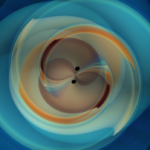
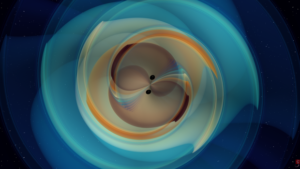
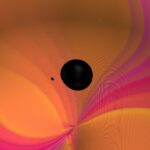
A still image from a numerical simulation of two black holes that inspiral and merge, emitting gravitational waves. The simulated gravitational wave signal is consistent with the GW190521 observation made by the LIGO and Virgo. (Credit: N. Fischer, H. Pfeiffer, A. Buonanno (Max Planck Institute for Gravitational Physics), Simulating eXtreme Spacetimes (SXS) Collaboration)
Virgo and LIGO have announced the detection of an extraordinarily massive merging binary system: two black holes of 66 and 85 solar masses, which generated a final black hole of around 142 solar
masses. The remnant black hole is the most massive ever detected with gravitational waves. It lies in a range of mass (from 100 to 1000 solar masses) within which a black hole has never before been
observed, either via gravitational waves or electromagnetic observations, and may help to explain the formation of supermassive black holes. Moreover, the most massive component of the binary
system lies in a mass range forbidden by stellar evolution theory and challenges our understanding of the final stages of massive stars life.
The nature of dark matter (DM), an invisible substance which constitutes 85% of matter in the observable universe, is one of the greatest puzzles in cosmology and astroparticle physics today. The most compelling and simplest solution is that DM is made of a new type of fundamental particle, not yet observed due to its incredibly feeble interaction with visible matter. The XENON collaboration produced world-leading results in the hunt for dark matter with the XENON1T detector and was just beginning to assemble the upgrade, XENONnT, when Covid-19 hit the world. This article describes the remarkable work done by some members of the collaboration to build XENONnT during Covid-19 times.
The XENON collaboration, a group of about 160 scientists from Europe, the USA and Asia, builds ultra-sensitive detectors with the aim of observing particle DM via scatters with atomic nuclei or electrons in a large volume of liquid xenon, kept cold at -95 °C. These detectors are based on the two-phase time projection chamber (TPC) technique, where the tiny light and charge signals released when a particle crosses the detector is observed. The measurement of the deposited energy and of the interaction position allows for the rejection of the majority of background events from radioactivity, maximizing the chance of observing ultra-rare interactions as predicted from DM.
The latest experiment in the XENON family was XENON1T, which operated 3.2 tons of liquid xenon in total, with 2 tons viewed by two arrays of photomultiplier tubes (PMTs), until the end of 2018 at the Laboratori Nazionali del Gran Sasso (LNGS) of INFN in Italy. This experiment reached the lowest background ever observed in a direct DM detection experiment, and set the strongest constraints on the interaction cross section of DM particles with nucleons above particle masses of about 85 MeV/c2 [PRL 121, 2018, PRL 123, 2019]. It also observed for the first time the two neutrino double electron capture process in 124-Xe with a half-life of 1.8 x 10²² years – the slowest process ever observed directly [Nature, Volume 568, April 2019]. Recently XENON1T reported an exciting excess of events in the low-energy region, which might be due to Tritium beta-decays, but could also be a hint for solar axions or other new physics beyond the Standard Model.
The XENONnT detector is an upgrade to XENON1T, with an increase of the active mass by a factor of three (8.3 tons of liquid xenon in total, with 5.9 tons in the TPC). While XENONnT will utilise much of the infrastructure built for XENON1T, it will operate a new TPC equipped with 494 PMTs and a neutron veto (based on Gd-loaded water) contained within the existing water Cherenkov muon veto. It will also feature a new liquid xenon purification system, as well as a radon distillation column, among other vital sub-systems.
The assembly during this challenging times was only possible due to the excellent management of the crisis and the support by LNGS, especially it’s director, Prof. Stefano Ragazzi and other members of the laboratory. The LNGS director imposed at all times very adequate and reasonable rules to minimize risks, following the general evolution of the crisis. This included adequately growing access restrictions and very strict rules for any work to be performed. The XENON collaboration followed these rules very carefully and asked over some time daily for permission of very careful chosen next steps, performed by a team of decreasing size.
Covid-19 started in December 2019 in Wuhan, China, and it seemed very far away and not relevant. On February 21 first cases were detected in the Milano area and the Italian government implemented red zones in the Lombardy region and in the Veneto area already on February 22. When the first Covid-19 cases appeared in Italy in mid February 2020, the TPC crew at LNGS was close to start assembling the detector components in a clean room (CR) above ground. The assembly work started February 24, and was completed in record time, about a week later.
On March 3, Bergamo became a red zone, expanded on March 7 to a large part of northern Italy and on March 10 to all of Italy. Within a rather short time life had changed drastically including life and work at LNGS. On March 5, the carefully packaged TPC was transported to the underground (UG) site with a dedicated low-vibration truck and an experienced driver. The goal was to minimize vibrations as much as possible during the short but potentially dangerous journey. On March 8 it was announced that only LNGS personnel will be allowed to access the above ground facilities. The Covid-19 related lockdown in Italy was issued on March 9. UG work was also strongly restricted to essential or urgent operations starting on March 10. The XENON collaboration performed in this phase well prepared steps involving a decreasing number of people who stayed at LNGS. From some moment on all steps were reviewed and approved by the LNGS director on a daily basis. Nonetheless, the work UG continued, for the TPC had to be inserted in the inner cryostat vessel, cabled and connected to the cryogenic systems, flushed with gaseous nitrogen to reduce radon plate-out etc. All these delicate operations and the following initial detector commissioning could be successfully completed with the help of a small group of people who was willing to work very flexible under very special conditions.
On March 20 first Covid-19 cases were found in Paganica close to LNGS where a number of the XENON team members were living. Some group members left at this time as planned. Others stayed even though their group leaders asked them to leave LNGS if they feel uneasy or endangered. A number of them stayed and carefully minimized risk as much as possible. The XENON collaboration owes all of those who worked under these conditions a lot and it is to a large extend their achievement that we have now a detector which is already in commissioning phase. Currently – as of summer 2020 – the XENONnT detector is well under commissioning at LNGS – with first light being observed in the gaseous xenon phase and full operation expected in the next months.
In the following, members of this team describe this challenging and stressful experience. Due to their dedication and willingness to remain on site while most others left, the XENONnT TPC was successfully installed UG, the necessary tests completed and the commissioning phase could start. This allowed the collaboration to see first light in the PMT arrays only a few weeks later. It is very interesting to hear the stories from some of these team members, since this shows the growing restrictions, the dedication of the team members, the adjustments necessary to complete such an operation in the very challenging Covid-19 situation.
CHIARA CAPELLI (PhD, UZH) – Assembly of the TPC
February 24 (and before) to March 5
I came to LNGS around the middle of February, to start preparing the components I had to take care and to participate in the assembly of the TPC. It was a moment of general excitement. Finally after intensive months (actually years) the collaboration was ready to start assembling the XENONnT detector. All the pieces had been designed and the required materials had been selected, manufactured and cleaned, in a process involving many research groups, and lots of people, around the world. In order to construct an experiment to search for an extremely rare interaction, any radioactive isotope (that may produce an interaction and thus mimic the shape of the signal we are looking for) has to be avoided. For this reason, all the TPC components have been shipped to LNGS where people like Stefan Bruenner (Postdoc, MPIK/Nikhef), Arianna Rocchetti (PhD, Freiburg), Jacques Pienaar (Postdoc, Chicago) and Junji Naganoma (researcher, LNGS) among many others, take care of cleaning and storing all components in air controlled environments before being installed. Despite how easy this may sound, this is an incredible difficult task. Each material and each component has to be treated in a unique manner, and it requires an incredible organizational effort and an even larger manpower availability. It is definitely not what people usually imagine a physicist job is 😉
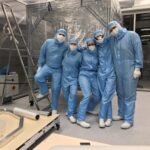
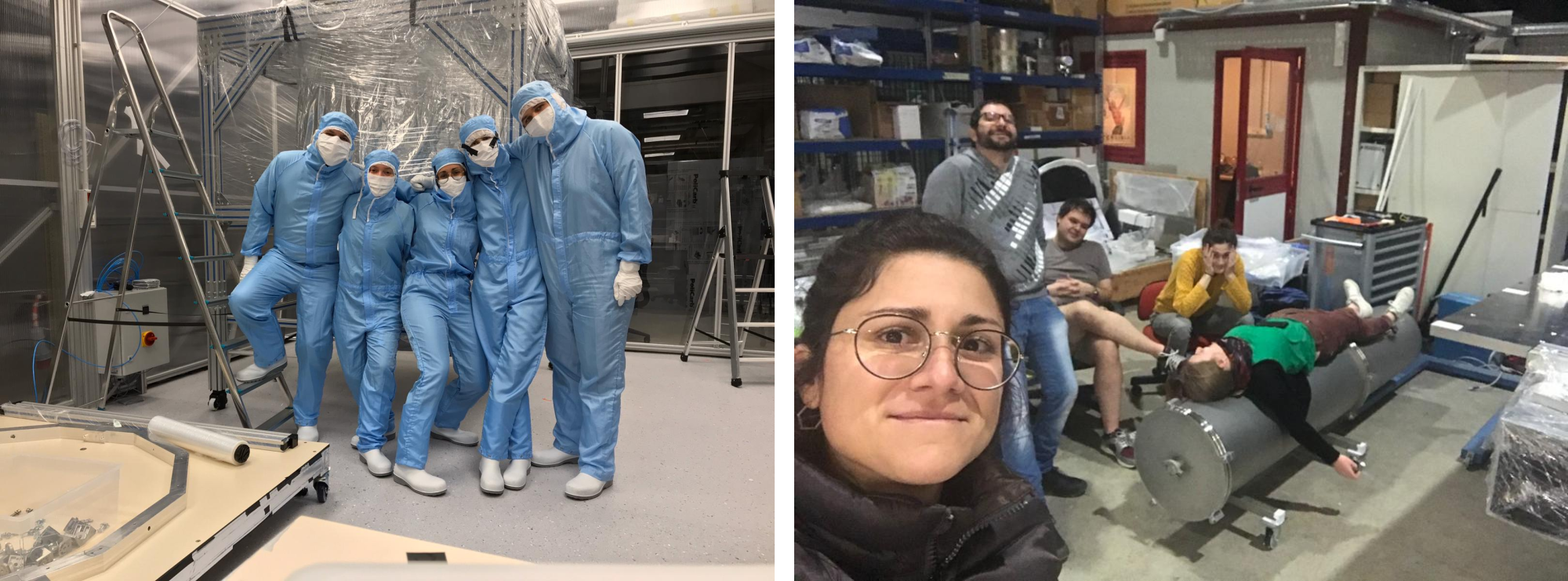
The Wednesday night team, 4th March, the day before TPC transportation: in the cleanroom as soon as the TPC was ready and bagged to go UG (left) and afterward outside the cleanroom (right). Right picture from the left, Arianna Rocchetti (Freiburg), Riccardo Biondi (Aquila U.), Jacques Pienaar (UChicago), Chiara Capelli (Zurich) and Luisa Hötzsch (MPIK).
In my case, I came to LNGS to install optical fibers, used for internal light PMT calibration. When I arrived at the airport in Rome there was a queue for letting people in after a thermal body-scan. I remember there was already the news of a virus spreading in China and a few cases around the world but I didn’t think it could affect us in such a way, and definitely I couldn’t imagine the whole Europe under lockdown. I was lucky enough (or not, depending on how you want to see it) to also help in several other tasks (i.e., built the main structure of the TPC, screw the internal reflective PTFE panels, and fix the field shaping copper wires and rings around the TPC). We were all working very hard those days, where we frequently skipped lunch and worked until late night. We finished installing the fibers on Sunday night, March 1st and transportation of the assembled TPC to the underground facilities of the laboratory had been scheduled for next Thursday, March 5th, where still several things had to be done before.
I clearly remember Wednesday, March 4th. There were still quite few things to do in a day, so we started early. In order to work in an air controlled environment, we needed to be inside a clean-room (CR). Working in a CR can be fascinating the first 15 minutes, just the time to start sweating in the suit and breathing badly behind the mask. Taking breaks is also annoying as it means you have to follow the procedure to undress and dress again in a safe way (safe=clean). That evening we knew we couldn’t go home until the TPC was closed in a protective bag ready to be transported. It was getting late, we were all extremely tired and starting to get nervous. As in real life, building the most sensitive detector is not always a love story, and we encountered several problems we had to overcome (I understand now the famous “problem solving” skills we tend to claim on our CVs…). Despite all and everything, we managed it! In fact, we never considered any other possibility but succeeding! 😀
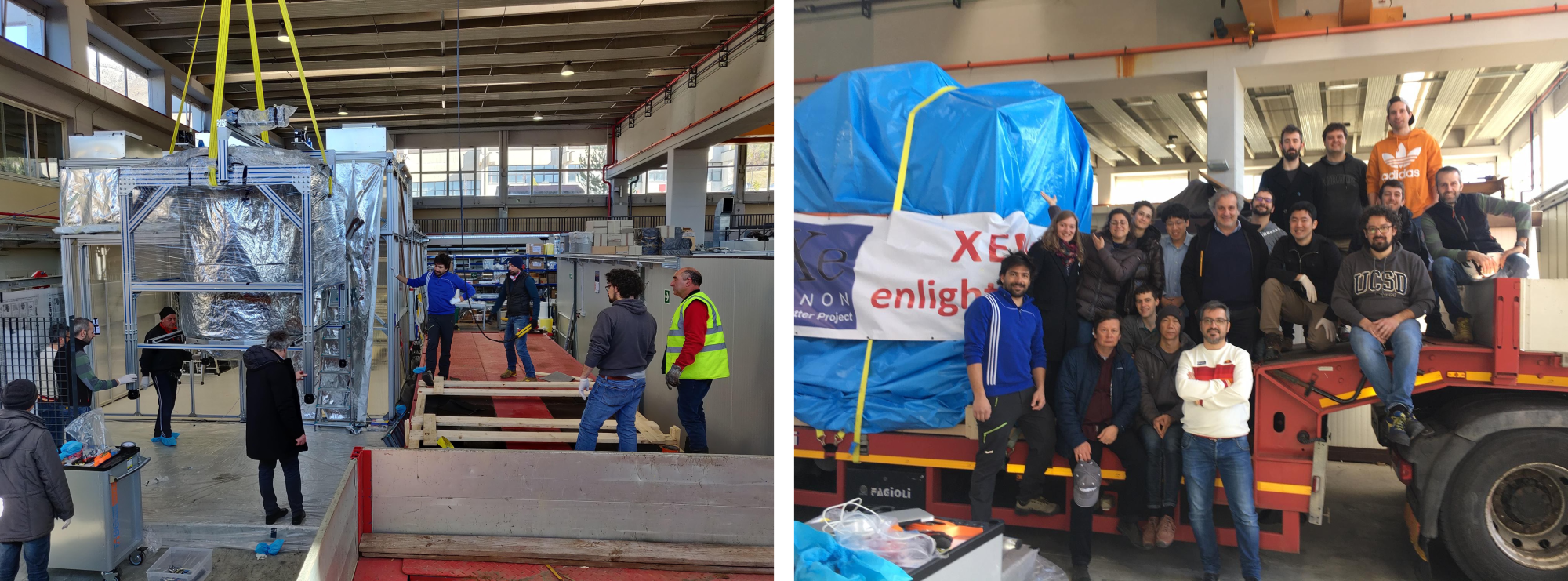
Part of the XENONnT crew next to the assembled TPC, properly bagged for the transportation underground. Right picture from the left: bottom row, Danilo Tatananni (LNGS), Petr Shagin (Rice), Adam Brown (Zurich), Junji Naganoma (LNGS), Luca Grandi (Chicago); middle row, Luisa Hötzsch (MPIK), Arianna Rocchetti (Freiburg), Chiara Capelli (Zurich), Yu-Chin Chen (Tokyo), Marcello Messina (LNGS), Riccardo Biondi (Aquila U.), Masatoshi Kobayashi (Kamioka-Columbia), Francesco Lombardi (Coimbra), Giovanni Volta (Zurich), Roberto Corrieri (LNGS); top row Shayne Reichard (Zurich) , Jacques Pienaar (UChicago), Michael Murra (Münster).
GIOVANNI VOLTA (UZH) – Cabling operation and underground TPC operation
March 4 to March 13
Adam Bown (UZH) and I left from Zurich towards LNGS the afternoon of March 4th. The Coronavirus spread was still localized in Lombardy, but worry had already started spreading everywhere: the plane was almost empty and everyone was a bit sceptical. At that point, I must admit I was not worried at all, I tended to believe that everything was an exaggerated reaction. That same evening, when arriving to LNGS, we went directly UG (TPC transportation had already been scheduled for next morning, and cable test had to be finished beforehand). We tested the electrical connection of almost 15 km of cables, going from the XENON facility building to inside the water-tank where the TPC is connected). Moreover, cables had to be sorted and organized from the water tank side, for the TPC arrival. We worked all night long, where our own excitement kept us awake (our main goal was close to be achieved and, then, all our efforts potentially rewarded). It is difficult to give credit to all the people that had contributed to this effort, but to list a few, at least, Alessandro Manfredini (UZH) and Josè Cuenca (KIT).
Chiara Capelli and Giovanni Volta inside the clean room underground, inside the water tank, during the cable testing inside the water tank.
Transportation went smooth and, by the end of the week, TPC had been successfully lifted and installed under the XENONnT dome, everything enclosed into another clean room UG. This was already a great achievement and, in order to celebrate it, we organized a dinner the evening of Friday 6th. This was the day everything changed, where all north Italy was declared a red zone, Coronavirus cases were being found everywhere, and regulations around Italy and the rest of the world were getting more restrictive on a daily basis. I guess we all got a bit scared, scared about the virus, scared about not being able to go home, and… also scared about XENONnT and our TPC that was not properly protected yet…
In order to have our TPC safe from contaminants, we wanted to lift and close the XENONnT inner vessel (a stainless steel cryostat that would enclose the whole TPC and the cryogenic instrumentation of XENONnT could reduce the air concentration within the TPC by over 10 orders of magnitude with respect to ambient air concentration). Just few seconds of exposure to normal air would throw away all the work done, with potentially irreversible consequences. There is no easy way back after having closed the inner-cryostat, and hence many things had to be connected and tested beforehand, in order to give green light to proceed. I believe that it was around this point when we started realizing that our health could also be compromised, and despite a rational decision would have been to quit, we didn’t give up. We cared too much about this experiment, and we had invested too much time and effort on it to let it go without fighting. The situation at the lab (and on Earth) was so uncertain that it was unclear what the next day could happen or when something/someone would block us.We wanted to give it a try, at least. Now looking backwards, one sees how lucky we were in some aspects, but definitely, what made the difference is how prepared we were for that moment. We had been working hard to get here, and all this preparation and knowledge allowed us to solve problems and make progress under the most adverse circumstances, until finally lifting and closing the inner cryostat.
I’ve been thinking about it since then, now that a few weeks have already passed and after all the great feedback we got from our colleagues and bosses. It is not that I have a super clear opinion about it, but I do know that we were not heros nor brave. Instead, I tend to think we were more kind of foolish and irresponsible people. We really care about what we do and, it is especially during these hard days of group work, where everyone is pushing towards the same directions, where things get really intense and emotional. We, as most of us did, underestimated the impact of Coronavirus and luckily, we have nothing to regret about now. After evaluating the general situation (health care, personal situation and governmental indications), some of us decided to remain isolated at the lab, and wait for things to improve. Having closed the inner-cryostat may look like a simple action, not worth taking all this risk for it, but it may also very well be that with our effort, we managed to deliver an instrument that may change our understanding of Nature for days to come.
Friday March 13 was the day we managed to lift the inner cryostat, finally closing the XENONnT TPC into a controlled environment. I remember it was sometime in the afternoon (being UG, is very difficult to keep track of the time, since there is no light change during sunset or sunrise) and I was inside the XENONnT water tank, ready for the operation of lifting the inner cryostat, waiting for instructions from our colleagues inside the underground CR (literally on top of us). The lifting operation, by itself, is not long nor complicated. The main problem is getting ready for it. Weeks of work and maintenance operations are needed in order to get all the areas and tools ready, which reduces the chances of contaminating the TPC with any external background, which would be fatal for the lifetime of the experiment. Even in terms of manpower, getting properly dressed takes a few minutes and then, the stupidest operation (i.e., going to the toilet) becomes a small nightmare. I remember the cold of that moment, the sound of air blowing from the air system, the tension on everyone. I was absolutely exhausted. The rhythm of the last weeks and months had been increasingly high, culminating in that week that was about to finish (and the COVID situation had not made things easier).
I must admit that on the previous Monday, March 9, I was still laughing at all this virus situation. It is true that the general atmosphere at the lab had changed quite a lot, but I was still quite reluctant about the whole panic. It was around Tuesday 10th, when Luca Grandi (the responsible of the TPC integration) informed all of us that all Italy had become a single red zone (what meant that COVID restrictions now applied to all Italy in the same way). It was weird to realize that individual freedom had suddenly changed, and we were not allowed to go out any more. My first 2 thoughts were whether I should tell my family (living in Barcelona) and whether I should go shopping the very next day (fearing that there could be some sort of food shortage). I did none of the two, as I was trying to contribute the least to the general panic spread.
Next morning, Wednesday, March 11, we all met at the laboratory as we were every morning doing. That morning everyone was particularly quieter, more than usual. We all showed up wearing masks and gloves (we have easy access to this kind of equipment, as it is commonly used in all our CRs). We were told by Luca Grandi that bars and restaurants had been closed, and that soon after, hotels would do so as well (what would be a problem for several of us, temporarily staying in a Hotel close to the lab). He also encouraged us to go shopping that same morning, if needed, since the day was expected to be long and would presumably finish late enough such that stores would be already closed. I guess that was the first day people started showing some concerns and/or fear about the whole COVID thing. There was no huge discussion about it, on the contrary, people remained rather quiet. I guess most of us were willing to continue, to pursue further, but foreign people being abroad on a trip to LNGS, started to be concerned on their way back.
Thursday, March 12 in the morning was already like living in a different world. The lab was absolutely empty. I stayed above ground all morning (had been UG for the last days) waiting for news from the people working in the underground CR. It was a sunny, warm and beautiful day, but it was easy to grasp people’s concerns in their faces. I was in my office, waiting with Roberto Corrieri (the XENONnT GLIMOS – our safety officer) and Mike Clark (Purdue U.), where we were just waiting for instructions from people UG. I had the feeling that Roberto had been in a bad mood all the previous week. It was then, after seeing how things had developed internationally, I understood better what Roberto had been going through the past days. I realised then that none of us, but Roberto, had understood by then what was going on, and what was about to come. Roberto had been following the news for the last few weeks, and as an Italian, as the XENON GLIMOS but, mostly, as our friend, he was definitely worried about all of us. It was in his XENON role to protect us, but he was doing more than that.
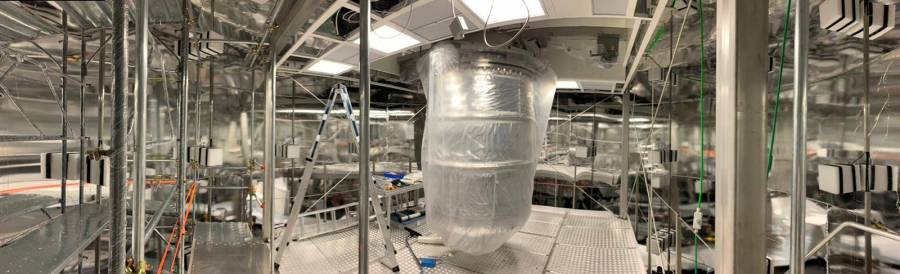
Picture of the XENONnT inner cryostat closed. Underground CR has been already removed and reflective water tank walls are visible all around.
Friday march 13 I had woken up at 3:00 am, and drove Mike Clark and Michael Murra (Muenster U) to the Airport. Both had booked their flight ticket the day before. It is about 1 hour and 30 minutes drive, and you need to drive all around Rome, however, the highway was absolutely empty. We barely talked on the way there and the airport was full of police and military men.
Coming back on Friday afternoon, inside the water tank and right below the CR… I could hear Danilo Tatananni’s (cryogenic expert LNGS) voice, however not loud enough to understand what he was saying. Danilo is our cryogenic expert, he is BY FAR the most skilled person to operate and manipulate the XENONnT detector. Any installation, maintenance or modification of the system is supervised by Danilo, and the TPC installation was not an exception. So here I was, a Friday afternoon UG, dressed on a clean suit, after having slept 3 hours, hearing Danilo’s voice giving instructions to the rest of the members inside the CR, and waiting for Danilo’s green light to lift the inner vessel, where I suddenly felt incredibly tired (all the accumulated stress from the previous days came suddenly over me). My eyes were closing against my will and I decided to have some sleep assuming I would be woken up when operation should start. It is DEFINITELY NOT within cleanliness standards to touch with your clean suit any floor or wall, as you may be contaminating your suit however, since I was not supposed to work next to the TPC, I decided to bend over that rule and crushed a few minutes sitting on the structure supporting the inner cryostat (that was still waiting to be lifted).
After the operation was finished, one of the people I was willing to inform first was Stefan Brünner (Nihkef), an expert on gas purity on ultra-low radioactive environments. Over the last 12 months, Stefan had been pushing the limits of his own, and the rest of the XENON team, to achieve the lowest impurity level for the XENONnT detector. Removing traces of contaminants is not a simple task. You cannot clean a ~200 kg TPC all at once. Not only the optimal materials had been selected over the last 5 years, but over the last 12 months, each of the individual components had been treated, cleaned, and accordingly stored until the assembly. TPC had been successfully assembled nearly 2 weeks ago, but this didn’t mean his concerns were over since air exposure was still a potential danger. I guess that if someone finally had some rest that night, after closing the inner vessel, it had to be Stefan.
Danilo Tatananni (LNGS) – XENONnT cryogenic work
March 14 to April 12
Picture of the 3 XENON members UG during the Italian lock down. From left to right: Danilo Tatananni (LNGS), Joaquim Palacio (MPIK) and Masatoshi Kobayashi (Columbia).
The days to come after the inner cryostat was closed were much easier, as for the first time over the last weeks time was not against us. News of COVID cases around l’Aquila were reported and the collaboration gave clear instructions to leave the laboratory. We had some chatting among us, the XENON members present at LNGS, and we encouraged all foreign members present at LNGS to return home and only ‘local’ people (living at driving distance from the lab, as is my case) should remain. For this next phase of the experiment, I was closely working with Masatoshi Kobayashi, a Japanese colleague expert on cryogenics that did his PhD in the Kamioka Laboratory and is now at Columbia University. Masa had been at LNGS for the last 7 months, and kept working on the TPC assembling and installation until inner cryostat was closed. Masa had decided to stay at LNGS during the pandemia spread, and it was only after Japan authorities made public they planned to close Japan borders, Masa started to consider to return to Japan. During the days to come, we followed and periodically analyzed the evolution of the instrument while being in very strong vacuum conditions. The evolution of the residual gasses released during these first days under vacuum tell us about the properties of the TPC. First gasses to be released come from the surfaces for the components of the TPC were, as days goes on, gasses trapped within the pores from the bulk of materials are released (it is like reconstructing backwards the assembly history of the TPC, and being able to evaluate the successfulness of the work done during the last year). I had the impression it was very hard for Masa to make up his mind, as a compromise between his care for the experiment and his colleagues, international health care advice not to spread further the virus, and of course personal matters related to his family. Needless to say, we all supported the idea that Masa should go home, and on Friday, March 27, he flew to Japan (the day before Japan authorities would actually close the border). He was stuck for 48 hours at Tokyo’s airport and was tested negative of COVID19. He still stayed locked down into the closest hotel room to his parents place before he finally joined his family. Funnily enough, collaborations between Japan and Europe are rather good, since work/sleep time is easily adjustable to provide 24h coverage on the experiment. Masatoshi and I kept interacting on a daily basis until April 12, where his availability on internet rapidly dropped (probably due to bad internet connection at his parents place…).
These impressions by members of the team which assembled XENONnT during the peak of the Covid-19 crisis show how difficult and challenging the work was. “The completed XENONnT detector will now allow us to soon probe exciting new territory where we might see dark matter or other new physics”, says Laura Baudis, (UZH), one of the leading members of XENON. Manfred Lindner, (MPIK), Co-Spokesperson of the XENON Collaboration, adds “XENONnT tests the most plausible parameter space where WIMPs, top candidates for the Dark Matter, could be found. The collaboration is very grateful to the team which assembled XENONnT during these difficult times. They put us into a leading position in the race towards understanding what dark matter is”.
Neutrinoless double beta decay (0νββ) is a crucial process in particle physics and cosmology. It can be conceived as an inclusive test of “creation of leptons” (leptons are produced with no counterpart in terms of antileptons, and lepton number violation occurs) and, more generally, as “creation of matter” (particles are produced with no counterpart in terms of antiparticles).
The observation of 0νββ is a big challenge: we need to find single events in a ton × year of exposure. Its signal corresponds to less than 10-13 Bq/g, while in normal life we are confronted with 15 Bq/banana! If from one side 0νββ is an extremely rare process, on the other one its signature is extremely clear and unambiguous: scientists need to find a peak in the spectrum of the total energy deposited in the detector by the two emitted electrons. The expected position of the peak is known with better than 0.1% accuracy.
Enriched Li2MoO4 crystal coupled to its Ge light detector (top); the CUPID-Mo detector installed inside the EDELWEISS cryostat at LSM (bottom). Credit: CUPID-Mo
The CUPID-Mo experiment, which has just completed the data taking at the Laboratoire Souterrain de Modane (France), is a demonstrator for CUPID, the next-generation upgrade of the first ton-scale cryogenic 0νββ-search, CUORE.
At the recent Neutrino2020 virtual conference, the Collaboration has presented a new world-leading limit for 0νββ decay of 100Mo, one of the most promising isotopes for this search (Poster).
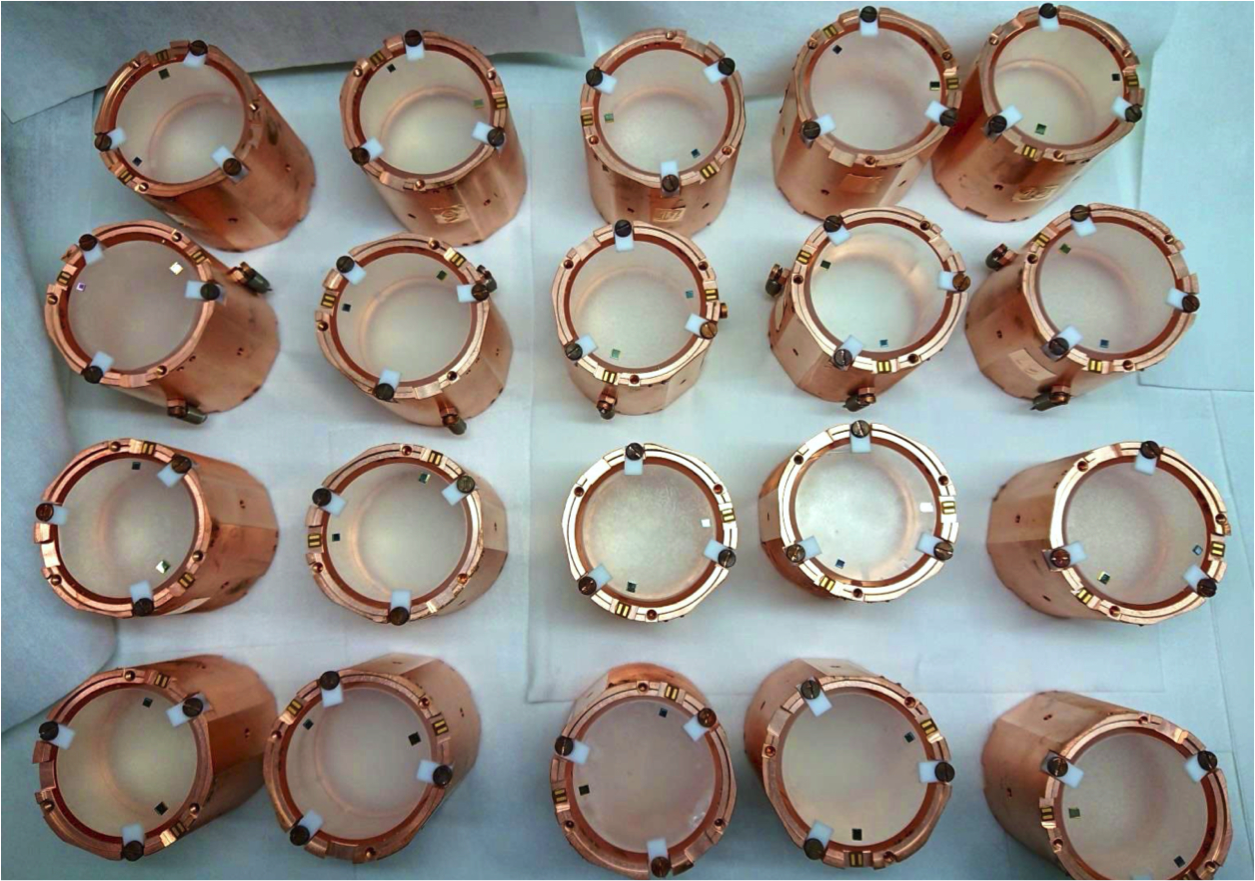
CUPID-Mo is composed by an array of 20 enriched ~0.2 kg Li2MoO4 crystals corresponding to 2.3 kg of 100Mo. The detectors were operated at ~20 mK under the Frejus mountain at a depth of 4800 m.w.e. sharing the EDELWEISS dilution refrigerator.
The CUPID-Mo Collaboration managed to combine the scintillating bolometer technique with an appropriate choice of the nucleus and of the crystal to obtain the exceptional background noise rejection necessary to search for 0νββ of 100Mo with unprecedented sensitivity.
20 enriched Li2MoO4 crystals in their copper case. Credits: CUPID-Mo
When a nuclear event occurs, the Li2MoO4 crystal undergoes an increase in heat. This tiny increase is detected by a temperature sensor. In addition to the temperature change, scintillation light is emitted by the crystal. This radiation is collected by a light detector. CUPID-Mo light detectors are made of high-purity Ge wafers with a diameter of 44.5 mm and 175 μm thickness, including a 70 nm SiO coating to increase light collection.
The advantage of this double readout is the discrimination, event by event, of decay types. We know from previous bolometric experiments that a large part of the background in the 0νββ comes from alpha decays. Thanks to a different light-output, it is possible to separate alpha from beta decay events.
Zoom of the background energy spectrum, we can see zero count in the Region of Interest. Credits: CUPID-Mo
In the presented analysis, we consider more than one year of data (2.17 kg × y exposure in Li2MoO4 corresponding to 1.2 kg × y exposure in 100Mo) acquired between March 2019 and April 2020.
With the rejection of alpha events of lower light output, we are able to perform the 0νββ search without any backgrounds in the region of interest. First, this means that thanks to the high efficiency of the bolometric technology we are able to set a new world leading limit for the half-live of 0νββ decay of 100Mo of 1.4×1024 y, better than the previous 1.1×1024 y. Moreover, the achieved suppression of background already exceeds the performance of the CUORE experiment and meets all requirements for the implementation of the CUPID-Mo technology in CUPID at much larger scale.
Effective Majorana mass as a function of the lightest neutrino mass. We can see the new limit obtained by the CUPID-Mo collaboration : with an exposure of only 1.2 kg x y in 100Mo, we are able to set a limit of mbb < (0.31-0.54) eV 90% c.i.
Limits obtained by other collaborations for other isotopes are also shown. Credits: CUPID-Mo
The CUPID-Mo experiment has completed a 3-week calibration campaign with an accelerator-produced short-lived source of 56Co to improve the understanding of the energy scale and resolution in the 0νββ decay region of interest. Several physics analyses will be performed in the coming months, along with a refined study of the background model.
Later this decade, the CUPID-Mo technology will be pursued on a large scale in the CUPID experiment, with about 1500 crystals installed at the Gran Sasso Laboratory in Italy in the current CUORE facility. CUPID will be at the forefront of 0νββ search.
The CUPID-Mo experiment brings together several European laboratories from France (IJCLab, IP2I-Lyon, IRFU/CEA, IRAMIS/CEA, Institute Néel, Université Paris-Saclay and Université Grenoble Alpes), Ukraine (KINR), Italy (INFN-Rome and INFN-Milano-Bicocca, LNGS, University of La Sapienza, University of Milano-Bicocca and University of Insubria) and Germany (KIT, TUM) and other international laboratories from the U.S. (LBNL, MIT, University of California and University of South Carolina), Russia (JINR, ITEP, NIIC) and China (Fudan University, USTC) .
LST-1 with Shooting Star, Credit: Tomohiro Inada, CTAO
Between January and February 2020, the prototype Large-Sized Telescope (LST), the LST-1, observed the Crab Pulsar, the neutron star at the centre of the Crab Nebula. The telescope, which is being commissioned on the CTA-North site on the island of La Palma in the Canary Islands and which just passed its Critical Design Review, was conducting engineering runs to verify the telescope performance and adjust operating parameters.
Pulsars are very rapidly rotating and strongly magnetized neutron stars that emit light in the form of two beams, which can be observed from Earth only when passing our line of sight. While detecting the strong and steady emission or outbursts of gamma-ray sources with Imaging Atmospheric Cherenkov Telescopes (IACTs) has become routine, pulsars are much more challenging to detect due to their weak signals and the typical dominance of the foreground gamma-ray signal from the surrounding nebulae. Despite hundreds of observations hours by IACTs around the globe, only four pulsars emitting signals in the very high-energy gamma-ray regime have been discovered, so far. Now that the LST-1 has shown that it can detect the Crab pulsar, it joins the field of telescopes capable of detecting gamma-ray pulsars, validating the timestamping system and the low-energy performance of the telescope.
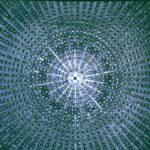
Visualization of GW190814, Credit: N. Fischer, S. Ossokine, H. Pfeiffer, A. Buonanno (Max Planck Institute for Gravitational Physics), Simulating eXtreme Spacetimes (SXS) Collaboration.
When the most massive stars die, they collapse under their own gravity and leave behind black holes; when stars that are a bit less massive die, they explode in supernovas and leave behind dense, dead remnants of stars called neutron stars. For decades, astronomers have been puzzled by a gap that lies between neutron stars and black holes: the heaviest known neutron star is no more than 2.5 solar masses, and the lightest known black hole is about 5 solar masses. Now, scientists from LIGO and Virgo have announced the discovery of an object of 2.6 solar masses, placing it firmly in the mass gap. About 800 million years ago, this object merged with a black hole of 23 solar masses and, in so doing, emitted an intense gravitational wave. Since the observation of this wave alone, which was detected on Earth in August 2019, does not allow us to distinguish whether the compact object is a black hole or a neutron star, its precise nature remains a mystery.
During the last meeting of the General Assembly a new Chair and Vice-Chair for the Scientific Advisory Committee have been elected: Sijbrand de Jong takes over the duty as chair from Laura Baudis and Silvia Pascoli substitutes Jocelyn Monroe as Vice-Chair. We want to take this opportunity to thank Laura Baudis and Jocelyn Monroe for their successful work in the last two years! The main task of the SAC is report to the General Assembly on issues of strategic scientific importance, including the connection to related areas, such as particle and nuclear physics and astronomy. With the planned town meeting next year an important event is imminent and the SAC is responsible for the scientific organisation. For this event and for all further tasks we wish the newly elected chairs all the best!
“Astroparticle physics has emerged as a recognisable, independent field over the past several decades. The ties with particle physics and astrophysics are very visible and strong and it would be good to keep close cooperation with these two fields.
Astroparticle physics is a vibrant field with a number of recent far-reaching breakthroughs, and many excited scientists who want to continue on this path. It is also a very diverse field, encompassing not only installations to observe the universe, but also controlled accelerator as well as non-accelerator experiments. Theoretical astroparticle physics is not only important for interpretation of observational and experimental results and to guide new observations and experiments, but also to provide the connection between the diverse areas of astroparticle physics.
Astroparticle physics is part of the big-science family, with major real estate running and being prepared for the future, very often in a global perspective. As a relatively young field, it does not yet have the degree of organisation that several other big-science fields have. APPEC plays a crucial role to provide coordination and organisation of astroparticle physics in Europe, with good connection to the rest of the world. Setting priorities is an important part of the coordination. Organising the European funding agencies behind the prioritised programmes is the other important aspect.
The APPEC SAC, as advisory body of the APPEC General Assembly, is responsible to provide the General Assembly with the necessary scientific arguments to set priorities, to push support for the prioritised projects all over Europe and to enable the General Assembly to seek alliances with parties outside of Europe. As the chair of the APPEC SAC I will do my very best to coach the SAC to deliver all relevant information as advice to the General Assembly: complete, on time and in comprehensible language.” Sijbrand de Jong
“Astroparticle physics aims at answering some of the most fundamental questions in physics, from the identity of dark matter to the symmetries of nature related to proton decay and neutrinos, from the behaviour of extreme astrophysical environments to the evolution of the Universe. It exploits the rich interface between particle physics, astronomy and cosmology and their synergy. It is in an exciting phase, with new experiments ongoing and planned for the future, the recent birth of multimessenger astronomy thanks to the discovery of gravitational waves and high energy neutrinos, and new theoretical ideas. Connecting with other related areas, such as particle and nuclear physics and cosmology, is also important and can open new research perspectives. In my role as Vice-Chair of APPEC SAC, I will strive to support the Chair, Prof. de Jong, in providing the scientific advice to APPEC General Assembly to shape the future of the field.” Silvia Pascoli
Biographies
Sijbrand de Jong
I have been educated as an experimental particle physicist. I started in 1984 as MSc student on the WA25 (neutrino deep inelastic scattering) and NA4 (BCDMS, muon deep inelastic scattering) experiments. I did my PhD from 1986 until 1990 on the preparation of the ZEUS experiment at HERA/DESY (ep deep inelastic scattering). As a post-doc and junior faculty, I worked on the OPAL experiment at LEP/CERN (e+e- scattering) from 1990 until 1998. After having been appointed full professor at Radboud University in Nijmegen, the Netherlands in 1998, I worked on the Dzero experiment at the Tevatron/Fermilab (ppbar scattering) and in the transition to Radboud University I worked for a short while in ATLAS (pp scattering).
Since 2005, I switched to astroparticle physics and I am active in the Pierre Auger Collaboration, notably on helping to establish the detection of ultra-high-energy cosmic rays ultra-high-energy cosmic rays via the radio frequency emission of their air shower (in jargon called radio detection). Currently, I am a member of the team that rolls out this technology to the full Pierre Auger Observatory 3000 square kilometre array to provide a completely new detection layer for the electromagnetic part of extensive air showers, especially also for horizontal showers, which may open the possibility for the detection of ultra-high-energy neutrinos.
I did my share of administration and governance, as director of the school of physics at Radboud University, as founding director of the Institute for Mathematics, Astrophysics and Particle Physics at Radboud University, as 10-year board member of the Dutch Physics funding agency, and more recently for three years as CERN Council President (after a preceding period of six years as CERN Council member).
I very much like education and public engagement and I founded a Pre-University College of Science at Radboud University at the interface between secondary school and university.
Silvia Pascoli
I have been interested in astroparticle physics since the beginning of my career. After obtaining a PhD in Elementary Particle Physics from SISSA, Italy, working on neutrinoless double beta decay theory, I moved to UCLA as a postdoc and then to CERN as a Fellow. In 2005 I joined Durham University as faculty, in the Institute for Particle Physics Phenomenology, where I served as Deputy Director from March 2011 to August 2014 and became professor in 2012. My main fields of research are neutrino physics and astroparticle physics, with focus on their phenomenology, the origin of neutrino masses and of the baryon asymmetry of the Universe, and the connection with dark matter and cosmology. For my research, I received the 2013 Occhialini Prize jointly by the Institute of Physics (UK) and the Societa ́ Italiana di Fisica (Italy) and I was awarded the ERC Consolidator grant NuMass. Although a theorist, I often collaborate with experimentalists to test new theoretical ideas and to understand the physics potential of current and future experiments, for instance as member of the DUNE collaboration and in the past with my involvement in e.g. LAGUNA-LBNO. I endeavour to contribute to the shaping of the field, both with advising roles (member of Fermilab Physics Advisory Committee, several STFC panels, Hyper-Kamiokande Program Advisory Committee) and with activities aimed at the broader community (e.g. Neutrino 2016 organisation, CENF-TH co-convener, Horizon2020 RISE InvisiblesPlus deputy coordinator, EuCAPT Steering Committee member). I believe that training the next generation of scientists is of paramount importance: in addition to teaching and supervising PhD students, I have acted as deputy coordinator of two EU-funded ITNs, Invisibles and Elusives, and I am the coordinator of the recently funded Horizon2020 ITN HIDDeN. I have a very strong commitment to Equality/Diversity/Inclusion and I try to inform all my activities by it. I have also a great interest in engagement with industry and the general public and have organized several outreach events.
At the recent Neutrino 2020 virtual meeting the Borexino Collaboration has announced the first detection ever of neutrinos from the CNO cycle in the Sun, an astounding experimental achievement, which closes a chapter of physics commenced in the years ‘30s of the past century.
It was indeed in 1938 when Bethe and von Weizsäcker independently proposed that hydrogen fusion in the Sun might be catalyzed by the heavy nuclei carbon, nitrogen, and oxygen, according to a cyclic sequence of nuclear reactions. This second mechanism of hydrogen burning into helium in the Sun’s core complements the main energy generating process constituted by the pp chain of reactions, initiated by the direct fusion of two protons into a deuteron.
Despite the indirect evidences from astronomical and astrophysical observations that the two hypothesized engines powering the Sun and the stars are actually occurring, a direct experimental confirmation can come only by detecting the neutrinos, which are copiously produced by several reactions in both sequences.
This consideration was at the heart of the foundation of the Solar Neutrino experimental program since the middle of the 20th century, by far one of the most successful areas of particle physics over the past six decades, which amassed results of enormous relevance and implications, the latest being the recent Borexino announcement.
From the first Solar Neutrino detection by the Homestake experiment in the 70’s, to the Gallex and Sage capture of the main pp neutrinos in the 90’s, to the present Borexino observation of the CNO cycle neutrinos, through these three milestones physicists have completely unraveled the two processes powering the Sun and the stars. We now have the final, definite and complete experimental answer to the centuries-old question of humankind on how the Sun shines.
PMTs installed on the Borexino Stainless Steele Sphere. Credits: Borexino
Following the initial intuition of the founders of the field, comprising true giant of physics like Pontecorvo and Alvarez, Solar Neutrinos proved to be an invaluable tool to study the operating mechanism of the Sun, being a direct probe of the otherwise inaccessible nuclear furnace at its core.
Moreover, throughout this several decade long fascinating enterprise to unveil the mysteries of the Sun, Solar Neutrinos were also pivotal to assess the neutrino oscillation phenomenon, indisputably one the greatest particle physics discovery at the dawn of the new millennium.
Borexino therefore, with its CNO discovery, represents the crowning of a physics field rich of multiple and somehow unexpected successes.
From the measurement side, the detection of CNO neutrinos was not easy at all, on the contrary, it was a true daunting task.
In general, Solar Neutrinos can be caught only with highly sensitive detectors, capable of suppressing most sources of background signals. To achieve the required sensitivity, the Borexino experiment was built with an onion-like design, characterized by layers of increasing radiopurity while moving from the periphery to the center.
The transparent, spherical core is filled with 280 tons of liquid scintillator (a material that emits light when a neutrino interacts with the electrons within it), which is encased in a large, stainless-steel sphere filled with a buffer liquid and equipped with 2200 light sensors. The outer sphere is contained within an even larger stainless-steel tank filled with 2400 tons of ultrapure water. The entire detector is located 1 kilometer underground, in the Gran Sasso Laboratory.
The liquid scintillator has attained unprecedented radiopurity levels by means of a series of special precautions and dedicated purifications, which the Collaboration adopted in an undeterred effort for the ultimate lowest background.
Borexino has been taking data since 2007. The Collaboration marked already important achievements in 2007 with the detection of the Solar Neutrinos from the Berillium-7 electron capture, and in 2014 when it announced the first real-time detection of neutrinos from the proton-proton fusion (in contrast with the previous detection, time and energy integrated, from Gallex and Sage).
Inside view of the Borexino detector. Credits: Borexino
Despite these outstanding successes and an already ultrapure detector, Borexino physicists had to push very hard to further improve the suppression and understanding of the tiny residual background to succeed in identifying the CNO cycle neutrinos. The key issue was the decay of the isotope Bismuth-210, whose energy spectrum is located exactly in the same energy window where the CNO signal is expected to occur. The measurement of the Bismuth-210 decay rate was achieved by studying the decay rate of Polonium-210, a process that is in equilibrium with Bismuth-210 decay, but easier to measure.
Therefore, the quest for CNO neutrinos turned into the quest for Bismuth-210 through Polonium-210.
However, since the decay rate of Polonium-210 is highly sensitive to fluctuations in temperature, which trigger convection of the liquid and induce the transport to the center of the detector of Polonium-210 originated on the surface of the scintillator containment vessel, the Collaboration needed to carefully stabilize thermally the whole set-up.
To this purpose, Borexino was wrapped with an insulation layer to decouple it from the external temperature variations, and an active control system was installed to establish internally across the scintillator a stable top-bottom gradient, which is key to help maintaining the liquid in a static condition. Furthermore, the detector was equipped with a large number of temperature sensors for high precision monitoring of the temperature evolution in multiple locations, and a sophisticated fluid dynamic simulation was implemented to predict the behaviour of the scintillator under varying external conditions.
As ultimate precaution, the air of the Hall C of the Gran Sasso Laboratory where Borexino is located, has been also stabilized by means of a feedback control loop.
When all these tools enabled finally the long-sought determination of the intrinsic Polonium-210, and hence Bismuth-210, content of the scintillator, the CNO signal emerged unmistakably in the global fit of the data with a significance as high as 5 sigma.
View of the internal of the Borexino Stainless Steel Sphere. PMTs installed, scaffoldings removed. Credits: Borexino
The CNO detection announced by Borexino (which following the scientific practice will be deemed official after been peer reviewed) is, hence, the successful outcome of a relentless, years-long effort, to stabilize and understand the detector, which implied to push the liquid scintillation technology beyond any limit previously attained.
Besides representing the final assessment of the global theoretical picture of how the Sun and the stars operate, CNO neutrinos attract the specific interest of Solar physicists because they provide a path toward the direct determination of the Sun’s metallicity, i.e. the content of elements heavier than hydrogen and helium. In particular, by studying the rate of CNO neutrinos it is in principle possible to shed light on the long-standing puzzle whether the Sun’s metallicity is more in line with models predicting a higher metallic content, or with models implying a lower content evaluation.
Although the inherent uncertainty of the Borexino result makes it consistent with both scenarios, the Borexino approach and outcome pave the way for future measurements from next generation experiments, which could further address the solar composition conundrum.
Beyond this, Borexino, which is approaching the conclusion of its lifetime, leaves to the neutrino field the persisting legacy of the first observation of CNO neutrinos, a breakthrough result obtained through an impressive experimental effort, which will remain for the future as one of the foundational achievements of neutrino physics.
Scientists from the international XENON collaboration announced on June 17th that data from their XENON1T, the world’s most sensitive dark matter experiment, show a surprising excess of events. The scientists do not claim to have found dark matter. Instead, they say to have observed an unexpected rate of events, the source of which is not yet fully understood. The signature of the excess is similar to what might result from a tiny residual amount of tritium, but could also be a sign of something more exciting – such as the existence of a new particle known as the solar axion or the indication of previously unknown properties of neutrinos.
“Our result could be the onset of new physics” says Prof. Manfred Lindner (MPIK), Co-Spokesperson of the XENON Collaboration and APPEC-SAC member. “We emphasize very carefully conventional explanations of the observed excess, but about 90 theoretical publications within one month show that it could point to exciting new physics”.
The central part (the TPC) of the XENON1T detector. Credits: XENON Collaboration
XENON1T was operated deep underground at the INFN Laboratori Nazionali del Gran Sasso in Italy, from 2016 to 2018. It was primarily designed to detect dark matter, which makes up 85% of the matter in the universe. So far, scientists have only observed indirect evidence of dark matter, and a definitive, direct detection is yet to be made. So-called WIMPs (Weakly Interacting Massive Particles) are among the theoretically preferred candidates, and XENON1T has thus far set the best limit on their interaction probability over a wide range of WIMP masses. In addition to WIMP dark matter, XENON1T was also sensitive to different types of new particles and interactions that could explain other open questions in physics. Last year, using the same detector, these scientists published in Nature the observation of the rarest nuclear decay ever directly measured.
“While our detector was mainly designed to detect dark matter particles, its low energy threshold coupled to an extremely low background allows us to search for other rare interactions and particles beyond the standard model of particle physics,” says Prof. Laura Baudis (UZH), member of the APPEC SAC, and one of the leading members of the project.
The XENON1T detector was filled with 3.2 tonnes of ultra-pure liquefied xenon, 2.0 t of which served as a target for particle interactions. When a particle crosses the target, it can generate tiny signals of light and free electrons from a xenon atom. Most of these interactions occur from particles that are known to exist. Scientists therefore carefully estimated the number of background events in XENON1T. When data of XENON1T were compared to known backgrounds, a surprising excess of 53 events over the expected 232 events was observed. This raises the exciting question: where is this excess coming from?
One explanation could be a new, previously unconsidered source of background, caused by the presence of tiny amounts of tritium in the XENON1T detector. Tritium, a radioactive isotope of hydrogen, spontaneously decays by emitting an electron with an energy similar to what was observed. Only a few tritium atoms for every 1025 xenon atoms would be needed to explain the excess. Currently, there are no independent measurements that can confirm or disprove the presence of tritium at that level in the detector, so a definitive answer to this explanation is not yet possible.
View into the water tank, lined with reflecting foil, and the XENON1T detector. Sensitive sensors identify light signals induced in the water by cosmic radiation. Credits: XENON Collaboration
More excitingly, another explanation could be the existence of a new particle. In fact, the excess observed has an energy spectrum similar to that expected from axions produced in the Sun. Axions are hypothetical particles that were proposed to preserve a time-reversal symmetry of the nuclear force, and the Sun may be a strong source of them. While these solar axions are not dark matter candidates, their detection would mark the first observation of a well-motivated but never observed class of new particles.
“This would have a large impact on our understanding of fundamental physics, and of astrophysical phenomena. Moreover, axions produced in the early universe could also be the source of dark matter,” says Baudis.
Alternatively, the excess could also be due to neutrinos, trillions of which pass through your body, unhindered, every second. One explanation could be that the magnetic moment of neutrinos is larger than its value in the Standard Model of elementary particles. This would be a strong hint to some other new physics needed to explain it.
Of the three explanations considered by the XENON collaboration, the observed excess is most consistent with a solar axion signal. In statistical terms, the solar axion hypothesis has a significance of 3.5 sigma, meaning that there is about a 2 / 10,000 chance that the observed excess is due to a random fluctuation rather than a signal. While this significance is fairly high, it is not large enough to conclude that axions exist. The significance of both the tritium and neutrino magnetic moment hypotheses corresponds to 3.2 sigma, meaning that they are also consistent with the data.
“We are very excited about this new result from our tonne-scale liquid xenon detector with an incredibly low background that hasn’t been reached by any other experiment in the field” says Baudis.
XENON1T is now upgrading to its next phase – XENONnT – with an active xenon mass three times larger and a background that is expected to be lower than that of XENON1T. With better data from XENONnT, the XENON collaboration is confident it will soon find out whether this excess is a mere statistical fluke, a background contaminant, or something far more exciting: a new particle or interaction that goes beyond known physics.
“XENON1T was primarily built to search for WIMPs”, says Lindner. “This are top candidates for the Dark Matter in the Universe, but the record exposure and the very low threshold allows us to look for other exciting new physics. Maybe we stepped on some other exciting new physics which we can further explore with XENONnT which was already assembled and should become operational in the next months”.
The XENON collaboration comprises 163 scientists from 28 institutions across 11 countries. The European participation in XENON is very strong, with the following groups being involved: INFN Gran Sasso, Bologna, Napoli and Torino, and L’Aquila University in Italy, MPIK Heidelberg, the Universities of Freiburg, Mainz, Münster and KIT Karlsruhe in Germany, the University of Zurich in Switzerland, Subatech, LAL, LPNHE in France, Nikhef in the Netherlands, Stockholm University in Sweden and the University of Coimbra in Portugal.
Together with the other international collaborators, these groups are responsible for many of the crucial systems in XENON: the TPC and the photosensors and their readout, the data acquisition and light calibration systems, the xenon storage and distillation systems for radon and krypton, the material screening and radon emanation measurements, along with other background mitigation techniques, the neutron and muon veto systems.



 The nuclear, particle and astroparticle physics communities, represented by the three committees/ consortia NuPECC, ECFA and APPEC want to join their forces not only to solve the questions on the smallest and the largest structures in nature but also to improve on diversity, working conditions and societal impact. The Deliberation document on the 2020 Update of the European Strategy for Particle Physics indicate the importance of mutual cooperation between the communities working on the science fields of relevance for APPEC and NuPECC with ECFA and includes the following recommendation, which is fully supported by APPEC: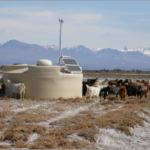













 At the recent