APPEC congratulates the CERN Council for its decision to update the European Strategy for Particle Physics setting up a vision for the future of particle physics, a process that was inclusive of the full Particle and Astroparticle Physics communities. The general considerations of the 2020 update acknowledge the importance of the rich and complementary physics programs of neighbouring fields, and in particular acknowledge:
the groundbreaking discovery of gravitational waves which occurred since last strategy update in 2013 and has contributed burgeoning multi-messenger observations of the universe;
that dark matter and flavor puzzles are outstanding mysteries. They require synergy with cosmological and astronomical observations and experiments looking for direct interactions of dark matter or axions and in the neutrino sector, with neutrinoless double beta decay experiments also having potential to reveal violation of the global lepton number;
that neutrinos are a fascinating portal towards Physics beyond the Standard Model, which can be addressed by accelerator, reactor, atmospheric neutrino, as well as cosmic neutrino and cosmic ray experiments;
the importance of synergy on theory, which concretized in the creation of the EuCAPT Astroparticle theory centre, with its first hub located at CERN;
that the Recognised Experiment program needs to be expanded for some cases into specific agreements on technical and scientific cooperation in fields, such as gravitational waves and dark matter, which can strongly advance the field of Particle and Astroparticle Physics, as well as innovation;
the coordinated activities in Astroparticle Physics by APPEC.
We look forward for the years to come and work together on the realization of these many synergies between Particle Physics and Astroparticle Physics to address the hiding secrets of fundamental physics laws in the tiny nooks of space and time.
In April 2020 the previous observer Poland became an official member of APPEC. In the General Assembly they are represented by Leszek Roszkowski from CAMK, who is director of AstroCeNT – the Particle Astrophysics Science and Technology Centre. Leszek Roszkowski also chairs the APPEC SAC sub-committee preparing a strategy report on direct detection of dark matter.
The quest for B-mode polarization of the Cosmic Microwave Background (CMB) is one of the major challenges of observational cosmology. A positive detection would signify the presence of primordial gravitational waves, theoretically expected from the inflation era. This is one of the most difficult measurements to make because the expected signal is very small and requires highly sensitive instruments with little systematic bias and with wide frequency coverage in order to separate the primordial signal from the foreground.
The QUBIC collaboration meeting of November 2019 at APC. Credits: QUBIC
QUBIC (QU Bolometric Interferometer for Cosmology: http://qubic.in2p3.fr) is an instrument based on a new concept called bolometric interferometry. The objective of QUBIC is to search for the B-mode polarization constructed from the Q and U modes (the two Stokes parameters describing the shape of the polarization ellipse of the microwave radiation). QUBIC combines the advantages of very sensitive and wide band cryogenic bolometers with the precise control of systematic instrumental effects possible with an interferometer, giving also the added capability of spectroscopic imaging. The original idea dates back to the early 2000s and, since then, European physicists have played a leading role in the development and exploitation of this innovative technology. After some initial projects, the QUBIC collaboration was created in 2008. New technical developments in European laboratories have enabled the creation of advanced detectors.
¼ focal plane of QUBIC composed of 256 TES cooled at 300mK and detection chain. Credits: QUBIC
The technological demonstrator (TD), identical to the nominal instrument but with fewer detectors and interferometry channels, smaller mirrors and without dichroic filter, was integrated at APC, Paris, in 2018 and underwent a test phase throughout 2019. It is intended to be installed at the QUBIC site at an altitude of 4800 m in the province of Salta in Argentina. Built by French, Italian, Irish, British and Argentinian laboratories, the technological demonstrator of QUBIC passed, in January, a review requested by the IN2P3-CNRS with the participation of the INFN. The review highlighted the innovation of the technical demonstrator as the first ever bolometric interferometry telescope and its potential for cosmology.
QUBIC synthesized beam, as measured (left) and expected (right). Credits: QUBIC
In the synthesis of the scientific presentations of the review group, which included international experts, the following evaluation was given on the general context of QUBIC:
“The interferometric nature of the synthesized beam results in a change of its multiply peaked pattern as a function of EM wavelength. Consequently, QUBIC would have sensitivity to space patterns on the sky as well as to their EM spectrum. QUBIC is therefore designed as a spectro-imager capable of measuring up to 5 sub-bands in each of our physical bands providing extra EM spectrum resolution with respect to traditional imagers. This unique feature could be a game-changer in the current context of a strong limitation to primordial B-mode observations from foregrounds (dust, synchrotron) whose spectral behaviour is not known and could significantly depart from a power-law (which is usually assumed in any component-separation so far).
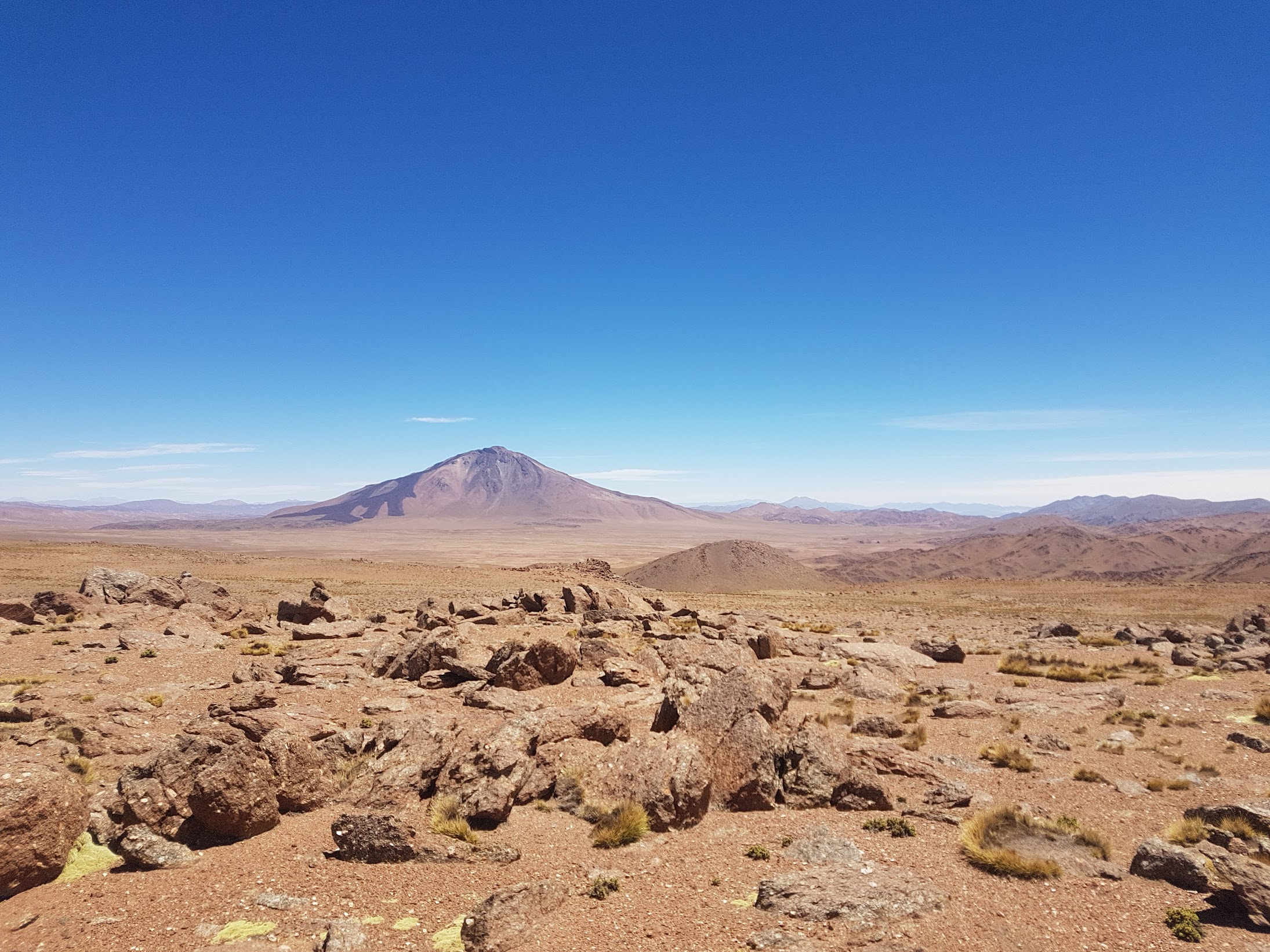
QUBIC site at 5000m altitude at Alto Chorillos, near San Antonio de los Cobres, Salta province, Argentina. The Tuzgle volcano is visible. Credits: QUBIC
The target QUBIC installation site will be on the La Puna plateau in Argentina at 4800 m altitude. This site is an excellent compromise between the atmospheric conditions (humidity, stability) similar to that of the neighbouring Atacama and little degraded compared to a site in Antarctica and secondly a possible accessibility almost all year long, incomparable to that of an Antarctic site.”
In the general remarks of the conclusions, the progress made over the past two years is considered impressive. The demonstrator is assessed as convincing and successful, since the concept’s polarization and spectroscopy capabilities have been found to be excellent and in particular, the spectroscopic feature is of utmost utility for foreground characterization and analysis.
QUBIC instrument in the APC intégration hall (Paris). Credits: QUBIC
Several instruments installed on various sites are already measuring the CMB in search of the B-mode signal. The strength of this signal is summarized by the ratio “r” between the amplitudes of the tensor and scalar modes of perturbation of the metric of the primordial Universe. As the PI, Jean-Christophe Hamilton, explains, QUBIC’s sensitivity and statistics, once operational, will be lower than some of the running experiments. Nevertheless, QUBIC’s novel approach to systematic effects and to the foreground subtraction could be decisive for the discovery or confirmation of the extremely weak expected signal. QUBIC’s new technology aims to be integrated into next generation large detectors through a multi-year deployment and sensitivity enhancement program.
Regarding the current phase of QUBIC, Aniello Mennella, system scientist, says that the next steps envisaged are the finalization of the tests at APC, the shipping of the TD to Argentina and the commissioning on the sky (which will suffer delays due to the health crisis unfortunately). Following the upgrade to the complete instrument which will improve the sensitivity, there will be an observing campaign of 2 years leading to an estimate of sigma(r) = 0.01, corresponding to the sensitivity of Stage III instruments in the terminology of the CMB community.
In the longer term, potential future developments of QUBIC are already envisaged in order to reach Stage IV sensitivity (sigma (r) = 0.001) within a few years. These include:
Upgrading the current cryostat for a gain in sensitivity (~ x5) and in spectral capacity using multimode optics.
Producing similar cryostats which multiply the sensitivity by a comparable amount.
Installation of a similar bolometric interferometer at the focus of the 12m LLAMA antenna, opening access to polarization physics at small angular scales (masses and number of neutrinos, Dark Energy, physics of galaxy clusters).
It should be reminded here that the coordination of European laboratories for the development of the burgeoning field of experiments for Stages III and IV has appeared necessary since some years. APPEC has contributed to global coordination of this field through the Florence CMB Workshop series that started in 2015 and that helped incubate multiple European initiatives for contributing to CMB Stage IV. Information and links are available from the last meeting https://indico.in2p3.fr/event/19414/overview
For several weeks now our everyday life has been quite disrupted by the novel corona virus. We all have to master difficult situations in this unusual time, facing conditions we never experienced before. Although everybody has to deal with a different situation some things are common for almost all of us and our institutions.
“These last weeks will leave a deep sign in my life forever, as possibly the life of many, who will remember the time of COVID. In first place, this time is making me understand better what it means to still have your house to refugee and think how important is our role to understand and help who do not even have it.”Teresa Montaruli
Most institutions have set up a COVID-19 task force to inform and update their employees and to find the right balance between keeping the business running and at the same time protecting the health of the employees in the best possible way.
Despite some people working in the lab most of us have to work from home. There, many have to combine taking care of their kids and doing their daily office work, which is more and more challenging the longer this situation holds.
To keep everybody motivated and to keep contact with colleagues many institutes organize not only scientific virtual meetings but also social events like common coffee breaks, lunches or even concerts.
Traditionally, personal contacts at collaboration meetings, exchanges with scientists – whether within our own working group or during visits to other institutes – and national and international exchanges at conferences make up a large part of our scientific life. But many conferences were cancelled or postponed, like the APPEC Town Meeting which was planned for this autumn is now postponed to 2021.
“I am now working from home for almost 3 months. It is amazing to see how much is still possible using video meetings, chats and the good old phone and email. On the other hand I miss the informal talks with colleagues, and unexpected chats while visiting labs and meetings. This informal opportunities are needed for make progress in delicate and complex topics. But we will learn week by week how to optimize in working from home.”Job de Kleuver
Many meetings and events had to move to a virtual place, which has both, advantages and disadvantages. One advantage of moving many activities to the virtual world is that more people can join. Here are some examples for online conferences, colloquia and seminars:
But having all kind of meetings, like Collaboration meetings, group meeting etc. online is sometimes also very exhausting and it is hard to stay concentrated after hours of a zoom meeting.
“On the positive side of this CoVID crisis, family is now more easily reconciled with my work since at least being a single mom of two kids I do not need to travel. This is despite I need to scholarize them at home while I work. The times I was forced to travel, were problematic to me from the organisation point of view and from the responsibility one. I would be very happy if we understand how effective are video meetings even for audiences of 100 people, if well guided. Another aspect is mobility that our research work requires. It detaches you from families. We should be more tolerant in not considering it as a must in the career of physicists.”Teresa Montaruli
Many of us do not only have to deal with online conferences but with online teaching duties. Some might be well prepared but for some this might be a new field and a lot of additional preparatory work was necessary to provide lectures at an equal level as usual.
“Overalls, this period of telematic contacts found me well prepared. I have migrated my courses completely online and now I am registering them and I will continue to do this also in the future when we will be back in classrooms. I think most physicists must have been able to do this step egregiously well.” Teresa Montaruli
But in addition to this current challenges some scientist are worried about their future. Especially those with temporary contracts or those just finishing their studies or PhDs, are now in a difficult situation. Not only they have to worry about the next month but also worry if this will have negative influence on their future career.
“I hope we find ways to safeguard the young scientists from career damage. Maybe this is a good moment to discuss what really matters: the quality and prospects of talented young scientists or just the numbers of their output in this early stage of their careers.” Job de Kleuver
This is accompanied by the overall funding situation for the following years. Science and experiments will be delayed and also funding opportunities might get worse in the future.
Despite these worries it is great to see that science still keeps going and even new experiments get deployed (XENONnT (German), Baikal-GVD). This is also reflected in the following topics.
Online Outreach Activities
Normally many science institutes have offers for students and pupils and also the general public to get insights in their labs or allow access to their experiments. Often also school labs are an important outreach tool. All these kind of things now have to be transferred to online activities. Sometimes this can be very successful but some experience is just not possible in this way and we are looking forward to the time when we can offer hands-on-experience for our students and pupils.
Until then you can checkout these links to online accessible outreach activities for students:
Besides the attempt to advance everyday physics in the home office and at online conferences, many scientists and institutes also want to participate directly in the fight against COVID-19. And many have found ways and possibilities to do so! They use their 3d printers to produce protective equipment for hospitals, many provide their computing power for virologic investigations into the structure of the coronavirus (Folding@Home, Rosetta@Home), and physicists are performing simulations on the spread of the pandemic. But it is important to keep in mind that we can only provide resources to support those who are experts in the respective field. In the following list you can find links to all kind of activities, perhaps this will motivate even more institutes to get engaged.
https://science-responds.org/ – This website was built to facilitate interaction between COVID-19 researchers and the broader science community (Particle Physics origin)
https://globalyoungacademy.net/covid19/ Covid19 – Initiatives of the GYA, Young Academies and Partners – repository for global and national young academies as well as partner institutions to link their work on Covid19, any statements, or information dissemination activities, initiatives to support scientists, to coordinate and facilitate institutions or governments
Activities from individual institutes or countries:
This list of different activities shows that we defy the difficult situation and accept it as a challenge. And even if the situation seems to relax a bit at the moment, we will have to live with this, for us still unusual, situation for a longer time.
“The Covid-19 crisis is serious and we will remember this for long, but I am convinced that things will go better again, maybe later than we had hoped. Let’s try to keep the spirit and continue as good as it can be with the exciting Astroparticle Physics science and the construction and design of new infrastructures. Let’s be prepared with excellent well-thought plans at the moment that governments will think about new investments to stimulate their economies. And let science in general, and Astroparticle Physics more specificially, demonstrate that Europe is strong when we join the efforts and work together. But for now, take care of your families and stay healthy!”Job de Kleuver
The list of links and information provided here is by far not complete. If you like to add something please contact us.
In the U.S., the Snowmass 2021 process will take place over the next year. Organized by the Division of Particles and Fields (DPF) of the American Physical Society (APS), this process is intended to define the most important questions for the particle physics community and to identify the most promising ways to address these questions in a global context. Snowmass provides an opportunity for the entire HEP community to come together to identify and document a vision for the future of particle physics in the US and its international partners. Given the increasing importance of interdisciplinary work, a strong participation of related fields such as astrophysics, cosmology, gravity, nuclear physics, accelerator physics, AMO and materials science is expected.
Between autumn 2020 and summer 2021 there will be a series of preparatory meetings and workshops organized by Snowmass conveners from ten frontiers (energy, neutrino, rare processes & precision, cosmic, theory, accelerator, instrumentation, computation, underground facilities, and community involvement).
The Frontier Conveners are nominated by the community and selected by the DPF Executive Committee plus members of the chair lines of Division of Astrophysics (DAP), Division of Physics of Beams (DPB), Division of Nuclear Physics (DNP) and Division of Gravitational Physics (DGRAV). Their first task is to identify topical group conveners. This process was developed in order to provide a diverse and representative leadership including junior and senior researchers, theorists and experimentalists, and balance regarding gender, geographical distribution, and background.
Besides there is the Steering group, which consists of the DPF Chair line and one representative each of the related units DAP, DPB, DNP, and DGRAV. This Steering group oversees the process and meets regularly with the Frontier Conveners. An inclusive Advisory Group is consulted on major decisions, and consists of the Steering Group plus the rest of the DPF Executive Committee (members at large, secretary/treasurer, and councillor), an editor, a communication liaison, and a set of International Advisors.
One of these International Advisers is Berrie Giebels as representative for APPEC.
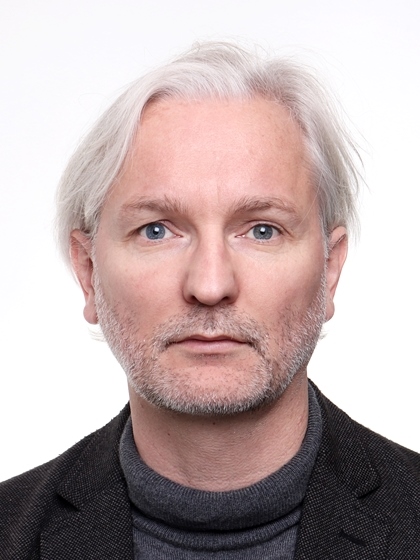
Berrie Giebels, APPEC representative in the Snowmass 2021
Berrie Giebels defended his dissertation in 1998 and was a research associate at SLAC for 3 years. Since 2001 he is physicist at CNRS in the field of high energy astroparticle physics (Fermi, HESS, CTA). Since 2016 he is IN2P3/CNRS deputy director in charge of the astroparticle physics & cosmology perimeter including the large research infrastructures (EGO-Virgo, CTA, LSST, KM3NeT, Auger,..).
„The Snowmass Process, while essentially aimed at developing a vision for the future of particle physics in the U.S., is also a very inclusive process – thematically, integrating other fields of research such as astroparticle physics, and geographically, through the inclusion of the international community in its advisory group. Participating to this process as a European scientist is a unique opportunity to reach beyond our currently closed borders and reaffirm that research in physics relies on worldwide cooperation and collective goals. The APPEC roadmap objectives and priorities should provide valuable insights to shape the Snowmass 2021 vision, which will in return have an influence on the next European Astroparticle physics strategy update.“ – Berrie Giebels
To optimally engage all participants in the process, the Division of Particles and Fields invites the international community to submit written documents. Given the increasing importance of interdisciplinary work in related fields such as astrophysics, cosmology, gravity, nuclear physics, accelerator physics, AMO, and materials science, members of the Divisions of Astrophysics, Gravitational Physics, Nuclear Physics, Physics of Beams and members of other units with a connection to particle physics are strongly encouraged by the DPF Chair, Young-Kee Kim to participate in this process:
Letters of Interest (submission period: April 1, 2020 – August 31, 2020)
Letters of interest allow Snowmass conveners to see what proposals to expect and to encourage the community to begin studying them. They will help conveners to prepare the Snowmass Planning Meeting that will take place on November 4 – 6, 2020 at Fermilab. Letters should give brief descriptions of the proposal and cite the relevant papers to study. Instructions for submitting letters are available at https://snowmass21.org/loi. Authors of the letters are encouraged to submit a full writeup for their work as a contributed paper.
Contributed Papers (submission period: April 1, 2020 – July 31, 2021) Contributed papers will be part of the Snowmass proceedings. They may include white papers on specific scientific areas, technical articles presenting new results on relevant physics topics, and reasoned expressions of physics priorities, including those related to community involvement. These papers and discussions throughout the Snowmass process will help shape the long-term strategy of particle physics in the U.S. Contributed papers will remain part of the permanent record of Snowmass 2021. Instructions for submitting contributed papers are available at https://snowmass21.org/submissions/.
The Snowmass homepage (https://snowmass21.org) provides you further information on the current status of Snowmass 2021.
From February 17 to April 10, two new clusters of optical modules were installed, the sixth and the seventh, at Baikal-GVD Deep Underwater Neutrino Telescope. The effective volume of the facility, corresponding to the detection of hadronic showers produced by neutrinos, reached 0.35 km3.
Credits: B. A. Shaybonov
The Baikal-GVD Neutrino Telescope is designed for detecting and studying high-energy neutrino fluxes from astrophysical sources. Scientists plan to explore the astrophysical processes with huge energy releases occurred at the time when the Universe was hundreds of millions or billions of years younger.
According to the project, the volume of the facility in Lake Baikal should be about one cubic kilometer. The installing of the two new clusters in 2020 was an important step towards this goal. The effective volume of the facility, corresponding to the detection of neutrino produced showers, reached ~ 0.35 cubic kilometer. The estimates, based on existing algorithms (which are constantly improving), suggest that the current setup should be able to detect 3-4 neutrino interactions per year with the neutrino energy exceeding 100 TeV.
The Baikal Neutrino Telescope, being still under construction, is a unique scientific facility, one of four pillars of the Global Neutrino Network (GNN), along with IceCube at the South Pole, KM3NeT and ANTARES in the Mediterranean Sea. They explore all together the Universe considering neutrinos as messengers.
The installation site of the Baikal Neutrino Telescope is 3.5 km away from the shore. The facility is assembled at the depth of 750-1300 m in the Southern Hollow of Lake Baikal from about one-meter-thick ice surface, what greatly simplifies the installation.
Credits: B. A. Shaybonov
This year, the expedition met hard times because of anomalous weather conditions. During the ice formation period, a strong wind broke the ice cover of the lake. Huge ice blocks and ridges grew all across the lake, which significantly impeded the mounting. Nothing like that was observed in the whole 40-year-long history of the Baikal expeditions. It was not clear whether the team would be able to cut the ice through all these ice ridges to lay the cables to the new facility.
Thanks to a great experience of the team, the appropriate solution was found and the two new clusters were installed. In addition to them, an experimental technological string with five calibration laser light sources and underwater fibre-optic cables for data exchange was mounted. At present, all devices are successfully taking data.
Credits: B. A. Shaybonov
In total, 60 researchers, engineers, technicians, workers, including volunteers, participated in the expedition. The 2020 expedition program has been fully completed.
This year, the International Scientific Baikal-GVD Collaboration comprises the Institute for Nuclear Research of RAS (Moscow), the Joint Institute for Nuclear Research (Dubna), Irkutsk State University, Nizhny Novgorod State Technical University, St. Petersburg State Marine Technical University, the Institute of Experimental and Applied Physics of Czech Technical University in Prague, the Faculty of Mathematics, Physics and Informatics of Comenius University in Bratislava (Slovakia), the Institute of Nuclear Physics of the Polish Academy of Sciences (Krakow, Poland), EvoLogics GmbH (Berlin, Germany).
The expedition was organized by the Institute for Nuclear Research of the Russian Academy of Sciences (Moscow) and the Joint Institute for Nuclear Research (Dubna).
G.V. Domogatsky, spokesman of the Baikal-GVD Collaboration
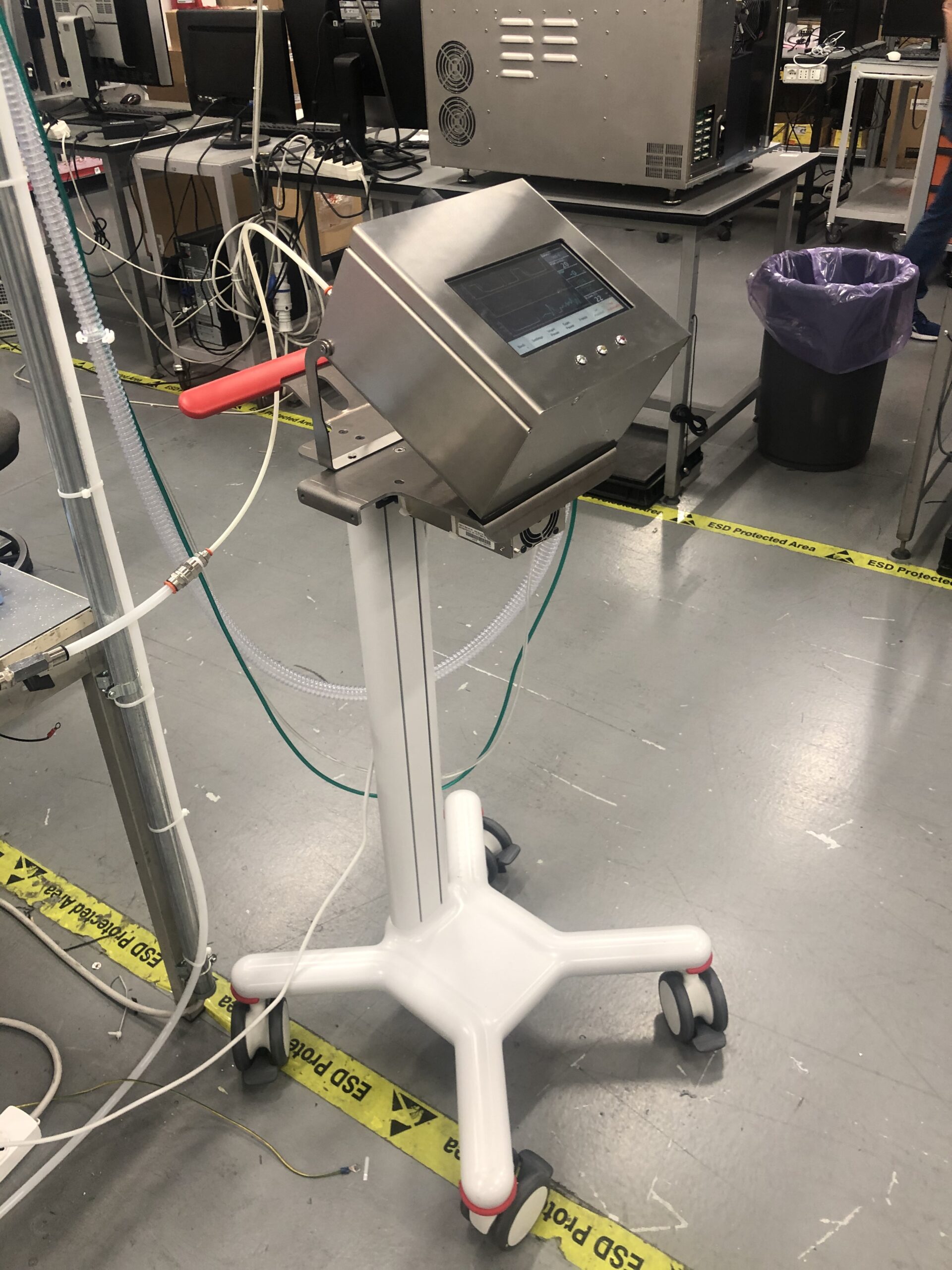
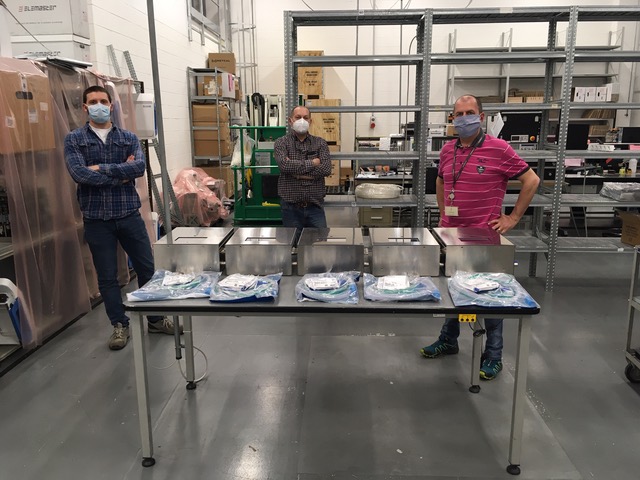
A prototype unit in its final configuration at Elemaster.
Credits: MVM Collaboration
The first five pre-prototype units at Elemaster. Credits: MVM Collaboration
The rapid spread of COVID-19 has shown a scarcity of ventilators compared to the number of patients. Thus, on the initiative of Cristian Galbiati (GSSI and Princeton University) with Art McDonald (Queen’s University), the MVM Milano Mechanical Ventilator project has been launched. MVM is an innovative device for assisted breathing, based on an open access design, and widely available components for its easy large-scale production. MVM was born within the collaboration of GADM (Global Argon Dark Matter), engaged in experiments on dark matter at the INFN’s Gran Sasso Laboratories in Italy, and SNOLAB in Canada. The expertise in sophisticated experimental apparatuses for research in astroparticle physics has allowed the development in the field of complex control systems of gases, similar to those used in lung ventilators.The project has the support of groups from universities and research institutes in Europe, Canada and USA. Bringing the MVM ventilator to patients requires a collaboration that goes beyond the field of particle physics. Thus, scientists , clinicians and companies such as Elemaster collaborate on the project. Members of the MVM International Collaboration have activated a crowdfunding campaign.
The European Consortium for Astroparticle Theory (EuCAPT) invited all scientists (PhD students, postdocs, and staff) affiliated to a European institution, and active in Theoretical Astroparticle Physics and Cosmology, to participate in the “1st EuCAPT census” by filling an Indico registration form. 660 scientists responded to this call and completed the census between January 13 and 31, 2020. This number shows the strong interest in Europe-wide coordination of Theoretical Astroparticle Physics and Cosmology. The data collected offer a first snapshot of the research interests of the Astroparticle and Cosmology theory community. The key-findings are summarized here.
In total 55 nationalities are represented, with more then half from four countries: UK, Italy, Spain and Germany. These are also the countries where around half of the scientists are working. We note however that the geographic and topic distribution might be biased by the channels used to advertise the census. Looking at the positions, the majority of registrants are currently faculty members. EuCAPT will make an effort to reach out to younger scientists and encourage them to join. EuCAPT will also try reach out to those communities which appear under-represented in the census, in particular low-energy neutrino astronomy and nuclear astronomy. The percentage of female scientists is only 20%, a disappointing result that however appears consistent with data from the American Physical Society and the UK Institute of Physics, and thus probably reflects the actual gender distribution in our community.
EuCAPT will now effectively start the process of consolidating and coordinating the relevant scientific community.
Part of the activities of EuCAPT is a monthly virtual colloquium which will start on March 3. The following presentations are already planned:
March 3, 11 am – Joachim Kopp
April 7, 11am – Samaya Nissanke
May 5, 11am – Licia Verde
Further information and details on how to connect will be announced on the EuCAPT website.
There will also be an annual symposium, the first one to be held at CERN from September 30 to October 2. For more details see: https://indico.cern.ch/event/853904/
We encourage those who have not completed the census but want to be informed about EuCAPT, to sign up at https://www.eucapt.org/census
Over the past year, the Scientific Advisory Committee (SAC) received mandate from the General Assembly to form a Dark Matter (DM) Direct Detection sub-committee, which is now ready to begin its work.
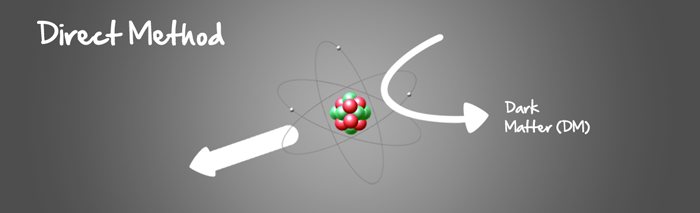
How to detect Dark Matter (credit: HAP / A. Chantelauze)
It is chaired by Leszek Roszkowski, who is supported by 12 experts from different fields covering relevant aspects of direct detection such as experiments targeting axion searches, LAr and LXe experiments, scintillating crystals, CCDs, theory and astronomy and cosmology connections, as well as connections with collider measurements.To aid in the discussions and to formulate concrete recommendations for the experimental effort in direct DM detection for the next decade, the DM Direct Detection committee is expected to provide an assessment of current and future scientific opportunities in non-accelerator DM searches, and to summarize the results in a written report.
The final report is expected to include:
The global context of DM particle searches, including the existing hints or evidence for DM particles, an inventory of alternatives for the particle nature of DM, and an inventory of present and best estimates of foreseen sensitivities of various techniques and how they compare to other than direct detection methods.
An inventory of existing DM experiments, with focus to Europe, and the technologies adopted by these, with current most competitive results.
A comparative SWOT analysis of existing, planned and proposed technologies for DM direct detection with the potential to surpass current sensitivities in the next decade with the eventual goal of reaching or surpassing the so-called neutrino floor.
An assessment of the required infrastructure in Europe, including maintenance and upgrades of existing facilities.
A list of likely technological and scientific synergies between the different direct detection technologies and with research and R&D outside of the field.
An inventory of physics, astronomy or other research that can be done in addition to DM direct detection with the various technologies. In addition, it would be important to discuss if such other research can be done even within the specifically proposed DM experiments. Synergies with other experiments of indirect, accelerator and cosmology DM searches should also be considered, including possible technical and R&D synergies, e.g. with CERN, other laboratories and industry.
Any other recommendations within the scope of DM direct searches, that the committee deems relevant.
The report is expected to be a useful and valuable resource not only for experts but also for a wider community of astroparticle physics and related research areas. It would therefore be welcome if the broader implications of low background physics and the search for rare events could also be discussed, as well as the relevance of the programme for the training of the next generation of researchers.
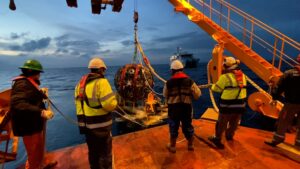
In January 2020 Phase 1 of the KM3NeT-France construction was successfully completed. About one year after the deployment of the first detector unit, the ORCA detector now comprises 6 detection units, each equipped with 18 sensor modules. A module houses 31 light sensors (photo-multiplier tubes) to record the faint Cherenkov light generated by charged particles in the sea water.
Two new detection units were installed the 24-26 January, 2.5 km below the sea surface at the KM3NeT/ORCA site located 40 km offshore from Toulon, France. Immediately after connection to the seafloor network the data taking started and downgoing cosmic ray muons came pouring in. Real time analysis of the new data also identified the first sample of candidate upgoing atmospheric neutrino events detected by ORCA6.












 The European Consortium for Astroparticle Theory (